





A Chinese research team has developed a metal-free, ligand-free zeolite-catalyzed route for producing propionic acid and isobutyric acid, according to the newspaper report cited in the supplied information. The event date is not specified. The development concerns raw materials used in food preservation and flavor production, but the supplied information identifies no accompanying change to regulations, standards, certification or trade rules. From an industry perspective, its immediate relevance is the potential for a different production route, with implications for supplier evaluation, product qualification and procurement if commercial supply becomes available.
A zeolite route to two food-related raw materials
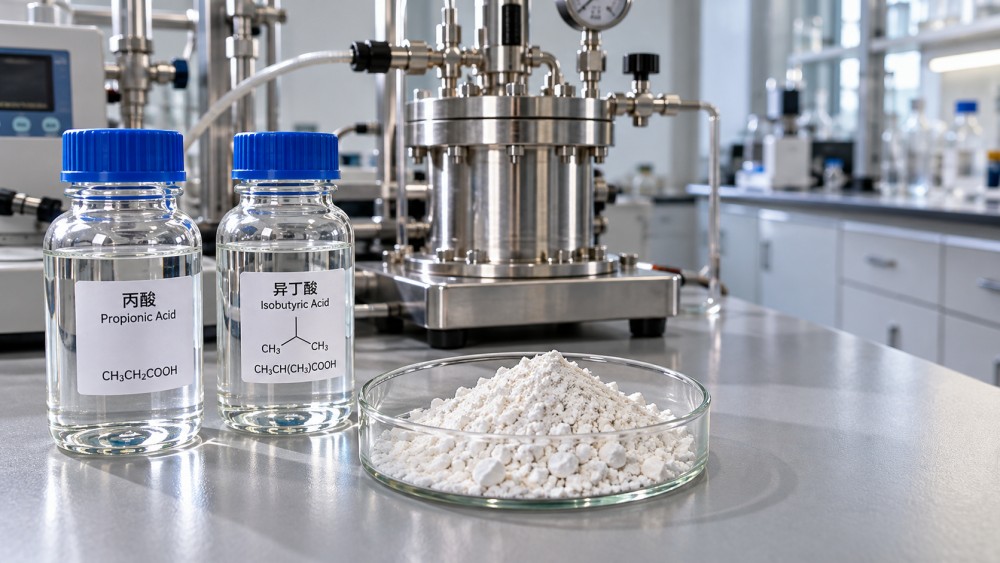
The reported research achieves olefin carbonylation using zeolite catalysis without metals or ligands, successfully producing propionic acid and isobutyric acid. The breakthrough addresses reliance on precious-metal catalysts such as rhodium and iridium in the reported reaction route.
Propionic acid is a common raw material for food preservatives, while isobutyric acid can be used in fruity food flavorings. The supplied report presents the research as a new path toward efficient production of these materials.
Supplier qualification becomes the practical point of attention
Producers could reassess catalyst procurement
Analysis suggests that manufacturers evaluating this route could reconsider their dependence on precious-metal catalyst inputs. Any procurement benefit would depend on production performance and commercial feasibility, neither of which is established in the supplied information. Purchasing teams could therefore assess the technical route as a potential sourcing option without assuming that catalyst savings already translate into lower delivered material prices.
Preservative and flavor buyers would need product-level evidence
From a buyer's perspective, a different catalyst system could prompt questions about product specifications, impurity profiles and consistency. The description of a reaction as metal-free does not, by itself, establish the compliance status or suitability of a finished ingredient. If materials made by this route are offered for sale, buyers could review supporting specifications, test reports and traceability records before considering substitution.
Traders and testing providers could face new documentation questions
Analysis suggests that distributors, exporters and testing providers may need to distinguish claims about the synthesis route from evidence about the supplied product. A potential commercial transaction could require clarification of product identity, intended use and customer acceptance criteria. The supplied information establishes no new customs treatment, certification exemption or market-access entitlement associated with this research.
Evidence to request before changing a purchasing specification
Confirm what the proposed material actually is
As a practical recommendation, buyers considering a future offer could request a clear product specification and documentation linking the material to its stated manufacturing route. The reported preparation of propionic acid and isobutyric acid should not be treated as confirmation that every resulting product is suitable for a particular food-related application.
Review compliance for the intended use
A prudent assessment would examine any applicable product requirements and customer specifications for the intended application. Where relevant, companies could verify whether a manufacturing-route change affects their existing qualification or documentation arrangements. These are suggested review steps; the supplied report does not announce a new approval procedure or mandatory certification requirement.
Validate substitution before committing to delivery
Procurement and production teams could seek samples, assess consistency and evaluate performance in their own applications before changing suppliers or specifications. Because the supplied information does not establish commercial capacity, supply availability or delivery timing, purchasing plans would need separate evidence on those points.
Keep technical claims separate from commercial commitments
As a documentation recommendation, supplier statements and purchasing agreements could distinguish the reported catalytic achievement from verified product quality and delivery capabilities. This would help buyers assess what a supplier can substantiate when offering materials made through the new route.
A research milestone with no announced rule change
Editorial assessment: this development is best understood as a technical advance that may create future qualification and compliance questions. The supplied information does not support presenting it as an implemented policy change, a regulatory enforcement signal or a revision to industry standards.
What deserves closer attention is whether subsequent information establishes reproducible production, application suitability and commercial availability. Any later regulatory statement, certification interpretation or customer specification addressing the route would need to be assessed on its own evidence. None is identified in the supplied material.
Assess the alternative while keeping purchasing decisions evidence-based
From an industry perspective, the reported achievement offers a potential route away from precious-metal dependence in producing two food-related raw materials. Its practical value for preservative and flavor supply chains will depend on evidence beyond the reaction breakthrough, including product qualification and reliable supply. Companies can treat it as a development to evaluate while basing changes to sourcing, compliance documentation and delivery commitments on verified commercial information.
Reporting basis and points requiring further verification
This article is based solely on the user-provided news title, event-time information and event summary, which attribute the development to a newspaper report. The event date was not specified, and no specific official source link was provided in the input. Further verification remains necessary.
The discussion of procurement, qualification and compliance is analysis rather than a report of newly issued requirements. Follow-up verification could examine original research disclosures, any relevant official announcements or standards documents, and substantiated supplier information. Commercial implementation, industry feedback and any subsequent certification or trade guidance remain matters for continued observation.
Related News
- Türkiye Notifies WTO of Draft Food Additives Regulation AmendmentsNov 09, 2026Food Preservation Scientist
- Chinese Zeolite Advance Removes Precious Metals from Food Preservative and Flavor ChemistryOct 28, 2026Food Preservation Scientist
- Flavour preservation failures caused by oxygen exposure in beveragesOct 01, 2026Food Preservation Scientist
- Which flavour preservation method best protects citrus top notes?Sep 30, 2026Food Preservation Scientist
Related News
- 00
0000-00
Wissen Research: Global Cosmetics Market to Reach $497.2 Billion by 2031 - 00
0000-00
Can biomimetic peptides improve skin firmness? - 00
0000-00
China Records 543 New Cosmetic Ingredients, Including 167 in 2026 - 00
0000-00
How to check a fragrance raw material specification for IFRA compliance - 00
0000-00
Australia and New Zealand Weigh Wider Steviol Glycoside Use in Griddle Products
Food Preservation Scientist
Weekly Insights
Stay ahead with our curated technology reports delivered every Monday.