





Food Preservation Solutions Suppliers: What to Check Before Requesting a Quote
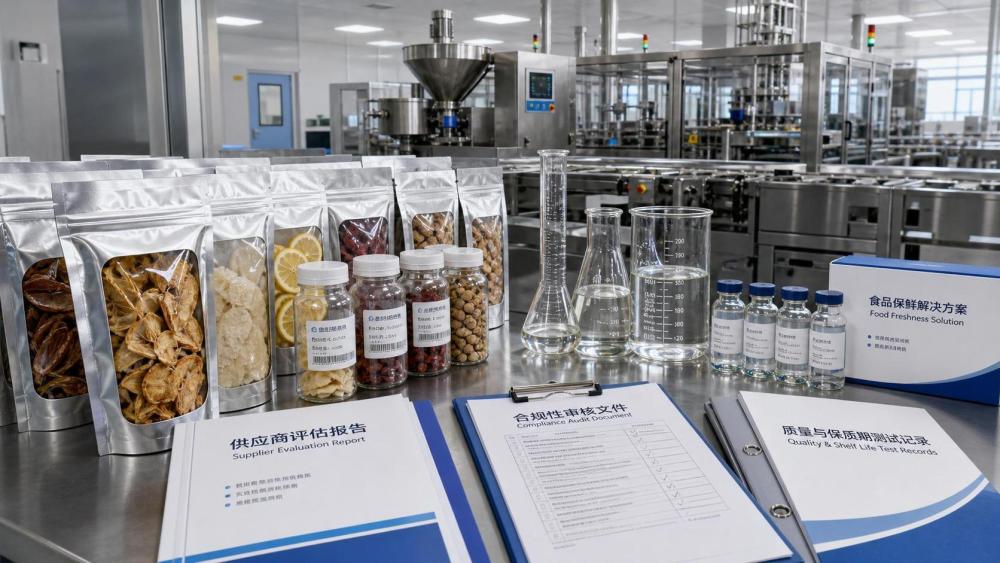
Choosing among food preservation solutions suppliers is not only a pricing task. It affects safety, shelf life, compliance, and supply continuity across the full product lifecycle.
That is why a quote should come after a technical review, not before it. A low unit price can quickly become expensive if the solution fails in production.
In practical sourcing, the strongest suppliers are rarely the ones with the cheapest first offer. They are the ones that reduce risk without slowing commercial execution.
For buyers comparing food preservation solutions suppliers, a disciplined checklist helps separate real capability from polished sales language.
This matters even more today. Clean label pressure, export rules, and shelf-life expectations are all rising at the same time.
A supplier may look suitable on paper, yet fail when your formulation, process temperature, or target market changes. That gap is where procurement mistakes usually start.
Start with application fit, not catalog breadth
Many food preservation solutions suppliers present long portfolios. That looks impressive, but procurement decisions should begin with your specific product system.
Ask whether the supplier has experience in your category. Bakery, sauces, beverages, dairy, and ready meals all create very different preservation demands.
A preservative that performs well in acidic beverages may fail in neutral pH foods. Water activity, fat content, packaging, and process heat also change outcomes.
Before requesting a quote, ask for application case references, recommended dosage ranges, and expected microbial control under realistic processing conditions.
This is where intelligence-led sourcing becomes useful. Teams following technical market signals can quickly spot whether a supplier understands preservation as chemistry, not just inventory.
Questions worth asking early
- Which food categories has this solution been validated in?
- What pH and water activity range does it cover?
- How stable is it during thermal processing?
- Does it affect flavor, color, or texture over time?
- Can the supplier support pilot trials and shelf-life testing?
Check compliance documents before discussing price
Among food preservation solutions suppliers, documentation quality is often a better signal than the first quote. It shows whether the business can support real market entry.
At minimum, request specification sheets, COA samples, allergen statements, GMO status, origin details, and relevant regulatory declarations for target countries.
If your product moves across regions, ask about FDA positioning, GRAS relevance, EU restrictions, labeling implications, and documentation for importer review.
A credible supplier should answer clearly. Delays, vague wording, or incomplete files usually mean more friction later in audits or customs clearance.
This is especially important for companies balancing clean label claims with shelf-life targets. Regulatory fit and marketing fit are not always the same thing.
Documents to request before RFQ approval
- Technical data sheet and product specification
- Certificate of analysis template
- Food safety and quality certifications
- Country-specific regulatory statement
- Shelf-life and storage guidance
- Traceability and batch coding policy
Evaluate performance in the full formula
One common sourcing mistake is testing ingredients in isolation. Food preservation solutions suppliers should be judged by how their systems behave inside the final formulation.
Preservation performance interacts with acids, antioxidants, thickeners, flavors, pigments, and packaging. A technically acceptable ingredient can still create sensory or process problems.
For example, some solutions protect shelf life well but introduce off-notes. Others work only at a dosage that disrupts texture or increases formula cost.
Request challenge test support, compatibility advice, and realistic use-level recommendations. The best food preservation solutions suppliers will discuss trade-offs openly.
That level of transparency matters because procurement is not buying a chemical name. It is buying stable marketable performance under commercial conditions.
Performance areas to verify
- Microbial inhibition under target shelf-life conditions
- Flavor impact across the product life cycle
- Thermal and pH stability during processing
- Interaction with gums, colors, and emulsifiers
- Label claim compatibility for target channels
Look beyond unit price to total sourcing cost
A cheaper quote can hide a higher operating cost. This is one of the most important realities when comparing food preservation solutions suppliers.
Start with the effective cost in use. Dosage rate, wastage, retesting, logistics, and reformulation time all change the real sourcing equation.
A solution priced higher per kilogram may still win if it works at a lower inclusion level or reduces spoilage returns.
It is also smart to ask how raw material volatility affects future pricing. Stable quoting terms matter when margins are under pressure.
Procurement teams should ask for cost scenarios, not just a list price. That creates a more realistic comparison across food preservation solutions suppliers.
Cost factors that usually get missed
Test supply reliability and technical support depth
Supply continuity often decides whether food preservation solutions suppliers become long-term partners. Availability problems usually appear after onboarding, not during quotation.
Ask about manufacturing location, backup capacity, standard lead times, minimum order quantity, and regional inventory support. These points affect planning more than many buyers expect.
Technical support matters too. When a formula behaves unexpectedly, response time becomes part of the product value.
A strong supplier should provide useful troubleshooting, not generic documents. Fast answers on heat stability, oxidation, microbial pressure, or label impact can save weeks.
This is where market intelligence platforms such as FFAI add practical value. Cross-category insight helps buyers compare technical claims with real-world formulation logic.
Use this pre-quote supplier screen
- Confirm category experience and application fit.
- Collect complete compliance and quality documents.
- Review challenge test and formulation support capability.
- Compare effective cost, not just quoted price.
- Assess lead time, traceability, and backup supply options.
- Check whether technical communication is fast and specific.
What a good RFQ should include
Once the screening is complete, your RFQ should be detailed enough to get comparable offers from food preservation solutions suppliers.
Include product type, pH range, target shelf life, process temperature, packaging format, storage conditions, labeling goals, annual volume, and destination markets.
Also request recommended dosage, compliance files, lead time, MOQ, sample availability, and technical support terms. This keeps the quotation process grounded in actual use.
The more precise the RFQ, the easier it becomes to compare food preservation solutions suppliers on performance, risk, and total value.
Before requesting a quote, make sure the supplier can support your product after purchase as well as before it. That is often the difference between a transaction and a workable sourcing decision.
In the current market, the smartest buying decision is usually the one that balances compliance, functionality, sensory quality, and cost stability from the start.
Related News
- Flavour preservation failures caused by oxygen exposure in beveragesOct 01, 2026Food Preservation Scientist
- Which flavour preservation method best protects citrus top notes?Sep 30, 2026Food Preservation Scientist
- How functional additives for beverages affect shelf-life stabilitySep 11, 2026Food Preservation Scientist
- Ingredient selection for preservatives when pH limits antimicrobial efficacySep 07, 2026Food Preservation Scientist
Related News
- 00
0000-00
What drives personal care ingredient price volatility in sourcing - 00
0000-00
What drives micelles price differences in cosmetic formulations? - 00
0000-00
How to assess color stability from a natural food colors manufacturer - 00
0000-00
When does amino acid surfactant powder improve cleanser mildness? - 00
0000-00
How to verify a cosmetic nanotechnology supplier's safety documentation
Food Preservation Scientist
Weekly Insights
Stay ahead with our curated technology reports delivered every Monday.