





Why are food preservatives now tied to shelf life, labels, and business risk?
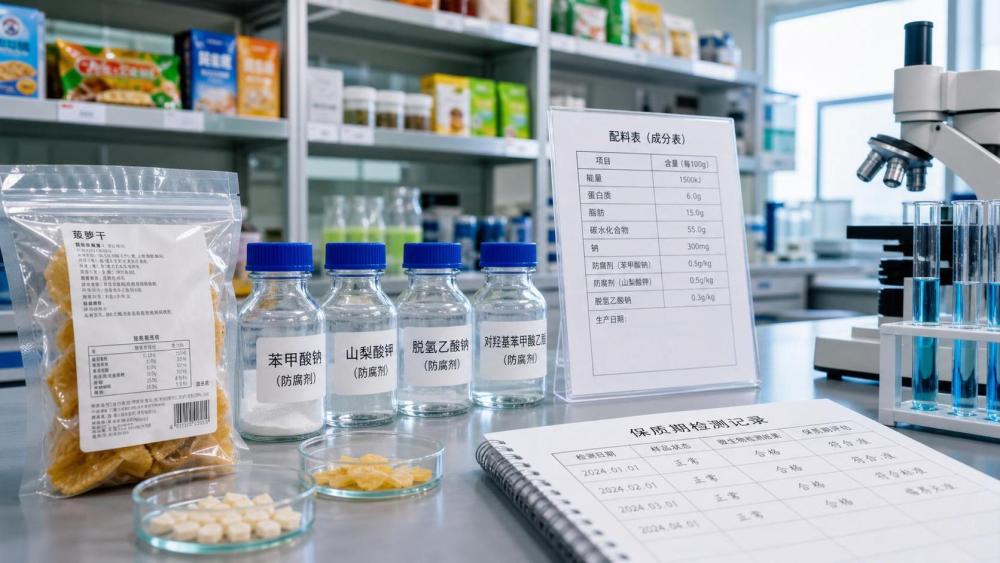
Food preservatives used to be discussed mainly as stability aids. That view is now too narrow for modern FMCG supply chains.
A preservative decision can change spoilage rates, ingredient statements, export readiness, and even whether a reformulation stays commercially viable.
That is why food preservatives sit at the intersection of microbiology, regulatory review, sensory quality, and cost control.
In practice, the question is rarely just, “Does this ingredient stop mold?” A better question is, “What chain of consequences follows if we use it, replace it, or reduce it?”
This is also where FFAI’s intelligence lens becomes relevant. Food preservation does not stand alone.
It interacts with antioxidants, texture systems, flavor delivery, and the broader demand for safe, credible, globally accepted formulations.
For teams managing technical standards, the real value lies in understanding those connections early, before a label issue becomes a recall risk.
What do food preservatives really do beyond preventing spoilage?
At the basic level, food preservatives slow or stop microbial growth, oxidation, or both. That part is familiar.
The less obvious point is that their performance depends on the full product system, not the ingredient in isolation.
pH, water activity, packaging barrier, process temperature, residual oxygen, and distribution time all shape the final outcome.
A preservative that works in a sauce may underperform in a bakery filling. The same dosage may behave differently after hot fill, retort, or ambient storage.
This is why shelf life studies must be linked to actual abuse conditions, not only ideal warehouse assumptions.
Another overlooked role involves sensory protection. Some food preservatives help maintain flavor freshness by supporting oxidation control or delaying off-notes linked to microbial drift.
More commonly, though, they create trade-offs. A system may improve microbial security while introducing taste, odor, or texture changes.
That is especially relevant in formulations using natural pigments, hydrocolloids, or delicate flavor top notes.
In other words, food preservatives protect shelf life, but they also influence the product experience consumers actually judge.
When does a preservative choice become a labeling problem?
Labeling risk usually starts before launch. It appears when technical teams optimize only efficacy, while commercial teams promise a simpler claim set.
Clean label pressure has made this more visible. Many brands want fewer additives, shorter declarations, or ingredients that sound familiar to end users.
Yet not every “natural” alternative performs with the same consistency, especially across long export routes and variable climates.
A useful way to frame the issue is to separate consumer-facing simplicity from technical reality.
The more complex the formula, the more this matters. Compound flavors, fruit preparations, thickeners, and inclusions can all affect final declarations.
That is why regulatory interpretation should sit beside formulation work, not after it.
FFAI’s broader perspective is useful here because preservation decisions often spill into flavor architecture, texture design, and cross-border compliance at the same time.
Is reformulating away from traditional food preservatives always worth it?
Not always. The answer depends on risk tolerance, product format, and the commercial value of the intended label change.
A replacement may look attractive on paper but create hidden costs in validation, sourcing, processing, and complaint management.
The most common mistake is treating reformulation as a one-to-one swap. Food preservatives usually work as part of a system.
When one component changes, the product may also need pH adjustment, packaging improvement, lower oxygen pickup, or different thermal treatment.
This is why reformulation risk should be reviewed in four layers:
- Microbial margin: whether challenge testing still supports the target shelf life.
- Sensory drift: whether flavor, color, or texture changes over time.
- Operational fit: whether the new system survives process heat and filling conditions.
- Commercial impact: whether claims gained justify higher cost or shorter distribution reach.
In real projects, a softer preservative approach may still succeed if supported by antioxidants, stronger barriers, or tighter cold-chain control.
But if logistics are long and temperature abuse is likely, removing established food preservatives can become an expensive experiment.
How should shelf life be tested when labels and exports are both in play?
Shelf life testing should answer more than one question. It must confirm safety, support the claimed date, and reveal where the formula begins to fail.
A practical program usually combines real-time storage, accelerated conditions, microbiological challenge work, and packaging verification.
What matters is that the protocol reflects actual movement through the market.
For exported goods, that means considering port delay, warm containers, partial carton damage, and variable retail turnover.
A short checklist helps keep validation grounded:
- Confirm the target organisms based on product category and pH profile.
- Test food preservatives at the minimum practical use level, not only the comfort level.
- Include final packaging, not lab containers that overstate stability.
- Review label statements against the tested formula version.
- Track sensory breakpoints alongside microbial results.
This last point is often missed. A product may remain microbiologically acceptable but no longer taste, smell, or look saleable.
For categories shaped by flavor and texture expectations, technical shelf life and market shelf life are not always the same.
What signals suggest your preservative system needs review before it becomes a bigger issue?
The warning signs are usually visible early, though they are often dismissed as isolated deviations.
Recurring late-life flavor changes, regional complaint clusters, inconsistent water activity, or rising incubation failures all deserve attention.
So do supplier changes in acids, flavors, fruit systems, or thickeners. Those inputs can shift preservative performance without changing the declared formula headline.
A review is also wise when any of the following happens:
- A clean label initiative removes or reduces established food preservatives.
- Distribution expands into hotter or slower-moving markets.
- Packaging material changes oxygen or moisture barrier performance.
- A new flavor system introduces different pH or solvent behavior.
- A cost-down program pushes lower dosage without new validation.
In broader formulation work, this systems thinking matters across categories. The same discipline used to assess cosmetic actives or surfactant performance applies here.
You look at efficacy, stability, compatibility, compliance, and total lifecycle cost together, not one at a time.
So what is the most reliable way to evaluate food preservatives today?
The strongest approach is not choosing between shelf life, labeling, and cost. It is building a decision framework that weighs all three together.
Food preservatives should be reviewed as part of a full product architecture that includes process, packaging, flavor stability, texture behavior, and market-specific rules.
That is especially important for companies operating across fast-moving global channels where one formula may face different regulations and consumer expectations.
A sensible next step is to map each SKU against three checkpoints: current preservative function, label exposure, and reformulation consequence.
From there, confirm where challenge testing is outdated, where declarations vary by market, and where ingredient substitutions could trigger larger technical changes.
When that review is supported by integrated intelligence, the result is usually clearer priorities, fewer surprises, and more defensible shelf life decisions.
For teams following FFAI’s cross-category perspective, that means treating preservation not as a narrow additive topic, but as part of formula strategy itself.
Related News
- Flavour preservation failures caused by oxygen exposure in beveragesOct 01, 2026Food Preservation Scientist
- Which flavour preservation method best protects citrus top notes?Sep 30, 2026Food Preservation Scientist
- How functional additives for beverages affect shelf-life stabilitySep 11, 2026Food Preservation Scientist
- Ingredient selection for preservatives when pH limits antimicrobial efficacySep 07, 2026Food Preservation Scientist
Related News
- 00
0000-00
Verifying halal status of hydrocolloid ingredients in the Middle East - 00
0000-00
How to interpret active matter on a surfactant specification sheet - 00
0000-00
What Quality Checks Should You Run on Fragrance Ingredient Suppliers? - 00
0000-00
How to assess a flavor chemistry manufacturer's batch consistency - 00
0000-00
What drives fragrance ingredients price changes in bulk orders?
Food Preservation Scientist
Weekly Insights
Stay ahead with our curated technology reports delivered every Monday.