





How to Choose Food Preservatives and Antioxidants for Sauces
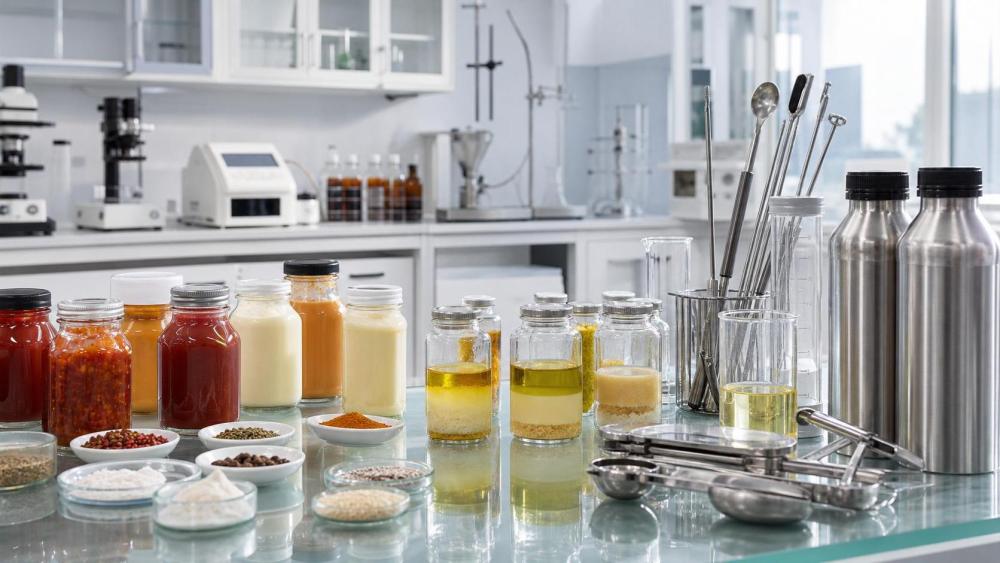
Choosing food preservatives and antioxidants for sauces is rarely a one-ingredient decision.
The right system must control microbes, slow oxidation, protect flavor, and remain stable during processing and storage.
That sounds straightforward, but sauces create difficult conditions.
Oil, water, acid, salt, spices, sugars, and heat all change how food preservatives and antioxidants for sauces actually perform.
In practical evaluation, shelf life is only one target.
A stronger decision also considers label expectations, regional rules, packaging format, and supply chain variability.
This is where a structured selection process matters.
For FFAI, ingredient intelligence starts with how molecules behave inside real formulations, not only inside specifications.
Start with the Sauce Risk Profile
Before comparing options, define the product risk map.
Food preservatives and antioxidants for sauces should be selected against the real failure modes of the formula.
Most sauce systems face five major variables.
- pH level and acid profile
- water activity and salt concentration
- oil content and unsaturated fat level
- thermal process intensity
- packaging oxygen exposure after filling
A tomato sauce, chili oil sauce, mayonnaise-style dressing, and fermented dipping sauce do not need the same preservation strategy.
Low-pH sauces often rely on acid-tolerant antimicrobial systems.
Oil-rich sauces usually need stronger antioxidant support because rancidity becomes a faster quality risk than visible spoilage.
From recent market changes, hybrid risks are becoming more common.
Clean label reformulation often reduces traditional safeguards, while wider distribution increases stress across storage and transport.
Match Preservatives to Microbial Threats
Food preservatives and antioxidants for sauces should not be evaluated as one category.
Preservatives manage microbial growth, while antioxidants manage oxidation chemistry.
For antimicrobial control, common choices include sorbates, benzoates, acetates, cultured sugar or dextrose systems, and fermentate-based solutions.
Their performance depends heavily on pH and product matrix.
For example, potassium sorbate performs best in acidic sauces and is widely used in dressings, ketchup-style products, and table condiments.
Benzoates also favor acidic environments, but sensory effects and labeling preferences may limit use in premium recipes.
When reviewing food preservatives and antioxidants for sauces, ask three direct questions.
- Which organisms are most likely in this product and process?
- Does the preservative remain active at the sauce pH?
- Will the ingredient still work after heating, hot fill, or retort?
This also means challenge testing matters more than supplier brochures.
A preservative that performs well in a simple aqueous system may lose effectiveness in sauces containing starches, proteins, or spice particulates.
Choose Antioxidants by Fat Phase and Process Stress
Oxidation in sauces is often underestimated during early screening.
Yet for many products, rancid notes, color loss, and aroma flattening define shelf-life failure before microbial limits are reached.
The best food preservatives and antioxidants for sauces account for both aqueous and lipid-phase reactions.
Common antioxidant choices include mixed tocopherols, rosemary extract, ascorbic acid, ascorbyl palmitate, EDTA, and synthetic options where regulations allow.
Selection should be tied to the oxidation mechanism.
- Tocopherols help protect lipid phases.
- Rosemary extract supports natural-positioning strategies.
- EDTA is useful when metal-catalyzed oxidation is the core problem.
- Ascorbic systems can work well, but must fit the broader redox environment.
In emulsified sauces, partition behavior is critical.
An antioxidant may look strong on paper, yet offer poor protection if it stays in the wrong phase.
This is a recurring issue in mayonnaise, creamy dressings, and chili sauces with dispersed oil droplets.
A useful rule is to test antioxidants under actual thermal and oxygen exposure, not under ideal storage only.
Evaluate Sensory Impact and Label Fit Early
Technical performance alone does not close a strong ingredient decision.
Food preservatives and antioxidants for sauces must fit the target sensory profile and market position.
Some natural antioxidants introduce herbal, bitter, or resinous notes.
Some preservation systems slightly shift acidity perception or aftertaste.
These effects may be acceptable in barbecue sauces, but disruptive in mild cream sauces or delicate Asian dressings.
A more visible signal in current launches is the pressure for simpler labels.
That pushes teams toward fermented ingredients, vinegar systems, plant extracts, and multifunctional blends.
However, clean label does not automatically mean lower risk.
In real business settings, label-friendly systems may require higher dosage, narrower processing windows, or tighter packaging control.
That tradeoff should be priced early, not after commercialization delays.
Build a Practical Screening Matrix
A good evaluation framework makes food preservatives and antioxidants for sauces easier to compare across technical and commercial factors.
Shortlist ingredients using a simple matrix before pilot work expands.
This type of matrix keeps discussions grounded.
It also helps separate technically elegant ingredients from ingredients that are commercially dependable.
Do Not Separate Formula Choice from Packaging and Compliance
Food preservatives and antioxidants for sauces perform inside a full system, not in isolation.
Packaging oxygen transmission, headspace control, light exposure, and closure integrity directly affect preservation outcomes.
A better bottle or pouch can sometimes reduce antioxidant demand more effectively than a formula change.
The same logic applies to compliance.
Ingredient legality, labeling terms, and maximum permitted levels differ by market.
For exporters, that can reshape the entire shortlist of food preservatives and antioxidants for sauces.
FFAI tracks these shifts closely because a technically sound formula still fails if documentation or destination approvals are weak.
That is why ingredient selection should include regulatory review at the same stage as bench testing.
A Smarter Decision Path for Sauce Formulators
The strongest decisions on food preservatives and antioxidants for sauces come from layered evaluation.
Start with product risks, then screen by microbial need, oxidation pathway, sensory fit, process tolerance, and market compliance.
In many cases, the best answer is a coordinated system, not a single additive.
A preservative can limit yeast and mold growth, while an antioxidant blend protects oils, spices, and color through distribution.
That integrated view reduces reformulation cycles and improves launch confidence.
For teams comparing options, the practical next step is clear.
Build a shortlist of food preservatives and antioxidants for sauces based on your exact pH, oil phase, process, packaging, and target market.
Then validate those candidates with real challenge tests, oxidation studies, and pilot-scale sensory checks.
That approach is slower at the start, but far more reliable when shelf life, product quality, and commercial scale all need to hold together.
Related News
- Flavour preservation failures caused by oxygen exposure in beveragesOct 01, 2026Food Preservation Scientist
- Which flavour preservation method best protects citrus top notes?Sep 30, 2026Food Preservation Scientist
- How functional additives for beverages affect shelf-life stabilitySep 11, 2026Food Preservation Scientist
- Ingredient selection for preservatives when pH limits antimicrobial efficacySep 07, 2026Food Preservation Scientist
Related News
- 00
0000-00
What drives fragrance ingredients price changes in bulk orders? - 00
0000-00
How to assess a food antioxidants distributor’s traceability practices - 00
0000-00
How minimum order quantities shape private label ingredient sourcing costs - 00
0000-00
What drives personal care ingredient price volatility in sourcing - 00
0000-00
What drives micelles price differences in cosmetic formulations?
Food Preservation Scientist
Weekly Insights
Stay ahead with our curated technology reports delivered every Monday.