





Shelf-life control is not a single ingredient decision. It is a system decision involving product formulation, microbial ecology, process lethality, packaging barrier, distribution conditions, and the limits of the intended market’s regulations. A food preservation technology supplier should therefore be assessed on whether it can demonstrate control of the relevant spoilage or safety mechanism under the customer’s actual conditions—not merely on whether it can provide a preservative, antioxidant, culture, coating, package, or processing aid.
The first technical question is simple but often mishandled: what failure is the supplier expected to prevent? A product may fail because of yeast and mold growth, bacterial outgrowth, oxidation, color loss, flavor degradation, texture collapse, package swelling, or loss of an active claim. These are different failure modes. A supplier that is effective against oxidative rancidity may have little relevance to post-process mold growth; a solution that extends microbiological shelf life may create an unacceptable flavor, pH, or label consequence.
A credible food preservation technology supplier begins with this distinction and converts a commercial shelf-life target into testable technical endpoints.
Separate food safety, spoilage control, and quality retention
“Longer shelf life” is an incomplete requirement. It should be divided into at least three endpoints:
- Safety: prevention or control of pathogens and toxin formation within the stated storage and use conditions.
- Microbiological spoilage: control of yeasts, molds, lactic acid bacteria, spore-formers, or other product-specific spoilage organisms.
- Quality retention: preservation of flavor, aroma, color, texture, emulsion stability, nutritional quality, and consumer acceptability.
These endpoints can conflict. Increasing acidification, salt, sugar, alcohol, or certain antimicrobial systems may suppress microbial growth while changing taste or mouthfeel. Oxygen scavenging can slow oxidation but may alter package design requirements. A high-temperature treatment may reduce microbial load but damage volatile flavors or destabilize a protein beverage. Suppliers should be able to identify these trade-offs before presenting a solution.
Technical evaluators should ask for a failure-mode statement specific to the product. For example, “extend ambient shelf life” is not sufficient. A more usable statement identifies the product category, pH range, water activity, process, target storage temperature, package atmosphere, expected distribution excursions, and the relevant deterioration mechanism. Without these inputs, supplier recommendations are hypotheses rather than substantiated proposals.
Evaluate the preservation mechanism before evaluating the product name
Food preservation technologies operate through different mechanisms, and the supplier’s competence should match the mechanism required. The technology may act by reducing initial contamination, inhibiting growth, removing oxygen, lowering water activity, acidifying the matrix, disrupting microbial cells, or slowing chemical reactions.
For antimicrobial ingredients, the critical variables commonly include undissociated acid fraction, pH, water activity, salt level, sugar content, fat content, protein binding, and the presence of competing microflora. Organic acids and their salts, for instance, cannot be evaluated solely by a dose expressed in parts per million or percentage. Their practical activity depends strongly on product pH and the microorganisms present. A supplier that cannot explain this relationship may not be able to support robust formulation work.
For antioxidant systems, the relevant question is not simply whether an antioxidant has a recognized reputation. The supplier should explain the oxidation pathway in the matrix: lipid oxidation, pigment oxidation, metal-catalyzed reactions, oxygen ingress, light exposure, or repeated thermal stress. An antioxidant can appear effective in a neutral oil but underperform in an emulsion, baked product, or product exposed to light and trace metals. Synergist selection, addition point, thermal stability, and interaction with flavor compounds can be as important as the nominal active concentration.
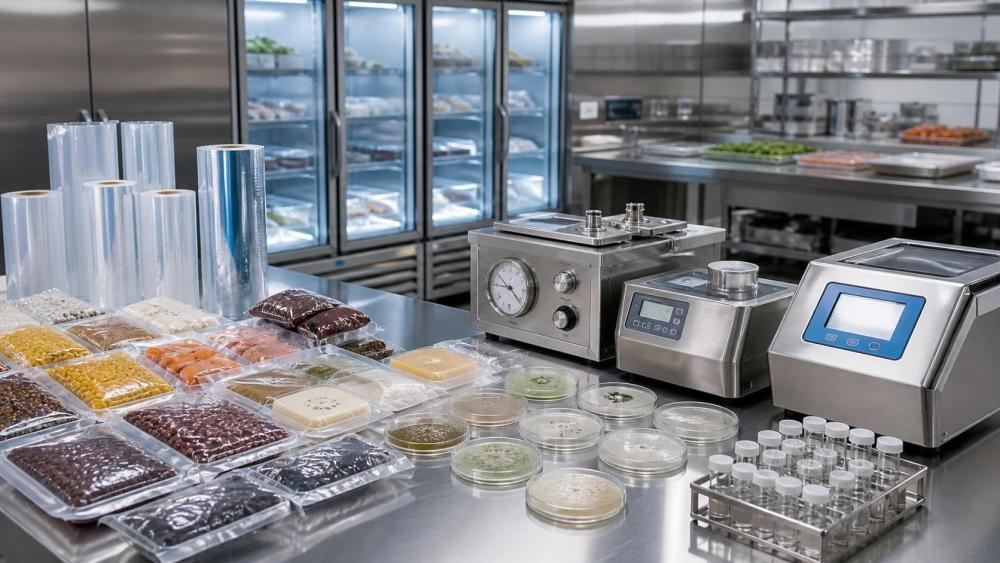
For physical technologies such as high-pressure processing, thermal treatment, modified-atmosphere packaging, aseptic filling, filtration, or active packaging, assess the complete operating window. A preservation claim that depends on a specified pressure profile, heat profile, headspace composition, seal integrity, or cold-chain condition cannot be transferred safely into a different plant configuration without validation.
Demand evidence from the finished product, not generic efficacy claims
Published literature, model-system data, and internal screening results can be useful starting points, but they do not establish commercial performance in a specific food. The minimum evidence package should be proportionate to the product risk and intended shelf-life extension.
For a preservation ingredient or multi-hurdle system, useful evidence may include:
- formulation details sufficient to reproduce the test condition, including concentration, pH, water activity, process conditions, and package type;
- microbiological methods, organisms assessed, inoculum rationale where challenge testing is used, sampling intervals, and detection limits;
- storage conditions that reflect both nominal distribution and credible temperature abuse scenarios;
- sensory and physicochemical results over time, rather than a microbiological result alone;
- batch-to-batch comparison data where natural raw-material variability can influence performance;
- a clear explanation of what the data do not prove.
Challenge studies require particular scrutiny. Their design should be scientifically justified for the food category and the hazard or spoilage organism under review. A result obtained with one strain, one package, or one storage temperature may not cover the full production and distribution envelope. For ready-to-eat products, the microbial safety strategy should be aligned with the product’s process, post-process contamination exposure, intended consumers, and jurisdictional requirements. A supplier can contribute technical support, but it should not substitute unsupported claims for a properly designed validation program.
Accelerated shelf-life testing also has limits. Elevated temperatures can speed some chemical reactions, but they do not necessarily reproduce microbial behavior, emulsion changes, package interactions, or flavor evolution at normal storage conditions. If a supplier relies on accelerated studies, it should identify which degradation mechanism the acceleration is intended to model and where extrapolation is not valid.
Test the solution at the process and packaging interfaces
Many preservation failures emerge at interfaces rather than in bench formulation. The most relevant supplier is one that examines how the solution behaves through manufacturing and into the packaged product.
Addition point matters. Some antimicrobials are less effective if exposed to heat, bound by proteins, partitioned into fat, or neutralized by other formulation components. Some natural extracts introduce volatile notes that become more noticeable after retort, baking, or extended storage. Protective cultures and fermentates may require constraints on process temperature, inoculation timing, and competing ingredients. Suppliers should specify the acceptable sequence of addition, mixing energy, residence time, and temperature exposure.
Packaging compatibility deserves equal attention. Oxygen-sensitive foods may depend more on package oxygen transmission rate, headspace control, light barrier, and seal performance than on a change in antioxidant dosage. For acidified or high-salt products, assess possible interactions with packaging materials, closures, and inks. Active packaging systems must be evaluated as a food-contact application as well as a preservation intervention. Migration, intended use conditions, and local food-contact compliance responsibilities should be documented rather than assumed.
Where the proposed technology changes viscosity, particle suspension, foam, emulsion stability, or water binding, shelf-life testing should include those attributes. A technically successful preservative system that causes sedimentation after six weeks or alters the release of a key flavor note has not solved the product problem.
Regulatory support must be market-specific and formulation-specific
Regulatory eligibility is not the same as regulatory suitability. A substance may be permitted in one jurisdiction, limited to specific food categories in another, subject to maximum-use levels, or require a particular label declaration. The same issue applies to processing aids, antimicrobial treatments, packaging components, and “natural” preservation systems.
For the European Union, food additives are governed principally by Regulation (EC) No 1333/2008, with authorizations tied to conditions of use and food categories. Labeling obligations may also arise under Regulation (EU) No 1169/2011. In the United States, a food ingredient may be used under an applicable food additive regulation, a food-contact authorization where relevant, or a conclusion that it is generally recognized as safe (GRAS) for its intended conditions of use. These pathways are not interchangeable labels of approval, and neither automatically establishes compliance in export markets.
A capable supplier should provide current specifications, composition disclosure appropriate to the evaluation, allergen and carrier information, certificates of analysis, microbiological limits where relevant, contaminant information, and traceability documentation. For botanical extracts, fermentates, cultured ingredients, and blends, technical evaluation should extend beyond the headline ingredient. Carrier systems, residual solvents where applicable, pesticide controls, heavy-metal limits, microbial specifications, and compositional variability can affect both compliance and performance.
Clean-label positioning needs the same discipline. “Natural,” “no preservatives,” or similar front-of-pack language can be commercially important, but those claims are not created merely by replacing a conventional preservative with a fermentate or extract. The supplier should explain the functional purpose, label name, applicable market constraints, and the evidence supporting any proposed claim language. A technical workaround that creates a labeling or claim risk is not a complete solution.
Assess reproducibility, not only the best laboratory result
Preservation systems are often sensitive to raw-material variation. Fruit preparations, dairy solids, spices, proteins, fats, and fermentation-derived ingredients can change pH, buffering capacity, microbial load, metal content, and antioxidant demand. A supplier should be able to state which incoming-material variables materially affect performance and what control ranges are necessary.
This is especially important when the proposed solution is a complex blend or naturally derived material. Request specification ranges rather than only target values. If active compounds vary between lots, determine whether dosage adjustment is required, how the supplier measures active content, and whether the method is suitable for routine release. A supplier that offers only a certificate stating compliance with a broad specification may not provide enough control for a narrow shelf-life margin.
Manufacturing continuity also matters technically. Changes in production site, raw-material origin, extraction method, fermentation substrate, carrier, particle size, or encapsulation process may affect preservation behavior. Change-control expectations should cover notification timing, comparability data, retained samples, revised regulatory documentation, and the customer’s right to revalidate where a change could affect shelf life.
Look for formulation support that is falsifiable
Strong technical support is not defined by the number of application ideas offered. It is defined by whether the supplier makes a recommendation that can be tested and, if necessary, disproved. The proposal should state the target, formulation range, expected mechanism, critical control variables, expected sensory effects, test design, and decision criteria.
For example, a useful recommendation might specify that a mold-control system is intended for a defined pH and water-activity range, must be added before a particular processing stage, requires a stated package condition, and should be accepted only if microbial, sensory, and appearance criteria are maintained through the agreed storage period. This allows a technical team to assess performance objectively.
Be cautious when a supplier promises a fixed shelf-life extension without requesting formula, process, package, and distribution information. Shelf life is an outcome of the food system. It cannot be reliably inferred from a generic ingredient brochure or from results in a different category.
Compare total implementation risk, not purchase price per kilogram
The lowest-cost ingredient can be the more expensive option if it requires reformulation, higher dosage, specialized packaging, added process controls, or repeated shelf-life failures. Conversely, a higher-cost solution may be justified if it reduces use level, protects sensory quality, simplifies a label, or provides a more stable validation margin.
A practical comparison should include delivered cost at the effective use level, waste or rework exposure, process modifications, laboratory validation needs, packaging implications, storage requirements, lead time, minimum order quantity, and technical response capability during deviations. Where a solution depends on a proprietary blend, supply continuity and second-source feasibility should be considered early. A preservation system that cannot be qualified across realistic supply scenarios can become a significant operational vulnerability.
The supplier selection decision is strongest when it is tied to a defined acceptance protocol: the product and package under review, the target shelf life, storage profile, safety and spoilage criteria, sensory thresholds, compliance markets, documentation requirements, and change-control obligations. That approach shifts the discussion from “Which supplier has the strongest preservation product?” to the more useful question: Which supplier can demonstrate reliable shelf-life control within this product’s real technical and regulatory boundaries?
Related News
- Flavour preservation failures caused by oxygen exposure in beveragesOct 01, 2026Food Preservation Scientist
- Which flavour preservation method best protects citrus top notes?Sep 30, 2026Food Preservation Scientist
- How functional additives for beverages affect shelf-life stabilitySep 11, 2026Food Preservation Scientist
- Ingredient selection for preservatives when pH limits antimicrobial efficacySep 07, 2026Food Preservation Scientist
Related News
- 00
0000-00
What drives personal care ingredient price volatility in sourcing - 00
0000-00
What drives micelles price differences in cosmetic formulations? - 00
0000-00
How to assess color stability from a natural food colors manufacturer - 00
0000-00
When does amino acid surfactant powder improve cleanser mildness? - 00
0000-00
How to verify a cosmetic nanotechnology supplier's safety documentation
Food Preservation Scientist
Weekly Insights
Stay ahead with our curated technology reports delivered every Monday.