





On July 1, 2026, industry attention is centered on a planned US policy change tied to an executive order signed by Trump on June 16: the proposed removal, from July 2026, of the under-$800 de minimis treatment for goods from China. For parcels shipped to the US through platforms such as SHEIN, Temu, and AliExpress, the key issue is no longer only tariff exposure, but also shipment-by-shipment customs clearance and added FDA/USDA import filing fees. This is especially relevant for importers, suppliers, and compliance teams involved in compound seasonings, healthy snacks, and functional foods containing ingredients such as Food Preservatives and Natural Antioxidants, where cost, documentation, and delivery predictability may all come under pressure.
What the proposed rule change would require
The confirmed information provided indicates that Trump signed an executive order on June 16 proposing that, starting in July 2026, Chinese goods would no longer receive de minimis treatment for shipments valued below $800 when entering the United States.
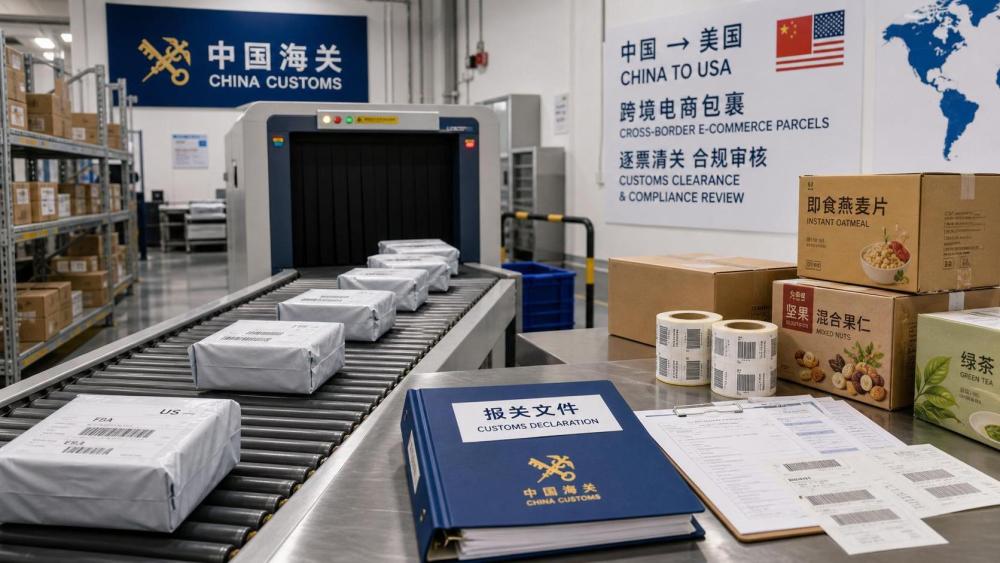
It also indicates that parcels sent through platforms including SHEIN, Temu, and AliExpress would need individual customs clearance and would be subject to tariffs as well as FDA/USDA import declaration fees.
The same information further states that this would significantly increase import compliance costs and delivery uncertainty for products such as compound seasonings, healthy snacks, and functional foods that contain ingredients including Food Preservatives and Natural Antioxidants.
Where pressure may emerge across the chain
Import planning becomes more document-sensitive
From an industry perspective, US importers may be among the first to feel the impact because the change shifts low-value parcel flows toward transaction-level customs handling. The affected business link is not only duty payment, but also the preparation and consistency of import documentation for each shipment.
What deserves closer attention is whether current parcel-based purchasing models remain workable for product lines that already carry ingredient-related compliance sensitivity.
China-based suppliers face closer operational alignment with buyers
Analysis shows that suppliers serving US demand through cross-border parcel channels may face tighter requirements from customers on product information, shipment paperwork, and fulfillment coordination. This matters particularly where goods contain Food Preservatives or Natural Antioxidants, because the cost of incomplete or mismatched documentation may become more visible once each parcel requires separate clearance.
The practical pressure point is likely to be the handoff between factory, exporter, and importer rather than production alone.
Platform-driven fulfillment models may lose some simplicity
Observably, the policy direction described in the input reduces one of the main operational advantages of small-parcel cross-border selling: simplified entry treatment for lower-value shipments. For merchants relying on platform traffic and parcel dispatch, the impact may show up in customs workflow, landed-cost calculation, and delivery certainty rather than only in product pricing.
This makes the shipping model itself a point of review, especially for goods that sit between food regulation, ingredient disclosure, and consumer retail demand.
What companies should watch now
Watch the wording and any rule-level clarification
Analysis shows that businesses should distinguish between the policy signal in the executive order and the exact operational rules that would govern implementation. The input confirms the proposed direction and timing, but the practical meaning for shipment handling, fee treatment, and category-specific execution still requires close reading of future official wording.
Review categories with ingredient-linked compliance exposure
What deserves closer attention is the concentration of risk in products such as compound seasonings, healthy snacks, and functional foods that include Food Preservatives or Natural Antioxidants. For these categories, the issue is not only added cost, but also whether every parcel can move with the supporting declarations needed for smoother entry.
Prepare for closer supplier-importer coordination
The provided information indicates that the change may push US importers toward FOB terms and more direct connections with Chinese suppliers. From a practical standpoint, companies should pay attention to how responsibilities for documents, shipment preparation, and handoff timing are allocated between both sides.
Reassess delivery commitments and customer communication
Observably, if single-parcel clearance becomes standard for these shipments, delivery uncertainty may become a commercial issue alongside compliance cost. Companies should therefore review how they communicate lead times, shipment status, and potential customs-related delays to downstream customers.
Why this looks more like a structural signal than a one-day headline
Analysis shows that this development is more important as a trade-structure signal than as a standalone platform story. The core issue is that low-value parcel treatment, customs processing, and product compliance are being pulled closer together in the China-to-US flow.
It is more appropriate to understand this as an emerging operating condition that could alter how certain consumer-facing food and functional product categories are sourced and shipped, rather than as a fully settled end state. Continued observation remains necessary because the business effect will depend on how the proposed direction is implemented in practice.
How the market may need to read this stage
At this stage, the industry significance lies in the combination of three factors already contained in the provided information: removal of under-$800 de minimis treatment for Chinese goods, shipment-level customs clearance, and added FDA/USDA filing costs. Together, these factors point to higher compliance friction for cross-border parcel trade involving sensitive ingredient-based products.
A neutral reading is that this is neither a minor procedural adjustment nor a fully closed outcome. It is more appropriate to understand it as a policy-driven shift that could affect sourcing terms, import workflows, and delivery reliability if implemented as described, and therefore merits sustained monitoring by importers, suppliers, and service providers.
Basis of this article and follow-up points
This article is based on the user-provided news title, event date, and event summary. No specific official source link was included in the input, so the exact official source documentation still needs ongoing verification.
For this type of development, commonly relevant source categories may include official government announcements, company statements, industry association updates, authoritative media reporting, and regulatory or standards-related documents. The main follow-up points to watch are any later official clarification on implementation rules, shipment-level filing requirements, and how the proposed change is applied in actual import operations.
Related News
- Flavour preservation failures caused by oxygen exposure in beveragesOct 01, 2026Food Preservation Scientist
- Which flavour preservation method best protects citrus top notes?Sep 30, 2026Food Preservation Scientist
- How functional additives for beverages affect shelf-life stabilitySep 11, 2026Food Preservation Scientist
- Ingredient selection for preservatives when pH limits antimicrobial efficacySep 07, 2026Food Preservation Scientist
Related News
- 00
0000-00
How to assess color stability from a natural food colors manufacturer - 00
0000-00
When does amino acid surfactant powder improve cleanser mildness? - 00
0000-00
How to verify a cosmetic nanotechnology supplier's safety documentation - 00
0000-00
How rheological thickeners for shampoo affect suspension stability - 00
0000-00
How to assess recombinant collagen ingredients for cream stability
Food Preservation Scientist
Weekly Insights
Stay ahead with our curated technology reports delivered every Monday.