





On January 5, 2026, China announced its intention to impose safeguard measures on imported beef — a move triggering ripple effects across meat processing, ingredient supply, and international trade channels. This development is accelerating adoption of natural antioxidants (e.g., rosemary extract and tea polyphenol complexes) in domestic meat products, particularly中式酱卤 (Chinese-style marinated and braised meats) and pre-portioned beef steaks. Industry stakeholders in meat processing, food ingredient sourcing, halal-certified manufacturing, and regulatory compliance should monitor implications for procurement strategy, formulation adjustments, and export readiness.
Event Overview
On January 5, 2026, Chinese authorities publicly indicated their intent to apply safeguard measures on imported beef. Starting in May 2026, domestic meat processors are intensifying efforts to substitute imported beef with domestically sourced alternatives. As a result, the usage rate of natural antioxidants — specifically rosemary extract and tea polyphenol complexes — in中式酱卤 and pre-portioned beef products rose to 12.7% in early 2026, up from 7.3% in 2025. Concurrently, Chinese suppliers are expediting FDA GRAS self-affirmation and EFSA Novel Food applications, primarily to support future exports to halal-certified meat processing facilities in Southeast Asia.
Industries Affected by Segment
Import-Dependent Trading Enterprises
These enterprises face potential volume contraction and margin pressure as safeguard measures may raise landed costs or restrict market access. Impact manifests in revised import quotas, increased customs scrutiny, and shorter-term contract renegotiations with overseas suppliers.
Raw Material Procurement Teams at Domestic Processors
Procurement functions must recalibrate sourcing strategies toward domestic beef and functional ingredients. The shift directly increases demand for certified natural antioxidants — especially those meeting halal, GRAS, and Novel Food requirements — making supplier qualification timelines more critical.
Meat Product Manufacturers (Especially中式酱卤 and Pre-Cut Steak Producers)
Formulation teams are adjusting preservative systems to maintain shelf life amid higher reliance on domestic beef, which may exhibit different oxidative stability profiles. The 5.4-percentage-point rise in natural antioxidant use (from 7.3% to 12.7%) reflects tangible reformulation activity, not just pilot testing.
Supply Chain Service Providers (Regulatory, Certification, Logistics)
Providers supporting export-oriented ingredient suppliers now see heightened demand for GRAS documentation support, EFSA pre-submission reviews, and halal-compatibility verification — particularly for shipments targeting Southeast Asian meat plants.
What Relevant Enterprises or Practitioners Should Focus On Now
Track official publication of final safeguard regulations
The January 5 announcement is a proposal, not an effective measure. Stakeholders should monitor the Ministry of Commerce’s formal notice, including product scope, duration, and trigger thresholds — all of which remain pending confirmation.
Assess formulation sensitivity to domestic beef variability
Domestic beef may differ in fat composition and oxidative susceptibility versus imported counterparts. Current formulation adjustments using rosemary extract and tea polyphenol complexes should be validated under real storage and distribution conditions — not only lab-scale trials.
Distinguish between policy signaling and operational implementation
The accelerated GRAS and EFSA filings by Chinese suppliers signal strategic preparation, not immediate export volume. These submissions typically require 6–18 months for review; actual commercial deployment to Southeast Asian halal facilities remains contingent on approval outcomes.
Review inventory and procurement lead times for key antioxidants
With usage rates rising sharply (to 12.7%), supply constraints could emerge for high-purity, food-grade rosemary extract and standardized tea polyphenol complexes — especially those already certified or pre-validated for halal/GRAS use. Early engagement with qualified suppliers is advisable.
Editorial Perspective / Industry Observation
Observably, this development functions less as an isolated trade action and more as a structural inflection point: it reveals how domestic supply chain resilience initiatives are reshaping functional ingredient demand patterns. Analysis shows that the 5.4-percentage-point increase in natural antioxidant adoption is directly correlated with substitution timing (May 2026), suggesting tight coupling between policy signals and R&D/commercial execution. From an industry perspective, the concurrent push for FDA GRAS and EFSA Novel Food status indicates Chinese ingredient suppliers are aligning with global regulatory benchmarks — but these efforts remain preparatory. The current phase is best understood as capability-building ahead of potential export opportunities, not evidence of scaled market penetration.
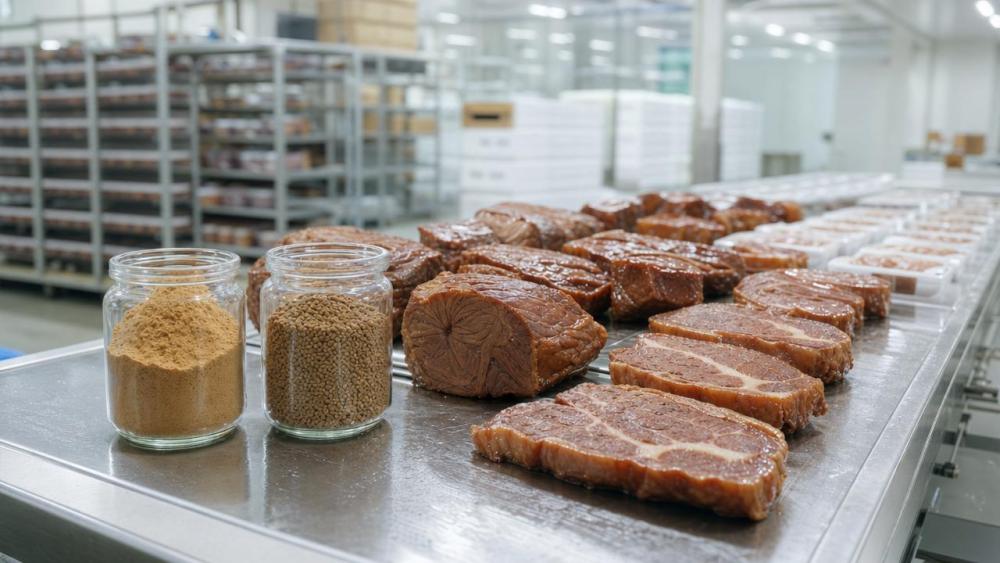
Concluding, this announcement carries dual significance: it signals tightening import conditions for beef — with cascading effects on formulation and sourcing — while simultaneously acting as a catalyst for regulatory modernization among domestic natural ingredient suppliers. It is neither a completed policy nor a sudden market shift, but rather an early-stage alignment of trade policy, food safety infrastructure, and export ambition. Currently, it is more appropriately understood as a coordinated readiness signal — one requiring measured response, not reactive overhaul.
Source: Official notice issued by China’s Ministry of Commerce, dated January 5, 2026; publicly reported formulation adoption data (2025 vs. early 2026); confirmed timeline for domestic processor substitution (effective May 2026).
Note: Final safeguard regulation text, EFSA review timelines, and commercial export volumes to Southeast Asian halal facilities remain under observation and have not yet been publicly confirmed.
Related News
- How to assess a food antioxidants distributor’s traceability practicesOct 11, 2026Food Preservation Scientist
- How natural antioxidants for oils can prevent rancidity in storageSep 25, 2026Food Preservation Scientist
- How to choose natural antioxidants for beverages with longer shelf lifeAug 23, 2026Food Preservation Scientist
- EU Tightens MRLs for Three Pesticides, Prompting Raw Material Checks for Natural Antioxidant ExportsAug 17, 2026Food Preservation Scientist
Related News
- 00
0000-00
Can biomimetic peptides in cosmetics reduce the look of wrinkles? - 00
0000-00
How to assess a bio-based thickener manufacturer's batch consistency - 00
0000-00
Verifying halal status of hydrocolloid ingredients in the Middle East - 00
0000-00
How to interpret active matter on a surfactant specification sheet - 00
0000-00
How Do You Test Hydrocolloid Viscosity After Changing a Thickener?
Food Preservation Scientist
Weekly Insights
Stay ahead with our curated technology reports delivered every Monday.