





On August 1, 2026, the European Commission updated Regulation (EC) No 1333/2008 by bringing three natural antioxidants into Annex III Part A and tying shelf-life claims to new thermal and UV stability validation. For exporters supplying natural food preservatives into the EU, as well as manufacturers, procurement teams, and customs-facing compliance functions, this is a development worth close attention because documentation and third-party testing now sit more directly in the path to market access.
What the amendment changes
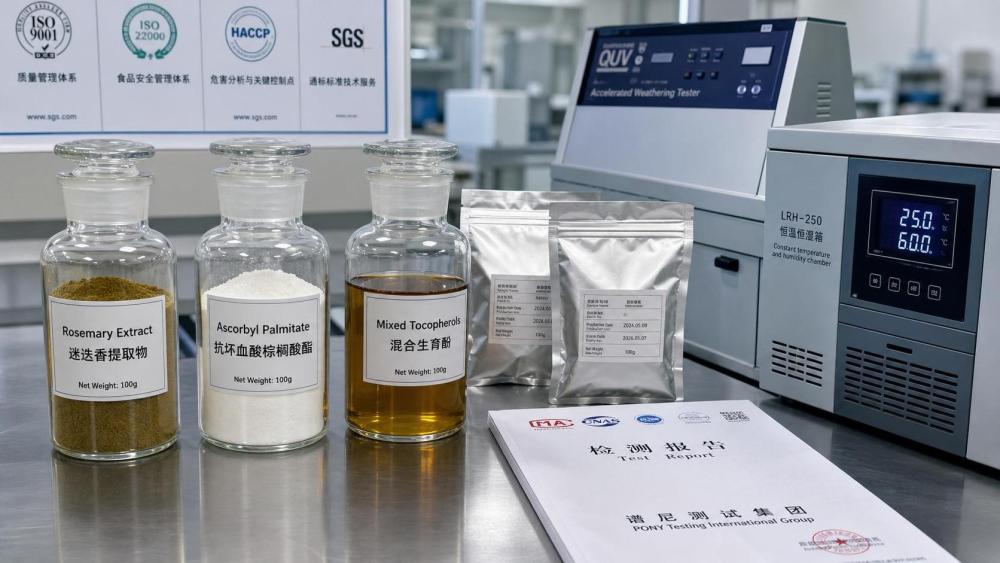
According to the information provided, rosemary extract (E392), ascorbyl palmitate (E304), and mixed tocopherols (E306) have been added to Annex III Part A under Regulation (EC) No 1333/2008. The update also requires new validation of thermal and UV stability when shelf-life claims are made. The same information indicates that exporters of natural food preservatives serving EU markets will need reformulation documentation and third-party laboratory reports before customs clearance.
Where the immediate pressure may appear
Export shipments face a tighter documentation threshold
From an industry perspective, exporters are the most directly exposed group because the change is linked to customs clearance. The practical impact is likely to center on shipment readiness, product files, and whether supporting materials are complete before goods move into the EU market.
Procurement and formulation teams may need to recheck specifications
Analysis shows that companies buying or using these antioxidants may need to review whether current formulation records and technical specifications are aligned with the new stability validation requirement. The pressure point is not only ingredient selection, but also how shelf-life support is documented for EU-bound business.
Third-party testing and compliance service providers may become more involved
Observably, the requirement for third-party laboratory reports means external testing and compliance support could become a more visible part of the transaction process. The impact is likely to show up in report preparation, validation timing, and coordination between suppliers and import-facing teams.
What companies should watch now
Check whether current shelf-life support is still usable
What deserves closer attention is whether existing shelf-life claims for products involving E392, E304, or E306 are backed by the kind of thermal and UV stability validation now required. Where that support is incomplete, businesses may need to prepare updated evidence before shipment.
Prepare reformulation files before customs becomes the bottleneck
The provided information specifically points to reformulation documentation as part of the new compliance burden. For companies already supplying EU customers, the operational issue is whether technical files are organized early enough to avoid delays at clearance.
Reconfirm supplier and lab coordination
Analysis shows that supplier communication now matters not only for ingredient availability, but also for the quality and timing of compliance documents. Companies should pay attention to whether upstream partners can provide the necessary records and whether third-party lab reporting can fit delivery schedules.
Separate the rule change from commercial assumptions
It is more appropriate to understand this as a compliance and evidence requirement first, rather than a confirmed market outcome. Businesses should avoid assuming the same level of disruption across all products until actual implementation details and transaction practice become clearer in day-to-day trade.
Why this matters beyond a single filing update
Observably, this is not just an administrative adjustment to an annex entry. The linkage between ingredient listing, shelf-life claims, and validation evidence points to a more documentation-driven compliance environment for natural food preservatives entering the EU. At the same time, based on the limited confirmed facts provided here, it should still be treated as a development that requires close follow-up rather than a basis for broad conclusions about the full market impact.
How to read the signal at this stage
At this stage, the update is best understood as an immediate operational change with possible longer-term implications for how natural antioxidant products are documented for EU trade. The confirmed result is clear: certain exporters will face new evidence requirements tied to customs clearance. The broader commercial effect, however, still needs to be observed through implementation, customer requests, and follow-on regulatory clarification if any appears.
Basis of this article
This article is based on the user-provided news title, event date, and event summary. For developments of this kind, relevant source types typically include official regulatory notices, company compliance notices, industry association updates, authoritative media reporting, and standards-related documents. A specific official source link was not provided in the input, so the exact publication record should continue to be verified. Follow-up attention should remain on any further official wording, implementation interpretation, and documentation expectations affecting EU customs clearance.
Related News
- How to assess a food antioxidants distributor’s traceability practicesOct 11, 2026Food Preservation Scientist
- How natural antioxidants for oils can prevent rancidity in storageSep 25, 2026Food Preservation Scientist
- How to choose natural antioxidants for beverages with longer shelf lifeAug 23, 2026Food Preservation Scientist
- EU Tightens MRLs for Three Pesticides, Prompting Raw Material Checks for Natural Antioxidant ExportsAug 17, 2026Food Preservation Scientist
Related News
- 00
0000-00
Can biomimetic peptides in cosmetics reduce the look of wrinkles? - 00
0000-00
How to assess a bio-based thickener manufacturer's batch consistency - 00
0000-00
Verifying halal status of hydrocolloid ingredients in the Middle East - 00
0000-00
How to interpret active matter on a surfactant specification sheet - 00
0000-00
How Do You Test Hydrocolloid Viscosity After Changing a Thickener?
Food Preservation Scientist
Weekly Insights
Stay ahead with our curated technology reports delivered every Monday.