





From August 12, 2026, the EU has formally enforced Regulation (EU) 2026/147, tightening the maximum residue limits for flumioxazin, pydiflumetofen, and fluopyram in mainstream foods such as apples, almonds, and grapefruit to 0.01 mg/kg, while setting tea and cumin at 0.05 mg/kg. According to the information provided for this article, these limits are aligned with the limit of detection, which raises the compliance threshold for exporters whose products may carry trace residues from upstream agricultural inputs.
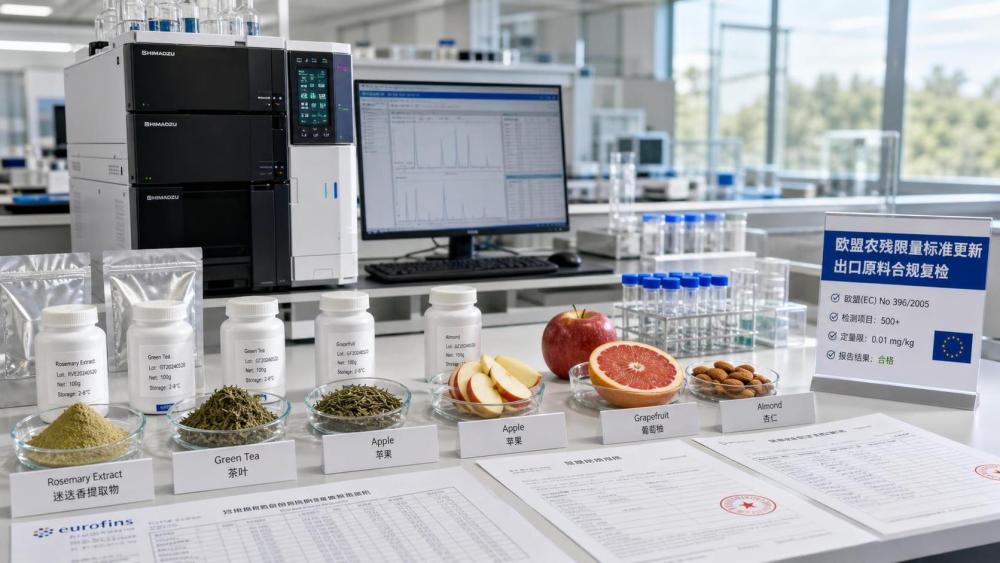
The immediate relevance for the natural antioxidant supply chain is clear. Suppliers exporting products such as rosemary extract, tea polyphenols, and vitamin E derivatives to the EU are being pushed to recheck whether pesticide control systems at the raw material cultivation stage are robust enough. Even where the finished ingredient is not directly treated, trace residues introduced through fruit, vegetable, or botanical raw materials could create clearance risk if the final product falls within the scope of residue scrutiny.
Why this matters for exporters now
The pressure point is not only the tighter numerical threshold, but also the gap between the EU requirement and the currently referenced domestic standard, GB 2763—2026, which, based on the provided information, does not yet specify residue limits for these three pesticides. That does not automatically imply non-compliance in domestic production, but it does mean exporters cannot rely on domestic benchmark coverage alone when assessing shipment readiness for the EU market.
For companies supplying natural antioxidants, the operational issue may shift upstream very quickly. The main risk is that pesticides used in preservation of fruits and vegetables or during cultivation of plant-derived raw materials could remain at very low levels and still trigger an EU Rapid Alert System for Food and Feed notification or customs rejection. In practice, that makes raw material sourcing, grower management, and residue testing protocols more important than a simple end-product review.
What the market is likely to watch
In the short term, the market may focus less on broad demand changes and more on documentation quality and supply-chain traceability. Export-oriented suppliers will likely need to verify whether their existing testing items, supplier declarations, and cultivation management records are sufficient for the stricter EU residue framework. Where controls are incomplete, the first signs of impact may appear in longer pre-shipment review cycles, added testing costs, or more cautious procurement from overseas buyers.
Another point worth watching is whether buyers begin asking for tighter evidence around raw material compliance rather than relying mainly on finished product specifications. For plant-based extracts and antioxidant ingredients, this could gradually shift commercial discussions toward field-level management and residue prevention, especially for products linked to fruit, tea, herb, or botanical sourcing.
This article is based solely on the title, date, and event summary provided above. For follow-up assessment, market participants should continue tracking official regulatory releases, customs and regulatory updates, public compliance notices, and company-side disclosures related to raw material control and export testing practices.
Related News
- How to assess a food antioxidants distributor’s traceability practicesOct 11, 2026Food Preservation Scientist
- How natural antioxidants for oils can prevent rancidity in storageSep 25, 2026Food Preservation Scientist
- How to choose natural antioxidants for beverages with longer shelf lifeAug 23, 2026Food Preservation Scientist
- EU Tightens MRLs for Three Pesticides, Prompting Raw Material Checks for Natural Antioxidant ExportsAug 17, 2026Food Preservation Scientist
Related News
- 00
0000-00
Can biomimetic peptides in cosmetics reduce the look of wrinkles? - 00
0000-00
How to assess a bio-based thickener manufacturer's batch consistency - 00
0000-00
Verifying halal status of hydrocolloid ingredients in the Middle East - 00
0000-00
How to interpret active matter on a surfactant specification sheet - 00
0000-00
How Do You Test Hydrocolloid Viscosity After Changing a Thickener?
Food Preservation Scientist
Weekly Insights
Stay ahead with our curated technology reports delivered every Monday.