





On June 30, 2026, the U.S. FDA updated its GRAS framework and placed three natural antioxidant ingredients into the exemption list for immediate use in ready-to-eat meat products, plant-based dairy beverages, and functional snacks. For formulators serving the North American market, the change matters because it can shorten pre-launch compliance preparation, while exporters of natural antioxidants, including China-based suppliers, will likely need to respond faster on documentation, delivery, and customer communication.
What the FDA Update Confirms
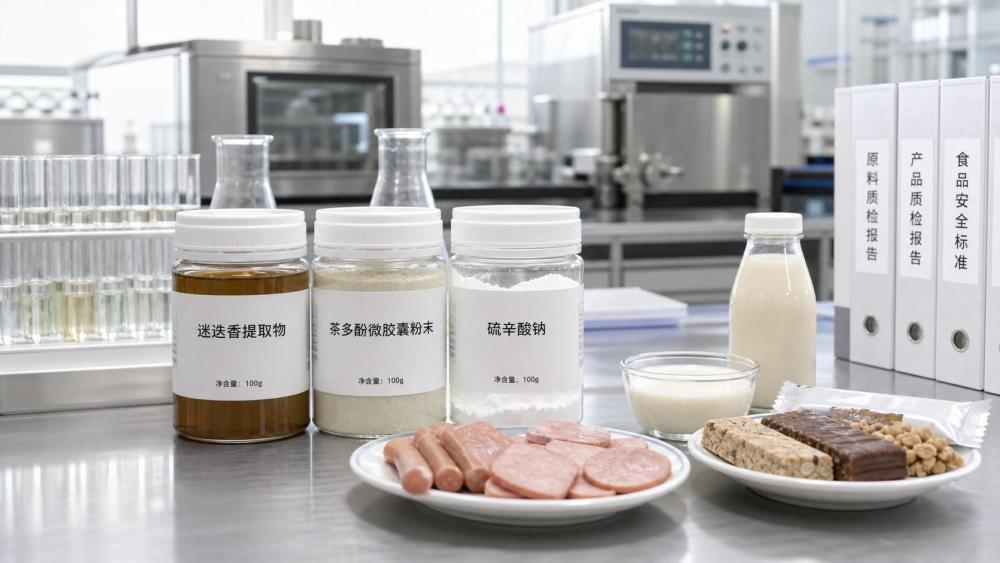
According to the information provided, the FDA on June 30, 2026 added rosemary extract (Rosmarinus officinalis CO2 extract), microencapsulated tea polyphenol preparations, and sodium lipoate to the GRAS exemption list. The update means these ingredients no longer require additional toxicology filing before use in the specified application areas: ready-to-eat meat products, plant-based dairy beverages, and functional snacks.
The same information also indicates that this adjustment can shorten new product launch cycles for North American formulators and create a more responsive commercial environment for Chinese export-oriented suppliers of natural antioxidants.
Where the Immediate Business Effects May Appear
Formulators working on North American launches
From an industry perspective, formulators are among the first groups likely to feel the effect because regulatory preparation is directly tied to launch timing. The main impact is expected in formula selection, approval workflows, and project scheduling for products in the listed categories. What deserves closer attention is whether customers begin moving faster from ingredient screening to commercial evaluation.
Natural antioxidant suppliers serving export demand
Analysis shows that suppliers positioned around rosemary extract, tea polyphenol preparations, and sodium lipoate may see changes in inquiry speed and order coordination. The practical impact is less about abstract policy discussion and more about readiness in specification sheets, application communication, and fulfillment timing. For export-oriented suppliers in China, the immediate issue is how quickly they can match customer requests tied to North American launches.
Manufacturers in ready-to-eat, plant-based, and functional snack categories
Observably, processors and brand-side manufacturing teams in the three named product categories may reassess ingredient options now that the filing burden described in the input has been reduced. The business effect is likely to show up in reformulation planning, product refresh cycles, and supplier comparison. What deserves closer attention is whether internal product teams treat this as a near-term substitution opportunity or as a longer qualification process.
Supply chain and service partners around compliance delivery
Service providers involved in documentation, sourcing coordination, and cross-border delivery may also be affected because a shorter market-entry path tends to shift pressure toward execution. The key business links here are document turnaround, sample handling, order coordination, and timing alignment between suppliers and downstream customers.
What Companies Should Watch Now
Track the exact scope of application language
Analysis shows that the commercial value of this update depends on how companies interpret and apply the listed use scenarios. Businesses should focus on the stated categories in the provided information rather than extending the policy signal beyond ready-to-eat meat products, plant-based dairy beverages, and functional snacks.
Separate regulatory signal from commercial readiness
What deserves closer attention is the distinction between being allowed to use an ingredient without additional toxicology filing and being operationally ready to supply it. Customer acceptance, internal qualification, and specification matching remain execution issues even when the regulatory step becomes simpler.
Prepare documents and communication for faster customer response
For suppliers and traders, the immediate practical issue is response speed. That includes product specifications, application-related explanations, supply planning, and customer-facing communication materials tied to the three named ingredients. In this case, policy movement may compress the time customers allow for quotation and sample coordination.
Review delivery timelines against possible demand shifts
Observably, if formulators shorten launch cycles, suppliers may face more time-sensitive requests. Companies should therefore pay attention to delivery planning, order coordination, and contingency preparation, especially where export execution and customer approval windows need to stay aligned.
How This Update Is Best Interpreted
Analysis shows that this development should be read first as a concrete regulatory simplification for specific antioxidant ingredients and product categories, not as a blanket change across all natural preservation solutions. It is more appropriate to understand this as both a short-term operational change for project timing and a broader signal that regulatory usability can quickly alter ingredient adoption priorities.
At the same time, this remains a development that merits continued observation. The input confirms the FDA action and its immediate commercial relevance, but the pace and scale of downstream adoption will still depend on how formulators, manufacturers, and suppliers act on it in real business settings.
A Practical Reading for the Market
The most immediate significance of the June 30 update is that three named natural antioxidants now sit in a more usable regulatory position for certain North American food applications. For industry participants, the key takeaway is not to overstate the event, but to recognize where it can affect launch timing, ingredient choice, and supplier responsiveness. At this stage, it is more appropriate to understand the news as a targeted operational signal with clear commercial implications, while keeping an eye on how quickly it converts into actual procurement and formulation activity.
Basis of This Article
This article is based on the user-provided news title, event date, and event summary. The factual core used here is limited to the reported FDA GRAS list update on June 30, 2026, the three named antioxidant ingredients, the stated application categories, and the stated implication for North American launch timing and China-based export suppliers.
For this type of industry update, relevant source types usually include official announcements, company statements, industry association information, authoritative media coverage, and standards-related documents. No specific official source link was provided in the input, so the exact official link remains to be verified on an ongoing basis. Continued attention should be paid to any later official wording, implementation interpretation, and follow-on market response related to the listed ingredients and application areas.
Related News
- How to assess a food antioxidants distributor’s traceability practicesOct 11, 2026Food Preservation Scientist
- How natural antioxidants for oils can prevent rancidity in storageSep 25, 2026Food Preservation Scientist
- How to choose natural antioxidants for beverages with longer shelf lifeAug 23, 2026Food Preservation Scientist
- EU Tightens MRLs for Three Pesticides, Prompting Raw Material Checks for Natural Antioxidant ExportsAug 17, 2026Food Preservation Scientist
Related News
- 00
0000-00
Verifying halal status of hydrocolloid ingredients in the Middle East - 00
0000-00
How to interpret active matter on a surfactant specification sheet - 00
0000-00
What Quality Checks Should You Run on Fragrance Ingredient Suppliers? - 00
0000-00
How to assess a flavor chemistry manufacturer's batch consistency - 00
0000-00
What drives fragrance ingredients price changes in bulk orders?
Food Preservation Scientist
Weekly Insights
Stay ahead with our curated technology reports delivered every Monday.