





Clean-label reformulation rarely succeeds by simply removing additives. Taste, aroma, texture, color, and shelf stability are all tied to molecular behavior. That is why molecular sensory analysis in food science has become a practical discipline rather than a laboratory luxury.
By connecting ingredient structure with human perception, teams can reduce formula complexity without creating bland flavor, weak mouthfeel, or unstable products. In fast-moving FMCG categories, that link matters as much as cost control and regulatory compliance.
For intelligence platforms such as FFAI, this topic sits at the intersection of preservation, thickeners, pigments, flavors, and safety. Cleaner formulas are no longer judged by what is removed alone, but by whether the full sensory experience still feels complete.
Why cleaner formulas depend on molecular-level understanding
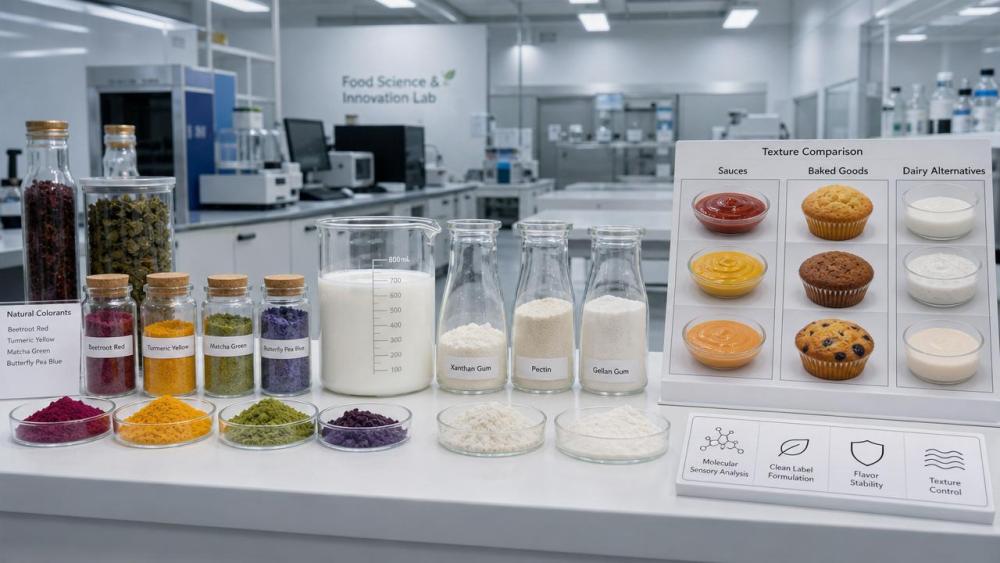
A clean label can look simple on pack while hiding a difficult technical balance. When one preservative, emulsifier, flavor booster, or thickener is reduced, several sensory signals often shift at once.
Molecular sensory analysis in food science studies those shifts from the bottom up. It looks at how volatile compounds reach the nose, how hydrocolloids alter flow, and how antioxidants protect both flavor and appearance.
This matters because consumers do not evaluate ingredients in isolation. They judge freshness, creaminess, naturalness, sweetness, and aftertaste as a combined experience. A cleaner formula fails if that experience becomes noticeably weaker.
In practical terms, the method helps explain why two formulas with similar labels can perform very differently on shelf and in use. One may taste brighter, pour better, or keep its aroma longer because molecular interactions were better controlled.
What molecular sensory analysis in food science actually examines
The discipline combines analytical chemistry, sensory evaluation, process knowledge, and application testing. It does not stop at identifying ingredients. It asks how molecules behave during heating, storage, mixing, and consumption.
Several dimensions usually shape the analysis:
- Aroma release, including top notes lost during baking, retorting, or high-shear processing.
- Taste modulation, such as bitterness masking or sweetness enhancement after additive reduction.
- Texture behavior, especially viscosity, creaminess, suspension, and breakdown under temperature stress.
- Oxidative stability, which affects rancidity, color fading, and flavor dullness over time.
- Ingredient compatibility, including interactions between preservatives, pigments, proteins, acids, and gums.
This explains why the subject is relevant beyond food alone. The same sensory logic appears across fragrance, active ingredients, and cleansing systems, where molecular structure shapes user perception and product acceptance.
Why the industry is paying closer attention now
Three pressures are pushing molecular sensory analysis in food science into daily formulation work. The first is label simplification. The second is global compliance. The third is the rising cost of trial-and-error reformulation.
When brands remove synthetic-sounding ingredients, they often replace them with natural pigments, essential oil extracts, fermentation-derived compounds, or multifunctional hydrocolloids. Those substitutions sound attractive, but they can change processing tolerance and sensory output.
Preservation is a good example. Food-grade antioxidants and preservatives are not only shelf-life tools. They also protect flavor identity. A formula may appear cleaner after reduction, yet lose freshness quickly if oxidation is not managed.
Texture creates another challenge. Small changes in xanthan gum, pectin, starches, or other thickeners can shift mouthfeel from silky to sticky. In dairy alternatives, sauces, and desserts, that difference is often decisive.
Platforms like FFAI are valuable here because they connect compliance, molecular science, and market reasoning. That broader view helps teams avoid reformulating only for label optics while missing sensory or export risks.
Where cleaner-formula decisions usually become difficult
The hardest decisions rarely happen in theory. They happen when a formula must survive real manufacturing conditions and still meet sensory expectations at launch.
In each case, molecular sensory analysis in food science turns vague complaints into testable variables. Instead of saying a formula feels less premium, teams can investigate why aroma release weakened or why viscosity collapses after storage.
How to apply the approach in day-to-day formulation work
A useful starting point is to define the non-negotiable sensory targets before reducing ingredients. That includes first aroma impression, peak taste, mouth-coating effect, visual freshness, and end-of-shelf performance.
After that, compare formula components by function rather than by label category alone. One ingredient may contribute preservation, flavor protection, and texture support at the same time. Removing it can create hidden gaps.
A practical sequence for evaluation
- Map the molecular role of each key ingredient before changing the formula.
- Test under real process conditions, not only bench-top conditions.
- Track both instrumental data and trained sensory panel feedback.
- Review regional compliance limits and clean-label claims together.
- Recheck cost after stability and sensory corrections, not before.
This sequence reduces a common mistake: replacing one ingredient for declaration reasons, then adding several more to recover lost performance. Cleaner formulas should become simpler in effect, not only simpler in appearance.
What deserves closer judgment before scale-up
Not every clean-label move improves the product. Some changes raise instability, increase waste, or create batch variation that is hard to control. Molecular sensory analysis in food science helps filter these risks earlier.
A few checkpoints usually deserve extra attention:
- Heat resilience of antioxidants, flavors, and natural color systems.
- Interactions between acids, salts, proteins, and rheology modifiers.
- Sensory drift during transport, long storage, and repeated temperature changes.
- Differences between immediate sensory impact and end-of-shelf acceptance.
- Whether a premium ingredient delivers measurable sensory return.
This is also where cross-category intelligence becomes useful. Lessons from fragrance encapsulation, active delivery, or surfactant behavior often sharpen food formulation thinking because all depend on molecular release and perception.
A clearer next step for cleaner formulation strategy
The strongest cleaner formulas are built with evidence, not assumption. Molecular sensory analysis in food science offers that evidence by showing how ingredients behave, how perception changes, and where compromise is acceptable.
A sensible next step is to review one existing formula through a sensory-molecular lens. Identify which ingredients protect flavor, which build mouthfeel, which support stability, and which only remain by habit.
From there, compare reformulation options against real process, shelf-life, and compliance conditions. That approach creates a cleaner label with stronger technical confidence, which is often the difference between a promising concept and a dependable commercial formula.
Related News
- How to assess a food antioxidants distributor’s traceability practicesOct 11, 2026Food Preservation Scientist
- How natural antioxidants for oils can prevent rancidity in storageSep 25, 2026Food Preservation Scientist
- How to choose natural antioxidants for beverages with longer shelf lifeAug 23, 2026Food Preservation Scientist
- EU Tightens MRLs for Three Pesticides, Prompting Raw Material Checks for Natural Antioxidant ExportsAug 17, 2026Food Preservation Scientist
Related News
- 00
0000-00
Can biomimetic peptides in cosmetics reduce the look of wrinkles? - 00
0000-00
How to assess a bio-based thickener manufacturer's batch consistency - 00
0000-00
Verifying halal status of hydrocolloid ingredients in the Middle East - 00
0000-00
How to interpret active matter on a surfactant specification sheet - 00
0000-00
How Do You Test Hydrocolloid Viscosity After Changing a Thickener?
Food Preservation Scientist
Weekly Insights
Stay ahead with our curated technology reports delivered every Monday.