





Natural Flavor Enhancers Supplier: What to Check Before Comparing Quotes
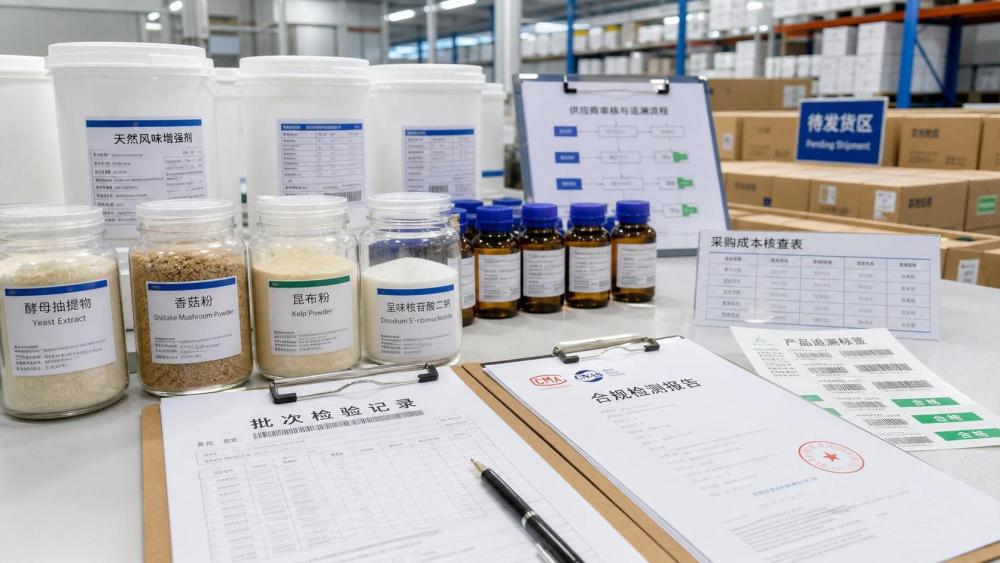
Choosing a natural flavor enhancers supplier is no longer just about price per kilogram.
The first quote may look competitive, yet hidden variables often decide the real procurement outcome.
A lower unit cost can quickly lose value when traceability is weak, documentation is slow, or supply becomes unstable.
That is why early supplier screening should focus on full landed cost, compliance readiness, and risk exposure.
In practical sourcing, natural flavor enhancers supplier selection affects product consistency, claim credibility, and margin protection at the same time.
For buyers working across food, beverage, nutraceutical, or sensory-led FMCG lines, this evaluation has become more technical.
More suppliers now promote clean label positioning, but not all of them support that claim with strong sourcing systems.
A reliable natural flavor enhancers supplier should explain where raw materials come from, how batches are standardized, and what may disrupt continuity.
From a business case perspective, those details matter before any negotiation on price or volume commitments starts.
Start With the Real Cost Structure
A natural flavor enhancers supplier may offer an attractive base price, but that number rarely reflects total cost.
The better question is simple: what does the ingredient cost once it reaches production use without quality compromise?
Total cost usually includes freight, duties, quality testing, reformulation risk, inventory buffers, and yield performance in the application.
This becomes even more important when flavor enhancers vary in potency, solubility, or heat stability.
A cheaper ingredient with inconsistent sensory impact may force a higher dosage rate.
At that point, the lower quote no longer delivers a better formulation cost.
When screening a natural flavor enhancers supplier, ask for a cost view across these factors:
- dosage efficiency in target applications
- batch-to-batch variation and correction costs
- minimum order quantity and warehouse pressure
- lead time volatility and emergency shipment exposure
- documentation support during audits or product registration
A capable supplier should discuss application economics, not just invoice pricing.
That is usually the first sign that the relationship can support long-term procurement planning.
Traceability Is Now a Commercial Requirement
Traceability used to be treated as a quality function.
Now it directly affects customer trust, recall management, and market access.
For any natural flavor enhancers supplier, traceability should be visible from source material to finished batch release.
That includes origin records, processing flow, blending controls, and retained sample procedures.
In recent years, this has become more important because clean label claims invite closer scrutiny from regulators and brand owners.
A natural flavor enhancers supplier should be able to answer practical questions quickly:
- What is the botanical or fermentation origin?
- Which intermediates are outsourced?
- How are allergens or cross-contact risks controlled?
- Can the batch be traced back within hours during an incident?
- Are country-of-origin shifts reported before shipment?
If answers remain vague, future risk is already visible.
This is where intelligence-led evaluation becomes useful.
Platforms like FFAI help buyers connect ingredient narratives with technical and regulatory evidence, rather than relying on brochure language.
Regulatory Readiness Should Be Verified Early
Another common mistake is checking compliance after commercial discussions move too far.
That often creates delays, relabeling work, or sudden supplier replacement.
A natural flavor enhancers supplier should provide a clear documentation package for the target market.
Depending on product use, this may include specification sheets, COA formats, allergen statements, non-GMO status, residual solvent data, and relevant declarations.
For cross-border trade, regulatory timing matters almost as much as regulatory content.
In actual business, document turnaround speed often separates operational suppliers from purely sales-driven ones.
Use a simple qualification table during supplier comparison:
If a natural flavor enhancers supplier struggles with this stage, scale-up risk is already high.
Map Supply Risks Before They Hit Production
Supply disruption is no longer a rare exception.
Weather events, crop shifts, freight bottlenecks, energy costs, and policy changes can all affect availability.
For a natural flavor enhancers supplier, risk mapping should cover both upstream materials and downstream logistics.
The stronger suppliers usually speak openly about seasonality, alternate origins, and inventory strategy.
That transparency matters more than overly confident promises.
A practical review should include these supply questions:
- Is the ingredient dependent on one harvest region?
- Does the supplier rely on one critical extraction partner?
- Are safety stocks positioned near target markets?
- How often have lead times changed in the last year?
- What triggers force majeure or allocation controls?
From a sourcing perspective, supply risk and price risk are tightly connected.
A natural flavor enhancers supplier with unstable access may offer a low entry quote, then pass volatility back through surcharges or limited fulfillment.
That is why forward visibility matters more than short-term discounting.
Look Beyond Sales Claims and Test Operational Fit
Supplier evaluation becomes stronger when commercial claims are tested against actual operating behavior.
A natural flavor enhancers supplier may present a polished profile, yet execution quality shows up in smaller interactions.
Notice how samples are labeled, how technical teams answer formulation questions, and how deviations are explained.
These details reveal process maturity better than marketing language does.
In many sourcing projects, the best natural flavor enhancers supplier is not the cheapest or the largest.
It is the one that combines consistent sensory performance with transparent risk communication.
During final comparison, score suppliers on operational fit:
- sample-to-bulk consistency
- speed of corrective action
- forecast collaboration quality
- change notification discipline
- commercial flexibility under demand swings
This kind of scoring keeps procurement decisions grounded in long-term performance, not just quote comparison.
A Smarter Shortlist Starts With Better Questions
The market for natural sensory ingredients keeps expanding, but so does evaluation complexity.
That is why selecting a natural flavor enhancers supplier should begin with structured questions, not fast quote ranking.
Cost transparency, traceability depth, regulatory readiness, and supply resilience are the first filters that matter.
Once those areas are validated, pricing discussions become much more meaningful.
In real procurement work, this approach reduces requalification cycles, protects margins, and supports more stable launches.
For teams monitoring ingredient markets through FFAI, the advantage is clearer context around technical claims, compliance signals, and sourcing shifts.
That context helps turn supplier selection into a disciplined commercial decision.
Before the next RFQ moves forward, review each natural flavor enhancers supplier against these four fundamentals first.
That sequence usually delivers a better shortlist, stronger negotiation leverage, and fewer surprises after approval.
Related News
- How to assess a food antioxidants distributor’s traceability practicesOct 11, 2026Food Preservation Scientist
- How natural antioxidants for oils can prevent rancidity in storageSep 25, 2026Food Preservation Scientist
- How to choose natural antioxidants for beverages with longer shelf lifeAug 23, 2026Food Preservation Scientist
- EU Tightens MRLs for Three Pesticides, Prompting Raw Material Checks for Natural Antioxidant ExportsAug 17, 2026Food Preservation Scientist
Related News
- 00
0000-00
What drives fragrance ingredients price changes in bulk orders? - 00
0000-00
How to assess a food antioxidants distributor’s traceability practices - 00
0000-00
How minimum order quantities shape private label ingredient sourcing costs - 00
0000-00
What drives personal care ingredient price volatility in sourcing - 00
0000-00
What drives micelles price differences in cosmetic formulations?
Food Preservation Scientist
Weekly Insights
Stay ahead with our curated technology reports delivered every Monday.