





Sensory Analytics for Dairy Products: Key Metrics for Shelf-Life and Flavor Consistency
For quality control and safety teams, sensory analytics for dairy products has moved from a nice-to-have tool to a core control point.
It helps detect flavor drift, texture decline, oxidation, and storage-related defects before consumers notice them.
That matters even more in today’s dairy market, where clean labels, longer distribution routes, and tighter compliance demands often pull in different directions.
The practical value of sensory analytics for dairy products is simple.
It turns subjective eating and smelling experiences into structured, repeatable data that supports shelf-life decisions and flavor consistency.
Why sensory analytics matters in modern dairy control
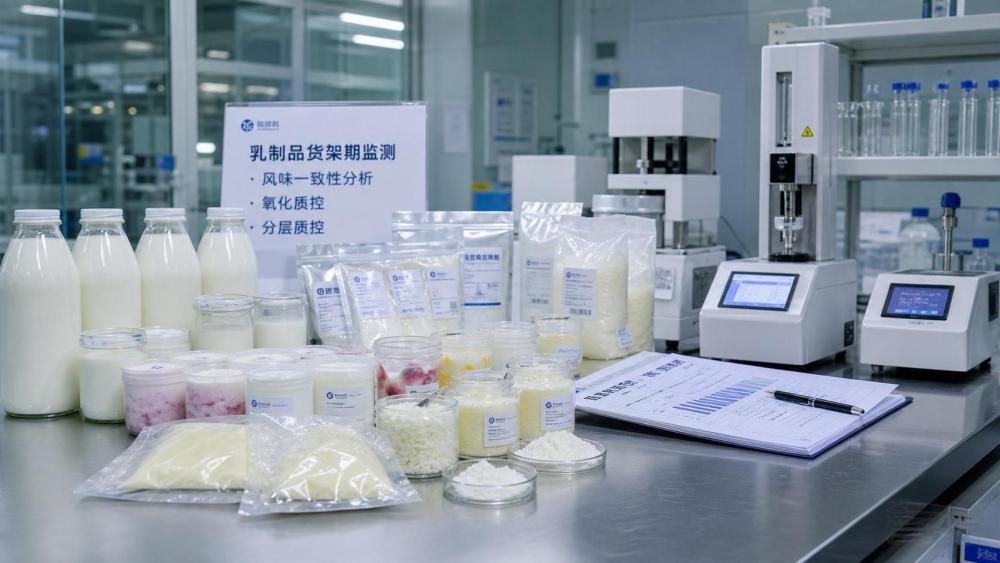
Dairy products are highly sensitive systems.
Small changes in fat oxidation, protein stability, fermentation activity, or packaging oxygen transfer can alter sensory quality fast.
A yogurt may still pass microbiological limits, yet already show sourness imbalance or whey separation.
A milk powder may remain safe, while delivering stale, cardboard-like notes that weaken brand trust.
This is where sensory analytics for dairy products becomes a risk management tool, not just a product development exercise.
It helps connect what consumers perceive with what production, storage, and packaging systems are actually doing.
- Early warning for oxidation, rancidity, cooked notes, and light-induced defects
- Better control of texture breakdown, sedimentation, syneresis, and mouthfeel loss
- Stronger batch-to-batch flavor consistency across plants and suppliers
- More defensible shelf-life validation for audits, claims, and customer reviews
The core sensory metrics that deserve close tracking
The most effective sensory analytics for dairy products starts with a focused metric set.
Too many attributes create noise.
Too few leave blind spots.
1. Aroma integrity
Aroma is usually the earliest sensory signal to move.
Track fresh dairy notes, creamy character, cultured notes, sweetness perception, and off-notes such as oxidized, sulfurous, barny, metallic, or feed-like tones.
In UHT milk and milk powders, cardboard and painty notes often point to lipid oxidation.
In fermented dairy, excessive acidic sharpness may signal culture imbalance or post-acidification.
2. Flavor balance
Flavor balance is broader than off-flavor screening.
It measures how sweetness, acidity, saltiness, dairy richness, and lingering aftertaste work together.
This is especially useful for flavored milk, yogurt, cheese spreads, and protein-fortified dairy drinks.
A stable formula can still fail if one note becomes dominant during storage.
3. Texture and mouthfeel
Texture metrics should reflect how the product is actually consumed.
Useful descriptors include creaminess, thickness, smoothness, graininess, chalkiness, adhesiveness, and astringency.
For yogurt, syneresis and spoonability matter.
For ice cream mixes, meltdown perception and body are critical.
For high-protein beverages, dryness and sediment sensation often decide repeat purchase.
4. Visual quality
Visual cues shape acceptance before tasting begins.
Track color uniformity, opacity, whey-off, surface defects, clumping, and phase separation.
These markers often align with stability issues that later become flavor or texture complaints.
How to connect sensory data with shelf-life decisions
Shelf-life is not only about safety limits.
In real commercial terms, it is the period during which the product remains acceptable, consistent, and on-brand.
That is why sensory analytics for dairy products should be linked with instrumental and environmental data.
This combined view makes shelf-life studies more useful.
Instead of asking only whether a product survives until expiry, teams can ask when a specific sensory threshold begins to fail.
That shift supports better release criteria and less waste.
Building a practical sensory analytics workflow
A strong workflow does not need to be overly complex.
What matters is repeatability, calibration, and clear decision rules.
- Define product-specific attributes using a short, consistent sensory lexicon.
- Set anchor references for fresh, aged, borderline, and failed samples.
- Align sensory scoring with pH, viscosity, color, oxidation, and packaging data.
- Test across real storage conditions, not only ideal lab settings.
- Create action thresholds tied to release, hold, rework, or investigation decisions.
In practice, the most reliable sensory analytics for dairy products uses both trained panels and simplified routine screening.
The trained panel builds the model.
Routine teams then use targeted checks to monitor known risks faster.
Common failure patterns and what they usually mean
Recent production reviews often show the same pattern.
Sensory defects appear before teams fully connect them to root causes.
- Flat flavor: often linked to aroma loss, low-impact flavor systems, or poor flavor retention in protein-rich matrices.
- Painty or cardboard notes: commonly tied to fat oxidation, light exposure, or oxygen pickup during filling.
- Excess sourness: usually connected to post-acidification, culture carryover, or temperature abuse in storage.
- Grainy texture: may indicate protein instability, heat stress, or poor hydration of dry ingredients.
- Visible separation: often reflects weak emulsification, low stabilizer efficiency, or transport stress.
These patterns show why sensory analytics for dairy products should sit close to formulation, packaging, and cold-chain review.
When teams isolate sensory work from process data, response time slows down.
Using sensory analytics to strengthen compliance and brand protection
Sensory programs also support compliance in a practical way.
They help justify shelf-life labels, supplier decisions, and storage instructions with clearer evidence.
That matters when customer complaints, audits, or market withdrawals put product quality under scrutiny.
For intelligence-led teams, sensory analytics for dairy products also creates a stronger bridge between technical risk and commercial impact.
A one-point drift in oxidized note intensity may look minor in a lab report.
In market reality, it can mean lower repurchase, retailer claims, and avoidable write-offs.
Where to start next
The best next step is not building a huge sensory system overnight.
Start with one category, one storage study, and five to eight attributes that truly drive complaints or shelf-life loss.
Then connect those results with oxidation markers, pH movement, texture data, and packaging performance.
That is usually where sensory analytics for dairy products begins to deliver measurable value.
It improves shelf-life confidence, protects flavor consistency, and gives faster signals when dairy quality starts to move in the wrong direction.
For teams balancing quality, safety, and brand expectations, that kind of early visibility is no longer optional.
Related News
- How to assess a food antioxidants distributor’s traceability practicesOct 11, 2026Food Preservation Scientist
- How natural antioxidants for oils can prevent rancidity in storageSep 25, 2026Food Preservation Scientist
- How to choose natural antioxidants for beverages with longer shelf lifeAug 23, 2026Food Preservation Scientist
- EU Tightens MRLs for Three Pesticides, Prompting Raw Material Checks for Natural Antioxidant ExportsAug 17, 2026Food Preservation Scientist
Related News
- 00
0000-00
Can biomimetic peptides in cosmetics reduce the look of wrinkles? - 00
0000-00
How to assess a bio-based thickener manufacturer's batch consistency - 00
0000-00
Verifying halal status of hydrocolloid ingredients in the Middle East - 00
0000-00
How to interpret active matter on a surfactant specification sheet - 00
0000-00
How Do You Test Hydrocolloid Viscosity After Changing a Thickener?
Food Preservation Scientist
Weekly Insights
Stay ahead with our curated technology reports delivered every Monday.