





For technical evaluators, bioactive peptides are no longer just attractive label claims—they are measurable performance assets that must prove identity, stability, bioavailability, and mechanism-linked efficacy. Whether used in anti-aging cosmetics, functional foods, or nutraceutical systems, the real question is not simply which peptide is present, but whether it survives processing, reaches the target site, and delivers reproducible biological activity. This guide highlights the key efficacy markers to check before selecting, validating, or commercializing peptide-based ingredients.
Why Bioactive Peptides Require Evidence Beyond the Ingredient Name
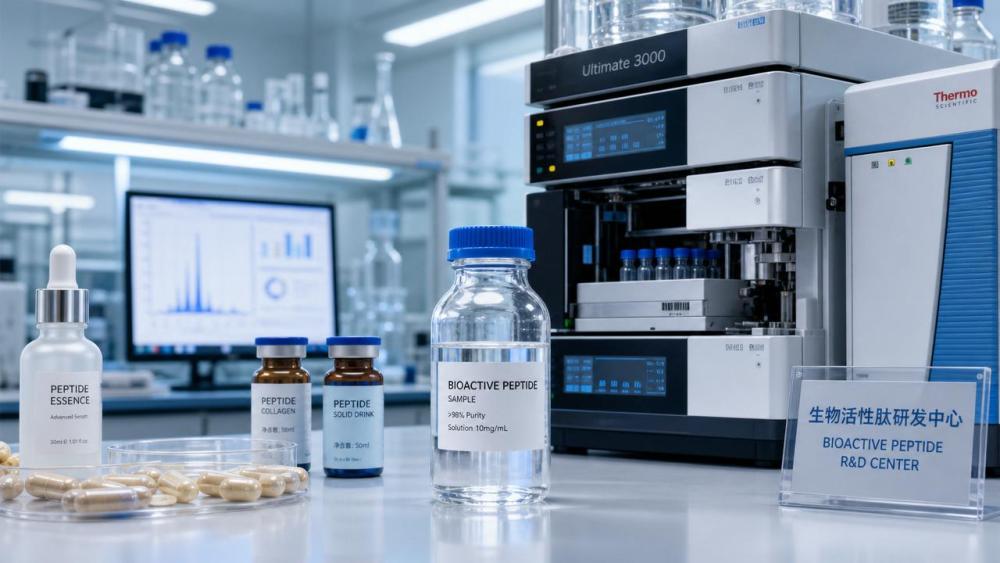
Bioactive peptides are short amino acid sequences designed or selected to interact with biological pathways. Their value depends on sequence, purity, conformation, delivery environment, and verified activity.
In food, fragrance, cosmetics, and health-oriented FMCG development, evaluators must connect molecular data with processing reality. A peptide that performs in a vial may fail in a cream, beverage, capsule, or heated matrix.
FFAI approaches bioactive peptides as performance markers within complete formulation systems. The same peptide may behave differently near preservatives, antioxidants, thickeners, surfactants, essential oils, or acidic flavor bases.
- Technical identity must be confirmed by sequence-specific analytical methods, not only by supplier naming or marketing description.
- Efficacy should be linked to a plausible mechanism, such as collagen signaling, antioxidant defense, enzyme inhibition, barrier repair, or anti-inflammatory modulation.
- Application suitability must be checked under real process conditions, including heat, pH, shear, oxygen exposure, storage, and packaging compatibility.
For technical evaluators, the central task is risk reduction. Before procurement, bioactive peptides should be screened as molecular actives, formulation components, and commercial claims support tools.
Which Efficacy Markers Should Technical Evaluators Check First?
A practical evaluation starts with markers that indicate whether bioactive peptides are authentic, stable, deliverable, and relevant to the intended claim. These markers also support supplier comparison.
The following table summarizes core checkpoints across cosmetics, functional foods, and nutraceutical applications. It is designed for screening before expensive formulation trials begin.
The table shows why bioactive peptides cannot be judged by concentration alone. A lower-dose peptide with stronger stability and delivery may outperform a higher-dose ingredient with poor matrix survival.
Marker Priority Changes by Application
For anti-aging cosmetics, penetration, irritation potential, preservation compatibility, and claim-relevant biomarkers are decisive. For functional foods, digestion survival, taste impact, and process stability move higher.
Nutraceutical evaluators often focus on dose justification, batch consistency, allergen source, microbial control, and evidence that bioactive peptides remain active after encapsulation or blending.
How to Compare Peptide Sources, Formats, and Delivery Systems
Bioactive peptides may be chemically synthesized, enzymatically hydrolyzed from proteins, fermented, or produced by recombinant routes. Each source has different cost, purity, regulatory, and sensory implications.
The right format is rarely universal. A cosmetic serum, a protein beverage, and a capsule require different peptide specifications, carriers, and supporting evidence packages.
A comparison table prevents teams from buying bioactive peptides based only on trend language. It forces discussion around claim strength, sensory burden, compliance route, and total formulation cost.
Where FFAI Adds Cross-Category Judgment
FFAI’s ingredient intelligence connects peptide science with preservatives, rheology modifiers, aroma systems, cosmetic actives, and surfactants. This is important because peptides rarely work alone.
For example, a peptide serum may need humectants, mild surfactants, fragrance allergens review, and preservation stress testing. A peptide drink may need bitterness control and antioxidant protection.
What Stability Tests Reveal Before Scale-Up
Stability is often the point where promising bioactive peptides fail. Deamidation, oxidation, hydrolysis, aggregation, and interaction with metal ions can reduce activity or alter sensory quality.
Technical evaluators should request data under conditions close to actual manufacturing. A cosmetic peptide stable at neutral pH may degrade in an acidic brightening formula.
- Check pH tolerance across the intended product range, especially acidic beverages, exfoliating cosmetics, and preserved emulsions.
- Assess heat exposure during pasteurization, spray drying, baking, hot-fill processing, or emulsion manufacturing.
- Evaluate compatibility with antioxidants, preservatives, chelators, thickeners, surfactants, flavors, pigments, and essential oil extracts.
- Measure peptide recovery after accelerated storage and compare it with biological activity, not only remaining concentration.
Processing Stress Is Not Only a Food Issue
In cosmetics, homogenization, oxygen exposure, high electrolyte systems, and fragrance solubilizers can also stress bioactive peptides. Transdermal delivery claims require particular attention to matrix effects.
FFAI’s molecular evaluation perspective helps teams identify whether performance loss is caused by peptide degradation, poor release, carrier incompatibility, or unrealistic claim design.
How to Link Mechanism, Dose, and Claims Without Overreaching
Bioactive peptides should be evaluated through a claim architecture. The intended message determines the required level of evidence, from supplier assays to human-use supporting data.
A peptide associated with collagen signaling may support different claim language than one tested for antioxidant response, ACE inhibition, moisture retention, or barrier-related markers.
- Define the commercial claim first, such as visible firmness support, post-exercise recovery, skin barrier support, or healthy aging nutrition.
- Map the biological mechanism to measurable biomarkers, including collagen I, elastin, MMP activity, TEWL, inflammatory mediators, or enzyme inhibition.
- Check whether the tested dose matches the finished product dose after manufacturing loss and expected consumer use pattern.
- Review whether evidence was generated in raw material, prototype formula, finished product, or a condition meaningfully similar to your application.
This approach prevents a common error: using evidence from one matrix to justify bioactive peptides in another matrix without checking delivery, exposure, and formulation interactions.
Dose-Response Matters More Than Decorative Inclusion
A trace inclusion may support an ingredient story but not a technical claim. Evaluators should ask whether the dose is functional, economically realistic, and stable over shelf life.
When budgets are limited, selecting fewer bioactive peptides with stronger evidence often beats a long ingredient list that dilutes cost, documentation, and formulation focus.
Procurement Checklist for Bioactive Peptides
Procurement decisions become easier when technical and commercial teams use the same checklist. Bioactive peptides should be screened for evidence depth, supply reliability, compliance fit, and formulation risk.
The following checklist helps technical evaluators turn supplier discussions into actionable comparison points instead of general claims and brochure language.
A strong supplier does not only provide bioactive peptides; it provides evidence that reduces reformulation, claim revision, compliance delay, and failed pilot production.
Compliance and Safety Markers Technical Teams Should Not Skip
Compliance expectations vary by region and product category. Bioactive peptides for cosmetics, foods, and supplements may require different documentation and claim boundaries.
For cosmetics, evaluators often review INCI naming, safety assessments, impurity control, CPNP-related notification needs in Europe, and local cosmetic ingredient restrictions.
For food and nutraceutical systems, questions may involve permitted use, allergen origin, GRAS-related positioning in the United States, novel food considerations, and contaminant specifications.
- Avoid translating cosmetic evidence directly into food claims, because exposure route and regulatory language differ significantly.
- Check residual solvents, microbial limits, heavy metals, endotoxin relevance, and source-related allergens before qualification.
- Confirm whether the peptide is a single sequence, a defined blend, or a hydrolysate with variable molecular weight distribution.
Documentation Quality Is a Commercial Risk Control
Incomplete documents can delay export, claims approval, distributor onboarding, or retailer review. Technical evaluators should treat documentation as part of ingredient performance.
FFAI’s Strategic Intelligence Center emphasizes practical compliance screening before commercial commitment, especially when bioactive peptides enter cross-border FMCG or premium beauty channels.
Common Misconceptions and FAQ About Bioactive Peptides
Many project delays come from unclear assumptions. These FAQ points address questions technical evaluators frequently face during ingredient screening and internal approval.
Are higher-purity bioactive peptides always better?
Higher purity is valuable when a defined sequence drives the claim. However, hydrolysate-based peptides may require standardized activity and molecular weight distribution rather than single-peak purity.
Can supplier cell assay data be used directly for finished product claims?
Not automatically. Supplier data can justify screening, but finished product claims should consider final dose, delivery, stability, consumer use, and the regulatory category of the product.
What makes peptide evaluation difficult in fragranced cosmetics?
Fragrance solubilizers, essential oils, alcohol, preservatives, and emulsifiers may affect peptide solubility or stability. Evaluators should test recovery and activity in the real fragranced base.
Do bioactive peptides create taste challenges in foods?
Some peptides contribute bitterness, astringency, or brothy notes. Taste masking, flavor balancing, sweetener selection, and encapsulation may be needed in drinks, powders, and gummies.
Why Choose FFAI for Peptide Evaluation and Ingredient Decisions
FFAI supports technical evaluators who need more than supplier brochures. We help connect bioactive peptides with formulation behavior, sensory impact, compliance boundaries, and commercial feasibility.
Our intelligence perspective spans food preservation, thickeners, flavors, fragrances, cosmetic actives, and surfactants. That cross-category view is critical when peptides interact with full FMCG systems.
- Consult us to confirm peptide parameters, including purity, molecular weight distribution, solubility, pH tolerance, and stability markers.
- Request support for product selection when comparing synthetic peptides, hydrolysates, encapsulated formats, or recombinant-derived options.
- Discuss delivery timelines, sample support, quotation factors, and documentation needs before committing to pilot or commercial batches.
- Review certification and regulatory requirements for cosmetics, functional foods, nutraceuticals, export channels, and claim-sensitive launches.
If your team is evaluating bioactive peptides for a new formula, reformulation, or supplier switch, FFAI can help structure the evidence review and reduce avoidable development risk.
Contact FFAI to discuss application scenarios, target claims, testing priorities, compliance concerns, sample evaluation, and cost-sensitive alternatives for peptide-based product development.
Related News
- Can biomimetic peptides in cosmetics reduce the look of wrinkles?Oct 17, 2026Cosmeceutical Formulator
- How to assess recombinant collagen ingredients for cream stabilityOct 02, 2026Cosmeceutical Formulator
- How to assess an anti-aging ingredients manufacturer’s batch consistencySep 17, 2026Cosmeceutical Formulator
- How to verify cosmetic peptide delivery compliance before launchAug 30, 2026Cosmeceutical Formulator
Related News
- 00
0000-00
Can biomimetic peptides in cosmetics reduce the look of wrinkles? - 00
0000-00
How to assess a bio-based thickener manufacturer's batch consistency - 00
0000-00
Verifying halal status of hydrocolloid ingredients in the Middle East - 00
0000-00
How to interpret active matter on a surfactant specification sheet - 00
0000-00
How Do You Test Hydrocolloid Viscosity After Changing a Thickener?
Cosmeceutical Formulator
Weekly Insights
Stay ahead with our curated technology reports delivered every Monday.