





Why are bioactive peptides with rapid absorption getting so much attention?
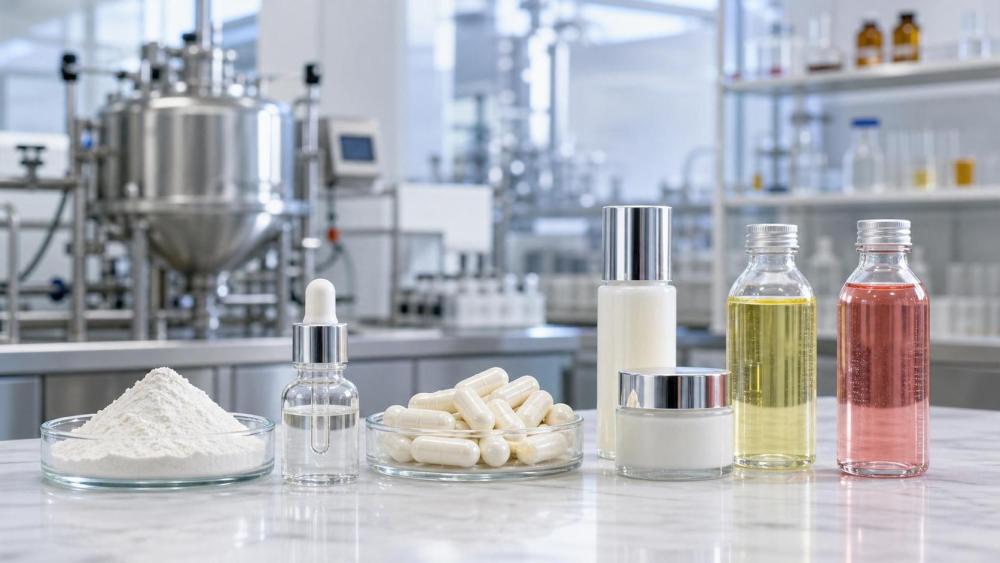
Bioactive peptides with rapid absorption matter because speed changes commercial value, but only when speed leads to visible efficacy.
That is why they attract interest across food, wellness, and cosmetic formulations.
In practical terms, these peptides are short protein fragments designed to act quickly after delivery.
They may support skin appearance, recovery, antioxidant defense, or targeted biological signaling.
The appeal is clear.
A faster-absorbing ingredient can shorten the path between formulation and measurable performance.
Still, absorption alone is not a performance guarantee.
A peptide may enter quickly and still fail because of instability, poor purity, weak compatibility, or the wrong delivery route.
This is especially relevant in the wider FMCG environment followed by FFAI.
Across food preservation, sensory design, and high-end actives, ingredient value depends on how chemistry survives real processing conditions.
That same discipline applies to bioactive peptides with rapid absorption.
A technically elegant peptide must still perform inside a beverage matrix, a capsule system, or a topical base.
So the useful question is not only, “Does it absorb fast?”
A better question is, “What conditions allow fast absorption to become reliable performance?”
What actually affects the performance of bioactive peptides with rapid absorption?
Several factors work together, and weak control in one area can reduce the final result.
Molecular size is usually the first checkpoint.
Smaller peptides often move across biological barriers more easily than larger ones.
But very small fragments can also lose specificity or become more vulnerable to degradation.
Purity is just as important.
If the active fraction is diluted by salts, by-products, or inconsistent hydrolysates, absorption data may look good while efficacy remains uneven.
Sequence matters as well.
Two peptides with similar molecular weight can behave very differently because amino acid order changes solubility, receptor binding, and stability.
The delivery system then becomes the next filter.
In oral use, pH, enzymes, and accompanying excipients affect whether peptides remain intact long enough to be absorbed.
In cosmetics, the challenge shifts toward penetration through the stratum corneum and maintaining activity in emulsions or gels.
Processing conditions can quietly damage performance.
Heat, shear, oxidation, water activity, and metal ions may alter the peptide before the product even reaches the shelf.
This is why FFAI often frames ingredients through a broader formulation lens.
The same logic used to protect antioxidants in baking or preserve fragrance release also helps explain peptide success.
If the matrix is wrong, bioactive peptides with rapid absorption may never show their theoretical advantage.
A quick judgment table for real-world evaluation
When comparing options, it helps to review performance drivers side by side rather than chasing one headline claim.
Do fast-absorbing peptides perform the same in food, supplements, and cosmetics?
Not really, and this is where many misunderstandings begin.
The same ingredient can behave differently depending on its application environment.
In beverages or nutritional products, flavor masking and pH stability may become immediate barriers.
Rapid absorption loses value if bitterness forces a lower dosage or if heat treatment damages the active fraction.
In powdered formats, moisture control and reconstitution behavior often decide whether the peptide remains stable through distribution.
Cosmetic use raises a different set of questions.
Here, the core issue is not digestive survival but skin delivery, formula compatibility, and long-term stability in the package.
A peptide promoted for rapid absorption may still need penetration support, optimized pH, or encapsulation.
That is why anti-aging actives are often evaluated with the same rigor used for transdermal pharmacology.
FFAI’s coverage of high-end cosmetic actives reflects this exact point.
Performance comes from the interaction between molecule and system, not from marketing language alone.
A practical way to think about bioactive peptides with rapid absorption is to match them to the intended route first.
- Oral formats need evidence for gastrointestinal survival and systemic uptake.
- Topical formats need penetration and local efficacy data.
- Hybrid wellness-beauty concepts need both sensory feasibility and regulatory clarity.
When that route fit is ignored, fast absorption becomes a vague promise rather than a useful technical advantage.
Where do operators usually misjudge bioactive peptides with rapid absorption?
The most common mistake is treating rapid absorption as a standalone quality marker.
It sounds decisive, but it rarely tells the whole story.
Another frequent issue is relying on supplier data generated in ideal conditions.
A peptide may look excellent in a clean laboratory buffer and behave very differently in a flavored drink or a complex cream.
Cost is also easy to misread.
A premium peptide is not automatically expensive in use if it works at a lower dose and survives processing better.
On the other hand, a cheaper peptide can become costly if losses force overuse or reformulation.
There is also a compliance dimension.
Claims, route of use, and region-specific rules should be checked early.
This is especially important when moving between food, nutraceutical, and cosmetic categories.
More careful teams usually ask narrower questions.
What is the active peptide fraction?
What processing window has been validated?
What happens after three months of storage?
What sensory or texture compromises appear at the effective dose?
Those questions reveal more than a fast-absorption headline ever could.
A short checklist before moving forward
- Confirm whether the peptide is defined, hydrolyzed, or blended with carriers.
- Ask for application-specific stability, not only raw material data.
- Check whether efficacy studies match the intended dosage and route.
- Review sensory impact, especially in food and beverage systems.
- Track regulatory fit before scale-up or export planning.
How should you compare options when several peptide systems look similar?
Start by separating performance claims into measurable layers.
Absorption is one layer.
Stability is another.
Dose efficiency, sensory fit, cost-in-use, and regulatory flexibility complete the picture.
This comparison becomes more useful when tied to a real product pathway.
For example, a peptide for premium skincare may justify higher cost if it offers cleaner stability and stronger claim support.
A peptide for functional food may need a different balance, with stronger focus on taste, thermal tolerance, and label strategy.
That cross-category thinking reflects the wider FFAI view of ingredient intelligence.
Ingredients do not win only because they are advanced.
They win when chemistry, sensory performance, safety, and cost logic all align.
If you are comparing bioactive peptides with rapid absorption, the most practical next step is to build a narrow decision framework.
Rank each option by route suitability, verified stability, effective dose, processing tolerance, and evidence quality.
That approach usually exposes the strongest candidate faster than broad feature lists do.
So what is the smartest next step?
The smartest next step is not chasing the fastest number on paper.
It is defining what successful performance should look like in the final application.
Bioactive peptides with rapid absorption are valuable when their speed is matched with purity, stability, compatibility, and usable evidence.
That is true whether the goal is better oral uptake, improved topical delivery, or stronger efficacy storytelling in a compliant formula.
In real development work, a grounded review saves time.
Clarify the delivery route, test the peptide inside the actual matrix, compare cost by effective use level, and watch for stability losses during processing.
If several options remain close, prioritize the one with clearer data under realistic conditions.
That is usually where reliable performance begins.
For ongoing evaluation, it also helps to track broader ingredient intelligence across preservation, rheology, sensory systems, and cosmetic actives.
Peptide success rarely sits in isolation.
It depends on how the whole formulation ecosystem is built.
Related News
- How to assess recombinant collagen ingredients for cream stabilityOct 02, 2026Cosmeceutical Formulator
- How to assess an anti-aging ingredients manufacturer’s batch consistencySep 17, 2026Cosmeceutical Formulator
- How to verify cosmetic peptide delivery compliance before launchAug 30, 2026Cosmeceutical Formulator
- When do biomimetic actives in North America justify a premium in anti-aging formulasAug 25, 2026Cosmeceutical Formulator
Related News
- 00
0000-00
What drives fragrance ingredients price changes in bulk orders? - 00
0000-00
How to assess a food antioxidants distributor’s traceability practices - 00
0000-00
How minimum order quantities shape private label ingredient sourcing costs - 00
0000-00
What drives personal care ingredient price volatility in sourcing - 00
0000-00
What drives micelles price differences in cosmetic formulations?
Cosmeceutical Formulator
Weekly Insights
Stay ahead with our curated technology reports delivered every Monday.