





Bioactive peptides for anti-aging cosmetics have become a focal point for formulators, ingredient suppliers, and research-driven beauty brands seeking visible efficacy beyond marketing claims. Yet not every peptide promises the same outcome: signal peptides, carrier peptides, enzyme-inhibiting peptides, and biomimetic sequences differ widely in skin penetration, stability, mechanism, and clinical support. This article examines what really works, how peptides interact with collagen synthesis and barrier repair, and which evidence matters when evaluating high-end cosmetic actives for safe, premium, and scientifically credible anti-aging formulations.
What Makes Bioactive Peptides for Anti-Aging Cosmetics Worth Evaluating?
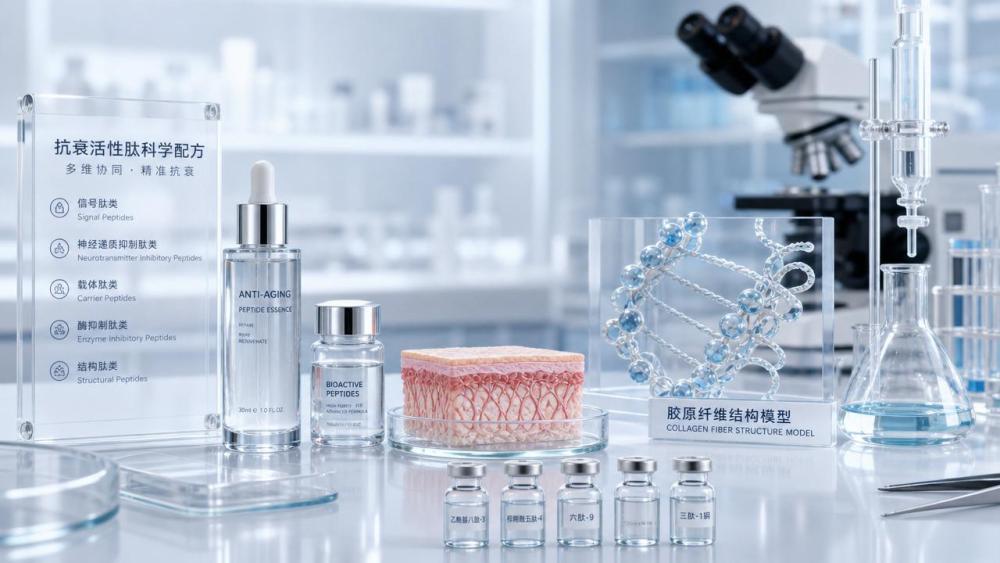
Peptides are short amino acid chains designed to influence skin biology without behaving like drugs. In cosmetics, they are valued because they can support firmness, smoothness, hydration, and recovery signals.
For information researchers, the real question is not whether peptides are fashionable. It is whether a peptide system has a plausible mechanism, adequate stability, and formulation compatibility.
The practical definition for formulators
Bioactive peptides for anti-aging cosmetics are peptide sequences selected to interact with skin processes such as extracellular matrix signaling, oxidative stress response, barrier repair, or visible expression lines.
- They are usually used at low percentages, so purity, preservation, and supplier documentation strongly affect final product credibility.
- They work best inside complete systems containing humectants, antioxidants, compatible emulsifiers, and well-controlled pH.
- They should be assessed by function, not by name alone, because similar marketing labels may hide different sequence quality.
FFAI approaches peptides as “molecular scalpels” within a wider FMCG ingredient landscape, connecting transdermal pharmacology, sensory formulation, compliance review, and ingredient premium logic.
Which Peptide Types Actually Work for Visible Anti-Aging Claims?
Different peptide categories serve different anti-aging purposes. A wrinkle-focused serum, a barrier-repair cream, and a luxury firming mask may require different peptide choices.
The table below compares common categories of bioactive peptides for anti-aging cosmetics from a mechanism and procurement perspective.
This comparison shows why procurement teams should not buy “a peptide” generically. Bioactive peptides for anti-aging cosmetics must match claim direction, formula architecture, and consumer price positioning.
What should “works” mean?
A peptide works when its mechanism is plausible, its active form survives the formula, and the finished product can support a compliant visible benefit claim.
For premium cosmetics, the strongest story combines molecular rationale, stability data, sensory elegance, and consumer-perceivable improvement over realistic use periods.
How Do Peptides Interact With Collagen, Barrier Repair, and Skin Penetration?
Anti-aging skin biology is not a single pathway. Collagen decline, oxidative stress, glycation, barrier disruption, inflammation signals, and water loss all influence visible aging.
Bioactive peptides for anti-aging cosmetics are often positioned around collagen synthesis, but barrier repair and delivery performance may determine whether users notice results.
Mechanism checklist for technical screening
- Collagen signaling: Does the supplier explain which matrix-related pathway is being supported without making drug-like claims?
- Barrier support: Is the peptide paired with ceramides, niacinamide, humectants, or film formers for resilience and comfort?
- Penetration logic: Is there a delivery system, lipophilic modification, encapsulation, or suitable molecular design?
- Formula survival: Has the peptide been assessed under heat exposure, pH drift, preservatives, metal ions, and oxidation stress?
The stratum corneum is a formidable barrier. Peptides are hydrophilic by nature, so finished-product performance depends on sequence, vehicle, and skin-condition context.
Why the vehicle can decide the outcome
A well-selected peptide can underperform in a poor emulsion. Surfactant residues, incompatible thickeners, or unstable fragrance systems may compromise active integrity.
This is where FFAI’s cross-category intelligence is useful: rheology, fragrance evolution, antioxidant protection, preservation, and cosmetic actives must be stitched together.
Procurement Guide: What Should Researchers Check Before Shortlisting a Peptide?
Information researchers often face scattered supplier decks, inconsistent INCI naming, unclear assay methods, and tight timelines. A disciplined screening grid reduces selection risk.
Use the following procurement matrix when comparing bioactive peptides for anti-aging cosmetics across suppliers, formula types, and target markets.
A peptide that looks expensive per kilogram may be efficient at low dosage. A cheaper material may become costly if it requires high input or extra stabilization.
Shortlisting steps for faster decisions
- Define the claim territory first, such as firmness, wrinkle smoothing, recovery, hydration, or age-defense maintenance.
- Match peptide category to product texture, target consumer, launch price, and expected use frequency.
- Check documentation before requesting samples, especially safety, specification, allergen position, and recommended restrictions.
- Run small-scale compatibility tests with the complete formula, not only in water or glycerin stock solution.
Cost, Alternatives, and When Peptides Are Not the Best First Choice
Bioactive peptides for anti-aging cosmetics can justify premium positioning, but they are not always the first ingredient to fix a weak formula.
If the base cream irritates skin, oxidizes fragrance, or dehydrates the barrier, peptide addition may only add cost without improving user satisfaction.
Comparing peptide systems with complementary actives
The table below helps compare peptide investments with other high-end cosmetic actives frequently used in anti-aging and barrier-focused formulas.
Peptides are strongest when they anchor a precise anti-aging concept. They are weaker when added as label decoration without dosage rationale or finished-product validation.
Compliance and Claim Control: What Can Brands Say Safely?
Cosmetic peptides should be described within cosmetic boundaries. Claims should focus on appearance, hydration, firmness, smoothness, radiance, and skin-conditioning support.
Bioactive peptides for anti-aging cosmetics become risky when marketing implies tissue regeneration, disease treatment, permanent reversal, or pharmaceutical repair.
Documentation typically worth reviewing
- INCI name, raw material specification, certificate of analysis, safety data sheet, and recommended storage conditions.
- Microbiological status, preservative system in the supplied solution, heavy metal limits, and residual solvent information when relevant.
- Regional cosmetic inventory status, CPNP notification support considerations, and responsible-person documentation for EU launches.
- Claim substantiation logic aligned with cosmetic regulations, advertising review, and local market language restrictions.
FFAI’s compliance intelligence emphasizes early risk clearing. It is cheaper to adjust wording and formula selection before packaging, registration, and channel education begin.
Application Scenarios: Where Bioactive Peptides Deliver the Strongest Commercial Value
Peptide value changes by product format. A rinse-off cleanser rarely offers the same contact time as a leave-on serum or night cream.
For information researchers, application scenario analysis prevents overpaying for actives in formats that cannot express their full value.
Best-fit uses in modern beauty pipelines
- Leave-on serums: ideal for concentrated storytelling, controlled dosage, and instrumental testing around firmness or fine lines.
- Eye treatments: suitable for expression-line narratives, but tolerance, migration, and preservative mildness require attention.
- Barrier creams: useful when peptide claims are combined with ceramides, cholesterol, fatty acids, and soothing systems.
- Luxury masks: effective for sensory premiumization when texture, fragrance evolution, and after-feel reinforce the active story.
In FMCG terms, peptides are not only efficacy tools. They also influence price architecture, hero ingredient communication, and consumer belief in scientific anti-aging.
Common Misconceptions and FAQ for Ingredient Researchers
Search results often simplify peptide science. The following questions address common decision points when evaluating bioactive peptides for anti-aging cosmetics.
Are more peptides in one formula always better?
No. A long peptide list can create a persuasive label, but compatibility, dosage, and mechanism alignment matter more than ingredient count.
A focused two-peptide system with strong documentation may outperform a complex blend with low active content and unclear contribution from each sequence.
Can peptides replace retinoids, antioxidants, or moisturizers?
Usually no. Peptides are better understood as targeted signaling or conditioning actives, not universal replacements for renewal, antioxidant, or hydration systems.
The strongest anti-aging cosmetics often combine peptides with barrier lipids, humectants, antioxidants, and sensory modifiers that improve daily adherence.
What evidence matters most before procurement?
Start with identity, purity, stability, and recommended use level. Then review mechanism studies and finished-product data when available.
For claim-sensitive launches, instrumental tests such as hydration, elasticity, wrinkle appearance, or barrier-related measurements may support more credible communication.
How long does peptide evaluation usually take?
Initial desk screening may take days, but formulation compatibility, accelerated stability, packaging checks, and consumer-use evaluation can require several weeks or longer.
Timelines depend on formula complexity, required claims, target region, supplier responsiveness, and whether the peptide is used in an existing base or new platform.
Trend Outlook: From Ingredient Hype to Precision Anti-Aging Systems
The next stage of bioactive peptides for anti-aging cosmetics will be less about adding fashionable names and more about precision architecture.
Brands will increasingly ask whether peptide systems are biodegradable, traceable, compatible with clean-label expectations, and supported by responsible safety documentation.
Signals worth watching
- Greater use of encapsulation, liposomal delivery, and lamellar systems to improve skin feel and active protection.
- More demand for recombinant, nature-inspired, or fermentation-linked actives where sustainability narratives are credible.
- Tighter advertising scrutiny around “reversal” language, making measured cosmetic claims more commercially durable.
- Stronger integration between fragrance, rheology, preservation, and active systems to create premium sensory evidence.
For ingredient suppliers, the winning offer will not be a peptide alone. It will be a defensible package of science, stability, compliance, and application support.
Why Choose FFAI for Peptide Intelligence and Formulation Decision Support?
FFAI helps researchers and formulation teams evaluate bioactive peptides for anti-aging cosmetics through a practical lens: molecule, formula, market, compliance, and cost.
Our intelligence approach connects high-end cosmetic actives with the broader FMCG ingredient ecosystem, including preservatives, thickeners, sensory materials, and safety expectations.
Consult us when you need to clarify
- Peptide selection by claim direction, product format, target price band, and expected consumer benefit.
- Parameter confirmation, including pH range, dosage, solvent base, stability risk, and compatibility with preservatives or fragrances.
- Supplier comparison, sample support planning, quotation discussion, lead-time expectations, and cost-in-use interpretation.
- Compliance preparation for cosmetic documentation, regional launch requirements, claim wording, and safety review priorities.
If you are shortlisting bioactive peptides for anti-aging cosmetics, FFAI can help translate supplier information into a clearer procurement and formulation roadmap.
Contact FFAI to discuss ingredient parameters, peptide system comparison, custom formulation direction, certification requirements, sample evaluation, delivery cycle, and quotation priorities.
Related News
- How to assess recombinant collagen ingredients for cream stabilityOct 02, 2026Cosmeceutical Formulator
- How to assess an anti-aging ingredients manufacturer’s batch consistencySep 17, 2026Cosmeceutical Formulator
- How to verify cosmetic peptide delivery compliance before launchAug 30, 2026Cosmeceutical Formulator
- When do biomimetic actives in North America justify a premium in anti-aging formulasAug 25, 2026Cosmeceutical Formulator
Related News
- 00
0000-00
How to interpret active matter on a surfactant specification sheet - 00
0000-00
What Quality Checks Should You Run on Fragrance Ingredient Suppliers? - 00
0000-00
How to assess a flavor chemistry manufacturer's batch consistency - 00
0000-00
What drives fragrance ingredients price changes in bulk orders? - 00
0000-00
How to assess a food antioxidants distributor’s traceability practices
Cosmeceutical Formulator
Weekly Insights
Stay ahead with our curated technology reports delivered every Monday.