





Bioactive Peptides with Rapid Absorption: What to Check
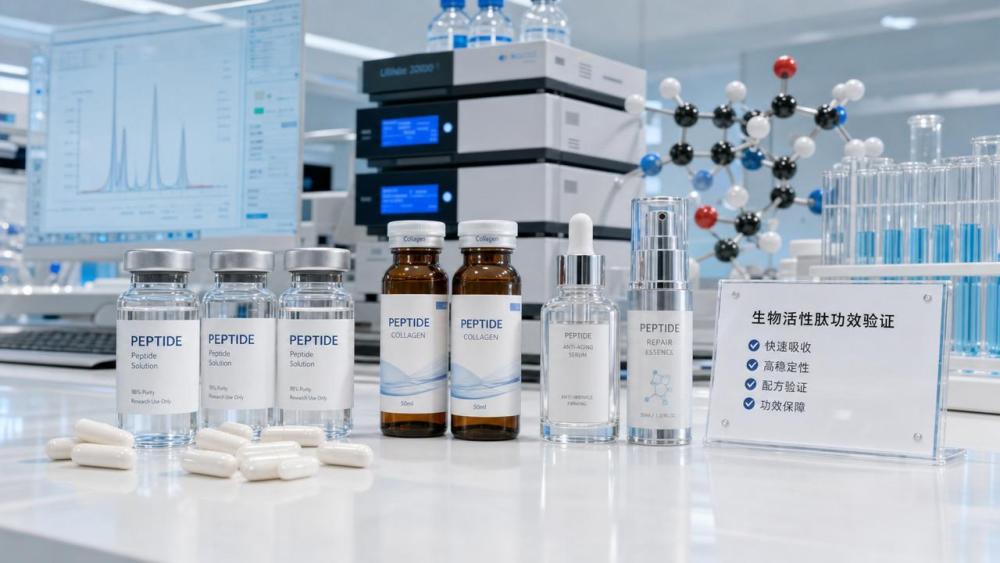
For technical evaluators, selecting bioactive peptides with rapid absorption requires more than checking a supplier’s efficacy claims.
Absorption speed depends on peptide size, sequence stability, delivery matrix, biological barriers, and the quality of supporting pharmacokinetic evidence.
This checklist helps separate clinically meaningful peptide technologies from marketing-driven ingredient narratives in food, nutraceutical, cosmetic, and personal-care formulations.
Why a Checklist Matters for Bioactive Peptides with Rapid Absorption
Bioactive peptides are positioned as high-value actives because they can signal, protect, repair, or support biological functions at low dosage levels.
Yet “fast absorption” is often used loosely across collagen peptides, anti-aging peptides, sports nutrition blends, and functional beverage systems.
A structured review prevents confusion between rapid dissolution, rapid release, rapid permeation, and true systemic bioavailability.
For bioactive peptides with rapid absorption, the key question is not only whether they enter the body quickly.
The stronger question is whether enough intact peptide, metabolite, or validated fragment reaches the relevant biological site.
Core Checklist for Bioactive Peptides with Rapid Absorption
- Verify molecular weight distribution, because smaller peptides may absorb faster, while oversized fractions can reduce consistency across oral and topical applications.
- Check peptide sequence disclosure, including active motifs, hydrolysis method, and batch fingerprinting by HPLC, LC-MS, or equivalent analytical platforms.
- Request pharmacokinetic evidence showing Tmax, Cmax, AUC, half-life, and validated biomarkers linked to the intended functional benefit.
- Confirm whether absorption data measures intact peptides, free amino acids, metabolites, or surrogate markers that may exaggerate performance claims.
- Assess stability under pH, heat, light, oxidation, and enzymatic stress to predict performance during processing and storage.
- Evaluate formulation compatibility with minerals, polyphenols, preservatives, surfactants, flavors, thickeners, oils, and encapsulation carriers.
- Review sensory impact, because bitter notes, sulfur tones, or marine residues can limit inclusion levels in consumer products.
- Confirm safety documentation, including allergen source, residual solvents, heavy metals, microbiology, toxicology, and contaminant control.
- Map regulatory positioning before launch, especially when claims suggest anti-aging, recovery, metabolic support, immunity, or therapeutic activity.
- Connect absorption speed with measurable outcomes, since bioactive peptides with rapid absorption must still prove visible or functional benefits.
1. Confirm What “Rapid Absorption” Actually Means
The term can describe fast solubility, fast digestion, fast epithelial transport, or fast appearance in plasma.
These are not interchangeable endpoints.
For bioactive peptides with rapid absorption, reliable documentation should define the absorption route and the analytical method used.
A strong dossier explains whether the peptide crosses intestinal cells, penetrates the stratum corneum, or acts locally after controlled release.
2. Examine Molecular Size and Sequence Logic
Di-peptides and tri-peptides often show better intestinal transport than large peptide chains.
However, smaller does not always mean stronger.
Sequence, charge, hydrophobicity, and resistance to peptidases determine whether bioactive peptides with rapid absorption remain biologically relevant.
Look for sequence-performance links, not only broad statements about hydrolyzed protein or low molecular weight fractions.
3. Demand Real Bioavailability Evidence
In vitro digestion models help screen peptide stability, but they cannot replace human or well-designed animal pharmacokinetic studies.
For oral products, plasma detection of target sequences strengthens credibility.
For topical bioactive peptides with rapid absorption, Franz diffusion data, reconstructed skin models, and tape stripping can support penetration claims.
Data should include dose, matrix, timing, analytical sensitivity, and whether the study used the final formulation.
4. Test Compatibility with the Delivery Matrix
Peptide absorption depends heavily on the carrier system.
Proteins, gums, emulsifiers, alcohols, acids, salts, and oils can alter peptide release, aggregation, or degradation.
In beverages, acidity and thermal treatment may damage sensitive sequences.
In creams, surfactants and preservatives may change peptide availability at the skin surface.
Bioactive peptides with rapid absorption should be tested inside the intended formula, not only in purified laboratory solutions.
Application Notes by Product Scenario
Functional Foods and Ready-to-Drink Nutrition
In beverages, powders, gels, and fortified snacks, rapid absorption must survive manufacturing realities.
Heat, shear, acidity, minerals, and flavor masking systems can all change peptide behavior.
Bioactive peptides with rapid absorption should be reviewed alongside shelf-life, sedimentation, taste, haze formation, and label-friendly preservation systems.
A peptide that works in water may fail in a high-protein drink with calcium, polyphenols, and xanthan gum.
Sports Recovery and Healthy Aging Supplements
Sports and healthy aging formulas often require fast uptake, repeat dosing, and clear consumer-perceived benefits.
Collagen peptides, muscle-support peptides, and antioxidant peptides need differentiated evidence.
For bioactive peptides with rapid absorption, compare onset time with the actual benefit window.
Fast plasma appearance is useful only when linked to recovery, elasticity, satiety, mobility, or validated biomarker movement.
Premium Cosmetic Actives
Cosmetic peptides face the stratum corneum, enzyme activity, formulation polarity, and claim restrictions.
Rapid absorption should not be confused with uncontrolled penetration.
For anti-aging systems, bioactive peptides with rapid absorption need evidence of skin delivery, tolerability, and measurable appearance improvement.
Support claims with wrinkle scoring, elasticity testing, hydration data, barrier markers, or ex vivo skin studies.
Personal Care and Scalp Systems
In shampoos, scalp serums, and leave-on tonics, surfactants can disturb peptide conformation or reduce retention.
Rinse-off exposure time is especially short.
Bioactive peptides with rapid absorption in scalp products should show deposition, residue stability, and compatibility with cleansing systems.
Otherwise, the active may leave the surface before any useful interaction occurs.
Commonly Ignored Risks
Mistaking Hydrolysis for Bioactivity
Hydrolyzed protein can improve solubility and digestibility, but not every hydrolysate contains a validated active sequence.
Bioactive peptides with rapid absorption require specific functional evidence, not generic protein breakdown claims.
Ignoring Enzymatic Degradation
Peptides may degrade before reaching the target site.
Gastric enzymes, brush-border peptidases, skin proteases, and microbial activity can reduce intact sequence availability.
Overlooking Dose Realism
A clinical dose may be impossible in a flavored beverage, capsule, serum, or rinse-off product.
Check whether the effective dose matches sensory, cost, regulatory, and stability constraints.
Accepting Unsupported Claim Language
Terms such as “cellular renewal,” “instant repair,” or “reversal” require careful claim review.
Bioactive peptides with rapid absorption should be described within compliant food, supplement, cosmetic, or personal-care boundaries.
Forgetting Batch-to-Batch Control
Peptide mixtures can vary by source material, enzyme process, purification level, and drying conditions.
Require fingerprint specifications to protect performance, safety, and repeatable product positioning.
Practical Execution Steps
- Define the target benefit first, then identify whether rapid systemic uptake, local delivery, or surface retention is scientifically necessary.
- Build a comparison sheet covering peptide source, sequence data, molecular weight, bioavailability results, safety files, and regulatory status.
- Run small-scale formulation trials using the final matrix, including heat exposure, pH drift, preservative contact, and sensory assessment.
- Challenge marketing claims against measurable endpoints, such as plasma kinetics, skin penetration, elasticity, recovery markers, or consumer-use tests.
- Set acceptance limits for active content, impurity profile, microbiology, heavy metals, allergens, and peptide fingerprint consistency.
- Review cost per effective dose, not price per kilogram, because higher-purity peptides may deliver better economics at lower inclusion levels.
This process keeps bioactive peptides with rapid absorption tied to evidence, formulation behavior, and commercial feasibility.
It also reduces the risk of launching a product that sounds advanced but performs inconsistently.
Evidence Documents Worth Requesting
- Request a certificate of analysis covering active peptide markers, microbiology, contaminants, moisture, ash, and relevant physicochemical parameters.
- Request chromatograms or mass spectrometry fingerprints to verify identity, purity distribution, and batch repeatability.
- Request stability data in conditions close to the intended product, not only standard powder storage conditions.
- Request safety assessments addressing raw material origin, allergen risk, toxicology, irritation, sensitization, and foreseeable consumer exposure.
- Request claim substantiation files that connect bioactive peptides with rapid absorption to the proposed product language.
If a supplier cannot explain how absorption was measured, the claim should be treated as preliminary.
If the evidence only shows amino acid increase, it may not prove intact peptide delivery.
Summary and Action Guide
Bioactive peptides with rapid absorption can support premium positioning across functional foods, supplements, cosmetics, and personal-care systems.
However, speed alone is not enough.
The strongest candidates combine defined sequences, credible pharmacokinetics, formulation stability, safety depth, and compliant claim architecture.
Start with the intended benefit, then verify whether the peptide reaches the relevant biological environment in a measurable form.
Next, test the ingredient inside the real formula and compare cost per effective dose.
Use this checklist before selecting bioactive peptides with rapid absorption for any high-value formulation.
The right choice should withstand scientific review, regulatory scrutiny, sensory testing, and end-user performance expectations.
Related News
- How to assess recombinant collagen ingredients for cream stabilityOct 02, 2026Cosmeceutical Formulator
- How to assess an anti-aging ingredients manufacturer’s batch consistencySep 17, 2026Cosmeceutical Formulator
- How to verify cosmetic peptide delivery compliance before launchAug 30, 2026Cosmeceutical Formulator
- When do biomimetic actives in North America justify a premium in anti-aging formulasAug 25, 2026Cosmeceutical Formulator
Related News
- 00
0000-00
Verifying halal status of hydrocolloid ingredients in the Middle East - 00
0000-00
How to interpret active matter on a surfactant specification sheet - 00
0000-00
What Quality Checks Should You Run on Fragrance Ingredient Suppliers? - 00
0000-00
How to assess a flavor chemistry manufacturer's batch consistency - 00
0000-00
What drives fragrance ingredients price changes in bulk orders?
Cosmeceutical Formulator
Weekly Insights
Stay ahead with our curated technology reports delivered every Monday.