





Why is cosmetic biomimetics getting so much attention in anti-aging formula design?
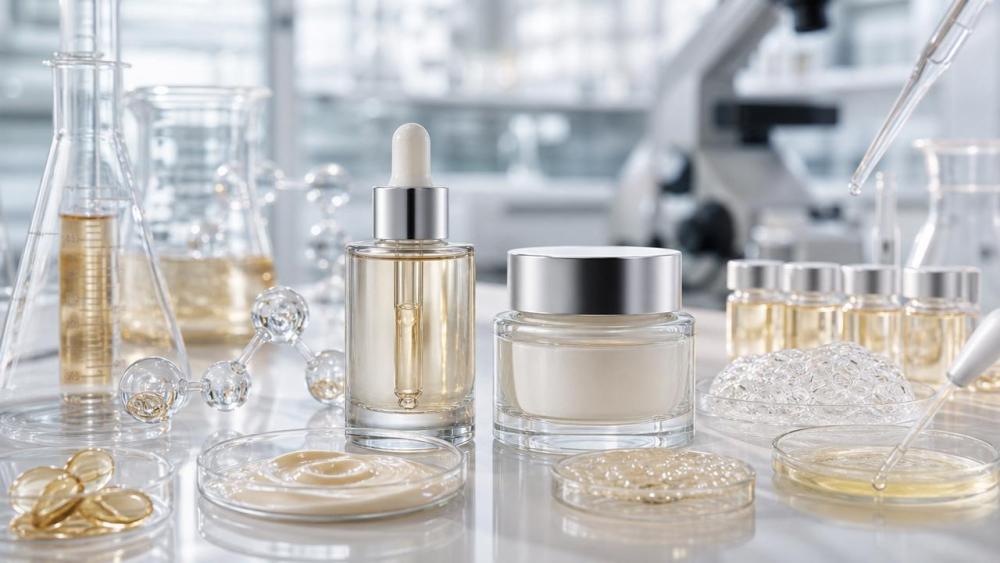
Cosmetic biomimetics matters because it tries to copy how skin already protects, repairs, and signals itself.
That idea sounds simple, but it changes how anti-aging products are evaluated.
Instead of chasing dramatic claims, formulators ask a tougher question: does the active behave like a useful skin-native cue?
In practice, cosmetic biomimetics often includes peptides, barrier lipids, sugars, and delivery systems designed to resemble physiological pathways.
The goal is not to “trick” skin, but to support repair with better compatibility and clearer mechanism logic.
That is one reason the topic fits the wider FMCG landscape so well.
Across food, fragrance, and beauty, value increasingly comes from precise molecular design, sensory performance, and safety confidence.
FFAI tracks that intersection closely, especially where premium anti-aging actives must prove both scientific credibility and commercial relevance.
For that reason, cosmetic biomimetics is not just a trend term.
It is a practical framework for comparing efficacy, formulation elegance, and premium positioning in modern skincare.
What actually counts as cosmetic biomimetics, and what is mostly marketing language?
A good rule is to separate resemblance from relevance.
An ingredient can look biomimetic on paper, yet add little real performance in a finished formula.
The stronger examples of cosmetic biomimetics usually fall into three groups.
- Biomimetic peptides that imitate repair signals linked to collagen support, matrix communication, or visible wrinkle reduction.
- Biomimetic lipids such as ceramide-aligned systems that reinforce barrier structure and reduce water loss.
- Biomimetic delivery approaches that improve deposition, stability, or skin affinity without excessive irritation.
Marketing language becomes weaker when “biomimetic” only means natural-sounding, trendy, or expensive.
A peptide is not automatically effective because its name is complex.
Likewise, a lipid blend is not truly biomimetic if the ratio ignores real barrier behavior.
More useful evaluation starts with mechanism, concentration, stability, and compatibility with the rest of the system.
This is where anti-aging formula design becomes more demanding.
A well-chosen active still fails if pH, solvent choice, emulsifier structure, or preservation strategy weaken it before use.
That broader systems view echoes FFAI’s approach across ingredients categories.
Whether studying antioxidants in food or peptides in skincare, what matters is how molecular behavior survives real formulation conditions.
Do biomimetic peptides and lipids really work better than classic anti-aging ingredients?
Not always better, but often more targeted.
Classic anti-aging ingredients such as retinoids, niacinamide, acids, and antioxidants still have strong evidence and broad usefulness.
Cosmetic biomimetics becomes valuable when a formula needs better tolerance, sharper positioning, or a more specific mechanism story.
For example, biomimetic peptides may support visible firmness and wrinkle appearance through cell-signaling pathways.
Biomimetic lipids, meanwhile, often improve barrier recovery faster than general emollients alone.
The difference is easier to see in combination formulas than in single-ingredient comparisons.
To make that comparison clearer, the table below captures the most common judgment points.
So the best answer is not either-or.
The strongest anti-aging formula design often pairs cosmetic biomimetics with proven legacy actives, then optimizes delivery and sensory profile.
Where does cosmetic biomimetics make the biggest difference in real formulas?
It tends to matter most when the formula has to do several jobs at once.
That includes improving visible aging signs, maintaining comfort, and supporting a premium user experience.
In actual development, cosmetic biomimetics shows strong value in these scenarios.
- Barrier-first anti-aging creams for dry, stressed, or mature skin.
- Eye and neck formulas where irritation tolerance is a stricter limit.
- Post-procedure support products needing gentler recovery logic.
- Luxury emulsions that need both performance claims and refined sensorial identity.
This last point is often underestimated.
Premium skincare is not built on efficacy data alone.
Texture spread, afterfeel, fragrance compatibility, and stability under transport all affect perceived value.
That is why insight platforms like FFAI matter beyond beauty alone.
Its broader coverage of rheology, sensory chemistry, preservation, and compliance reflects how anti-aging formula design really works in the market.
A biomimetic peptide may promise a strong mechanism.
Still, the final product succeeds only if the full formula protects that value from lab bench to shelf.
What are the most common mistakes when choosing biomimetic anti-aging actives?
The first mistake is confusing biological inspiration with clinical significance.
An elegant mechanism does not guarantee a visible result.
Another common issue is underestimating delivery.
Many biomimetic materials are delicate, water-sensitive, charge-sensitive, or difficult to keep stable in complex emulsions.
Needless cost inflation is also a risk.
Some anti-aging formulas stack several premium actives that compete for the same claim space.
That may raise the bill of materials without improving the final story.
More common red flags include the following.
- Relying on supplier language without checking test conditions.
- Ignoring preservative interactions and packaging compatibility.
- Treating peptide concentration as meaningful without active content clarity.
- Positioning “biomimetic” as the whole claim instead of supporting benefit proof.
Compliance should not be left until the end either.
Claim language, regional notification rules, and dossier quality influence launch speed and risk.
FFAI’s intelligence model is relevant here because formulation choices rarely stand alone.
They sit between science, regulation, sensory design, and pricing logic.
How should cosmetic biomimetics be evaluated for cost, timeline, and premium value?
A practical review starts with three questions.
Does the biomimetic active improve visible performance, improve tolerance, or strengthen brand differentiation?
If it does only one weakly, the investment may be hard to justify.
Timeline matters because biomimetic systems often require extra stability work, packaging checks, and claim substantiation.
That does not make them inefficient.
It simply means early screening should be stricter.
A useful evaluation checklist usually includes:
- Mechanism credibility supported by relevant in vitro or in vivo data.
- Formulation tolerance under heat, light, pH drift, and preservative load.
- Sensory fit with the intended texture and fragrance profile.
- Regional compliance readiness, especially for claims and notifications.
- Margin logic tied to actual consumer-perceived improvement.
This is where cosmetic biomimetics becomes commercially interesting.
When chosen well, it can support a stronger efficacy narrative without abandoning safety and elegance.
When chosen poorly, it becomes a costly decoration in anti-aging formula design.
So what should be the next step when comparing cosmetic biomimetics options?
Start by defining the real job of the formula.
Is the priority wrinkle appearance, barrier recovery, post-stress comfort, or premium repositioning?
That choice will shape whether cosmetic biomimetics should focus on peptides, lipids, delivery systems, or a blended architecture.
Then compare ingredients as systems, not isolated claims.
Look at concentration reality, formula compatibility, regulatory path, sensory impact, and total cost of proof.
The most effective anti-aging formula design usually comes from disciplined trade-offs rather than the longest ingredient list.
In that sense, cosmetic biomimetics works best when it is treated as a decision framework.
It helps connect transdermal science, molecular storytelling, and market-ready safety in the same formula logic.
That balanced view is also central to FFAI’s wider perspective.
Across taste, texture, fragrance, and anti-aging actives, the lasting winners are rarely the loudest ingredients.
They are the ones that remain stable, believable, compliant, and genuinely useful in finished products.
If a comparison is underway, the next practical move is to build a short evaluation grid, test under realistic conditions, and keep only the biomimetic options that improve both performance logic and formula value.
Related News
- How to assess recombinant collagen ingredients for cream stabilityOct 02, 2026Cosmeceutical Formulator
- How to assess an anti-aging ingredients manufacturer’s batch consistencySep 17, 2026Cosmeceutical Formulator
- How to verify cosmetic peptide delivery compliance before launchAug 30, 2026Cosmeceutical Formulator
- When do biomimetic actives in North America justify a premium in anti-aging formulasAug 25, 2026Cosmeceutical Formulator
Related News
- 00
0000-00
What drives fragrance ingredients price changes in bulk orders? - 00
0000-00
How to assess a food antioxidants distributor’s traceability practices - 00
0000-00
How minimum order quantities shape private label ingredient sourcing costs - 00
0000-00
What drives personal care ingredient price volatility in sourcing - 00
0000-00
What drives micelles price differences in cosmetic formulations?
Cosmeceutical Formulator
Weekly Insights
Stay ahead with our curated technology reports delivered every Monday.