





For technical evaluators, cosmetic peptide delivery determines whether anti-aging claims remain theoretical or become visible, measurable skin outcomes in finished products.
Peptides can signal collagen renewal, barrier repair, and wrinkle reduction, yet their benefits depend heavily on stability, penetration, and controlled release.
This makes cosmetic peptide delivery a central formulation decision across premium skincare, dermocosmetics, and science-led FMCG innovation.
Within the broader active ingredients landscape, delivery technology also shapes compliance pathways, cost structure, sensory quality, and brand positioning.
Cosmetic Peptide Delivery: Definition and Technical Scope
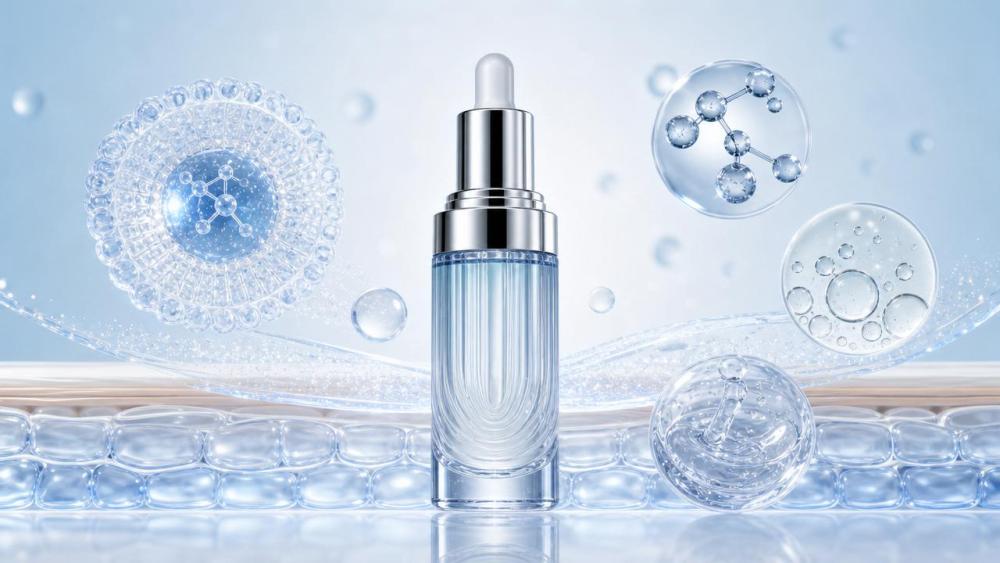
Cosmetic peptide delivery refers to the systems used to protect, transport, and release peptides onto or into the skin effectively.
Peptides are often fragile molecules. They may degrade through hydrolysis, oxidation, enzyme exposure, pH shifts, or thermal processing.
Many anti-aging peptides also struggle to cross the stratum corneum, the skin’s outer barrier designed to keep foreign materials out.
As a result, cosmetic peptide delivery must address four linked targets:
- chemical and physical stability during manufacturing and storage
- penetration through or interaction with the skin barrier
- release rate at the intended skin depth
- compatibility with texture, packaging, and regulatory expectations
A peptide may be highly active in vitro, but poor cosmetic peptide delivery can erase that advantage inside a commercial formula.
Industry Context and Current Evaluation Priorities
In advanced anti-aging development, delivery selection now receives attention equal to peptide sequence design and concentration claims.
The reason is simple. Consumers expect visible performance, while brands require safe, scalable, and premium-ready systems.
Across the wider active ingredients market, several signals shape cosmetic peptide delivery decisions:
For intelligence-driven platforms such as FFAI, cosmetic peptide delivery sits at the intersection of molecular performance and commercial feasibility.
Core Delivery Options and Their Performance Logic
Different systems solve different peptide problems. No single route fits every sequence, dosage form, or anti-aging claim.
Liposomes
Liposomes are phospholipid vesicles that can encapsulate hydrophilic or amphiphilic peptides and improve skin affinity.
They often support better cosmetic peptide delivery by shielding peptides from degradation and promoting gradual release.
However, liposome stability can be sensitive to oxidation, processing shear, and long-term storage conditions.
Nanoemulsions
Nanoemulsions use very small dispersed droplets to enhance spreadability, sensory elegance, and contact with the skin surface.
They can support cosmetic peptide delivery indirectly, especially when paired with penetration enhancers or hybrid carriers.
Still, not every peptide remains stable in oil-water interfaces, so interfacial behavior must be tested carefully.
Polymeric or biomimetic carriers
These systems include biodegradable capsules, lamellar carriers, and skin-mimicking structures designed for controlled release.
They are increasingly attractive because cosmetic peptide delivery now demands both efficacy and a refined safety narrative.
Biomimetic designs may also improve premium perception, especially in high-end serums and barrier-repair creams.
Microneedle-assisted systems
Microneedles create temporary microchannels, helping peptides bypass the outer barrier more directly than topical passive systems.
This can produce stronger cosmetic peptide delivery for demanding actives, but usability and compliance questions become more complex.
Product classification risk, skin sensitivity, and consumer handling all require tighter review.
Simple aqueous or hydrogel systems
Not all peptides need elaborate carriers. Short peptides with favorable properties may perform adequately in optimized gels or essences.
In these cases, cosmetic peptide delivery relies on pH control, humectant balance, film formers, and packaging protection.
Business Value of Better Cosmetic Peptide Delivery
Better cosmetic peptide delivery does more than improve lab metrics. It can strengthen the full commercial story of an anti-aging product.
- Higher active efficiency may reduce overuse of expensive peptide raw materials.
- Improved stability can lower performance drift across shelf life.
- Controlled release may support gentler performance for sensitive skin lines.
- Advanced delivery can justify premium pricing and stronger product differentiation.
- A credible technology platform often strengthens science-based storytelling.
For the broader FMCG ecosystem, this matters because efficacy today must coexist with sensory elegance, safety transparency, and international scalability.
Typical Application Scenarios by Product Format
The best cosmetic peptide delivery route usually depends on product format, claim intensity, and user experience targets.
This format-based view helps narrow cosmetic peptide delivery choices before expensive scale-up work begins.
Practical Evaluation Points and Common Risks
A strong evaluation framework should compare peptide chemistry, carrier behavior, manufacturing limits, and claim strategy together.
- Check peptide molecular weight, charge, solubility, and degradation sensitivity first.
- Test cosmetic peptide delivery under realistic pH, heat, light, and packaging conditions.
- Measure both penetration indicators and biological endpoints, not penetration alone.
- Review whether carrier ingredients raise irritation, nano perception, or regulatory documentation burdens.
- Confirm the system remains compatible with fragrance, preservatives, thickeners, and surfactant background.
One frequent mistake is chasing a fashionable carrier without proving that it improves the selected peptide more than a simpler system.
Another mistake is ignoring scale-up. Cosmetic peptide delivery that works in pilot batches may fail during filling or long-distance storage.
Decision Direction for Next-Stage Anti-aging Development
The most effective path is usually evidence-led selection rather than technology-first enthusiasm.
Start by matching the peptide’s mechanism to the intended claim, then screen cosmetic peptide delivery options against stability, penetration, sensory profile, and compliance complexity.
From there, build a comparison matrix covering cost-in-use, shelf-life behavior, formulation compatibility, and premium positioning potential.
For innovation teams working across active ingredients, flavors, textures, and safety expectations, this structured approach prevents costly reformulation cycles.
In modern anti-aging product design, cosmetic peptide delivery is no longer a supporting detail. It is the performance architecture behind credible results.
A disciplined review of delivery options can turn peptide science into stable, compliant, and commercially valuable skincare solutions.
Related News
- How to assess recombinant collagen ingredients for cream stabilityOct 02, 2026Cosmeceutical Formulator
- How to assess an anti-aging ingredients manufacturer’s batch consistencySep 17, 2026Cosmeceutical Formulator
- How to verify cosmetic peptide delivery compliance before launchAug 30, 2026Cosmeceutical Formulator
- When do biomimetic actives in North America justify a premium in anti-aging formulasAug 25, 2026Cosmeceutical Formulator
Related News
- 00
0000-00
Verifying halal status of hydrocolloid ingredients in the Middle East - 00
0000-00
How to interpret active matter on a surfactant specification sheet - 00
0000-00
What Quality Checks Should You Run on Fragrance Ingredient Suppliers? - 00
0000-00
How to assess a flavor chemistry manufacturer's batch consistency - 00
0000-00
What drives fragrance ingredients price changes in bulk orders?
Cosmeceutical Formulator
Weekly Insights
Stay ahead with our curated technology reports delivered every Monday.