





Before a peptide synthesis service moves from development into routine manufacturing, the hardest question is rarely yield alone. The real issue is whether the method can travel intact across teams, instruments, sites, and release cycles without changing the peptide itself.
That matters far beyond laboratory efficiency. In cosmetics, personal care, nutrition, and adjacent FMCG innovation, peptides often sit inside high-value formulas where purity, safety, and consistency support both regulatory confidence and brand claims.
For FFAI, which tracks high-end actives alongside preservatives, sensory systems, and formulation intelligence, peptide quality is part of a broader market shift. Buyers want molecular performance, but they also want traceability, reproducibility, and a defensible risk profile.
Why method transfer deserves closer attention
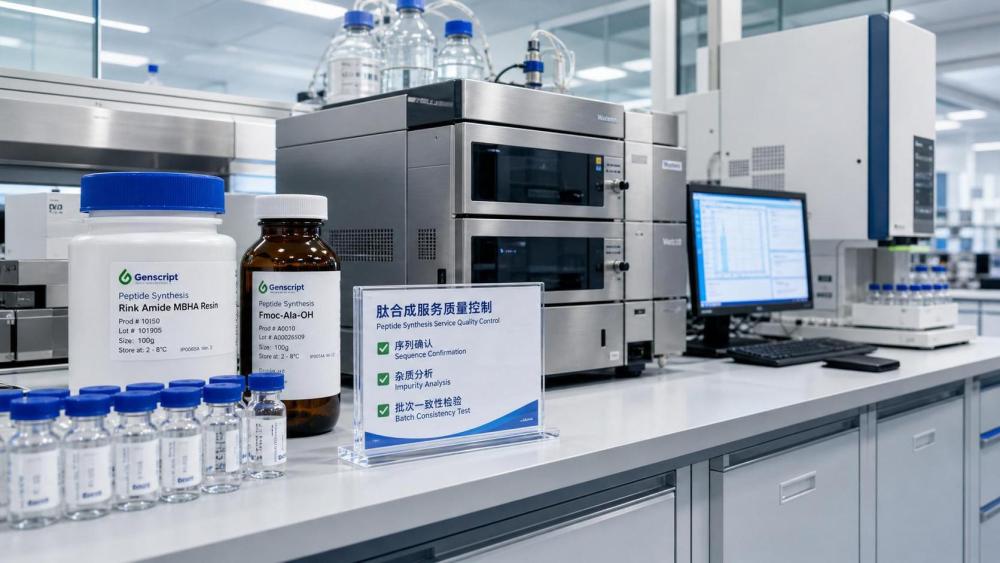
Method transfer is the point where a development protocol becomes an operational standard. In a peptide synthesis service, this stage tests whether process knowledge is truly complete or still dependent on tacit experience.
A peptide may look acceptable during development while hidden weaknesses remain. Small changes in resin loading, coupling efficiency, cleavage conditions, or purification settings can reshape impurity patterns and alter release outcomes.
In practical terms, transfer failure shows up as inconsistent chromatograms, poor mass confirmation, unstable reference standards, or batch records that leave too much open to interpretation. Each problem creates delay, rework, or compliance exposure.
This is especially relevant when peptides support anti-aging, skin repair, or bioactive positioning. The commercial value of such ingredients depends on molecular credibility, not only marketing language.
What quality checks should confirm before routine transfer
A robust peptide synthesis service should confirm more than one final purity number. Transfer readiness depends on a linked set of analytical, process, and documentation controls.
Sequence identity and structural confirmation
The first checkpoint is simple in principle: the peptide must be the intended sequence. In practice, confirmation should include molecular mass, expected retention behavior, and review of common deletion or substitution risks.
For longer or more sensitive chains, orthogonal evidence becomes more important. LC-MS alone may not resolve every concern when isobaric impurities or sequence truncations are plausible.
Impurity profile, not purity headline
A release specification can report acceptable purity while still hiding a problematic impurity pattern. During method transfer, the impurity map should be understood well enough to distinguish acceptable process-related peaks from critical unknowns.
This includes deletion peptides, deamidation products, oxidation variants, protecting-group remnants, residual scavengers, and cleavage by-products. The key is not naming every peak perfectly, but controlling the ones that affect safety, efficacy, or downstream stability.
Analytical reproducibility
Transfer only works when two analysts, or two laboratories, can reach the same conclusion from the same sample. That means system suitability, sample preparation, injection sequence, integration rules, and acceptance criteria must all be explicit.
If chromatographic interpretation depends on one experienced reviewer, the method is not truly transferred. It is still person-dependent.
Residual risk checks
A peptide synthesis service should also evaluate residual solvents, inorganic residues, counterions, water content, and microbial considerations where relevant. The exact panel depends on intended use, but transfer cannot ignore non-sequence quality attributes.
Where transfer risk usually hides
Most transfer problems do not begin at the final report. They begin earlier, where development choices were reasonable for feasibility but too fragile for routine control.
One common issue is incomplete characterization of critical process parameters. A coupling step may tolerate narrow timing in development, yet drift under manufacturing scheduling. The result is a new impurity pattern, not an obvious process alarm.
Another issue is reference standard weakness. If the reference lot is unstable, poorly assigned, or not periodically bridged, even a capable peptide synthesis service can produce uncertain comparisons over time.
Data interpretation is another weak point. Integration settings, peak grouping, and outlier handling often live in analyst habit rather than controlled method language. That is manageable in development and dangerous in release testing.
For cross-border supply, documentation quality becomes even more important. FFAI regularly highlights how compliance expectations differ by application, whether the peptide enters a cosmetic active dossier, a specialty ingredient file, or a broader product safety review.
Why this matters across the FFAI landscape
Peptides do not exist in isolation. In real formulations, they interact with preservatives, thickeners, fragrance systems, surfactants, pH conditions, packaging materials, and storage environments.
That is why method transfer in a peptide synthesis service should be understood as part of ingredient system control. A peptide that passes release but degrades inside a complex emulsion or serum still creates downstream quality risk.
This systems view aligns with FFAI’s focus on the chemistry behind taste, texture, preservation, and beauty performance. High-purity actives are commercially valuable only when they remain stable, compatible, and compliant in use.
For anti-aging formulas in particular, the pressure is higher. Premium claims often rely on low-dose actives with high technical expectations. Any unresolved uncertainty in peptide identity or impurity control can undermine both product credibility and safety assessment.
A practical review framework before approval
Before signing off a transferred peptide synthesis service method, a focused review can reveal whether the control strategy is ready for routine use or still development-heavy.
- Check whether critical impurities are linked to realistic alert and action thresholds.
- Confirm that sample preparation instructions remove analyst discretion.
- Review whether raw materials, resins, and cleavage reagents have defined acceptance logic.
- Verify that reference standards are qualified, stored correctly, and trended over time.
- Ensure deviation handling explains when reanalysis is acceptable and when investigation is required.
- Test whether another site could repeat the method using only the controlled documents.
That last point is often decisive. If success depends on verbal coaching, the transfer package is incomplete.
What to evaluate next
A peptide synthesis service should ultimately be judged by how well it supports reliable decisions, not only by how well it produces laboratory data. Good transfer packages make batch release faster because fewer questions remain unresolved.
The next step is usually to compare current transfer practice against three lenses: analytical robustness, process understanding, and documentation integrity. Gaps in any one of these can reopen risk later.
For organizations working with cosmetic peptides, sensory-led formulations, or other high-value actives, it also helps to assess compatibility after transfer, not only purity at release. That broader review fits the market reality FFAI follows closely: molecular excellence must survive commercial use.
A disciplined review of transfer readiness, impurity logic, and evidence quality gives the clearest basis for choosing or monitoring any peptide synthesis service over time.
Related News
- Can biomimetic peptides in cosmetics reduce the look of wrinkles?Oct 17, 2026Cosmeceutical Formulator
- How to assess recombinant collagen ingredients for cream stabilityOct 02, 2026Cosmeceutical Formulator
- How to assess an anti-aging ingredients manufacturer’s batch consistencySep 17, 2026Cosmeceutical Formulator
- How to verify cosmetic peptide delivery compliance before launchAug 30, 2026Cosmeceutical Formulator
Related News
- 00
0000-00
Can biomimetic peptides in cosmetics reduce the look of wrinkles? - 00
0000-00
How to assess a bio-based thickener manufacturer's batch consistency - 00
0000-00
Verifying halal status of hydrocolloid ingredients in the Middle East - 00
0000-00
How to interpret active matter on a surfactant specification sheet - 00
0000-00
How Do You Test Hydrocolloid Viscosity After Changing a Thickener?
Cosmeceutical Formulator
Weekly Insights
Stay ahead with our curated technology reports delivered every Monday.