





Recombinant Collagens for Serums: Stability and Efficacy Checklist
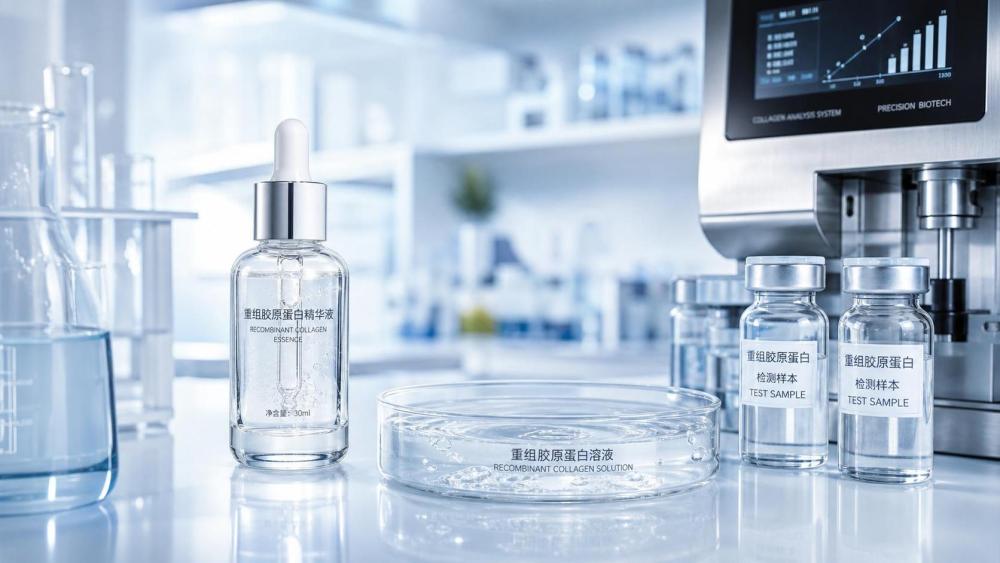
For technical evaluators, selecting recombinant collagens for serums requires more than trend awareness. It requires a disciplined review of structure, purity, compatibility, and measurable performance.
That is why recombinant collagens for serums should be judged as functional biomaterials, not just marketing actives. The real question is whether they stay intact, usable, and effective inside finished formulas.
In practice, the best decisions come from a checklist. It helps compare suppliers, flag hidden formulation risks, and separate lab promise from scalable product value.
This guide reviews the core checkpoints behind recombinant collagens for serums, with attention to stability, efficacy, compliance, and premium anti-aging positioning.
Why Recombinant Collagens Matter in Serum Design
Collagen has long carried strong consumer recognition. Yet traditional animal-derived collagen raises recurring questions around purity, traceability, odor, batch variation, and regulatory comfort.
Recombinant collagens for serums answer many of those concerns. They are produced through controlled expression systems, allowing tighter sequence design and more consistent quality attributes.
More importantly, recombinant technology makes claim strategy more precise. A serum can be built around specific film-forming, hydrating, soothing, or elasticity-support functions instead of vague collagen messaging.
This also changes evaluation logic. You are not only buying a protein ingredient. You are assessing a molecular system that must survive manufacturing, packaging, storage, and repeated consumer use.
Checklist Item 1: Verify Molecular Identity and Design Logic
Start with the sequence itself. Not all recombinant collagens for serums are full-length collagen analogs, and many are collagen fragments, collagen-like peptides, or engineered domains.
Ask for clear technical documentation on amino acid sequence, molecular weight range, expression host, and intended mechanism. Without that, efficacy claims are difficult to anchor.
A useful screening list includes:
- Defined INCI and biochemical description
- Average molecular weight and distribution
- Triple-helix relevance or collagen-mimetic rationale
- Target skin benefit linked to structure
- Expression platform and traceability records
If the supplier cannot connect sequence design to skin function, the ingredient may be commercially interesting but technically weak.
Checklist Item 2: Check Purity, Residuals, and Batch Consistency
Purity is where many premium actives either justify their value or lose it. Recombinant collagens for serums should come with more than a marketing specification sheet.
Review residual host proteins, nucleic acid remnants, endotoxin status where relevant, solvent residues, preservatives, heavy metals, and microbiological limits. These are practical formulation issues, not paperwork details.
Batch-to-batch consistency matters just as much. A serum with tight sensory and efficacy targets cannot absorb wide variation in protein content or impurity profile.
At minimum, request trend data across several lots. One certificate of analysis is not enough for a serious technical decision.
Checklist Item 3: Stress-Test Stability Inside the Formula
This is usually the decisive step. Recombinant collagens for serums may look stable in water, then degrade under real formulation stress.
The main variables are pH, ionic strength, heat exposure, shear, preservatives, alcohol content, glycols, and interactions with other actives such as vitamin C derivatives or peptides.
A reliable evaluation should cover:
- Short-term thermal stability during manufacturing
- Freeze-thaw tolerance during transport
- pH stability across the intended serum window
- Viscosity or appearance drift over shelf life
- Protein integrity after preservative challenge
If recombinant collagens for serums lose conformation or precipitate over time, the formula may still pass filling, yet fail during market circulation.
A practical warning on pH and solvent load
Many serums chase brightening, resurfacing, and preservation efficiency in one system. That often means lower pH or higher solvent load, which can weaken collagen performance.
When screening recombinant collagens for serums, always test them in the final base, not only in a supplier demo solution.
Checklist Item 4: Confirm Bioactivity With Relevant Evidence
A clean protein profile is valuable, but efficacy still needs proof. Recombinant collagens for serums should show evidence that matches their proposed cosmetic role.
For hydration-oriented claims, look for corneometry, transepidermal water loss trends, or barrier-support signals. For anti-aging positioning, elasticity, roughness, and wrinkle imaging data matter more.
In vitro work can help explain mechanism. Still, finished-product or ingredient-level human data gives stronger decision value, especially for premium launches.
Review whether the test dose resembles real usage. Some efficacy files look impressive until you notice the concentration was never commercially realistic.
Questions worth asking suppliers
- Was the study done on the raw ingredient or the serum prototype?
- Were comparison benchmarks included?
- Did the test measure immediate film effects, long-term improvement, or both?
- Does the claimed mechanism fit the molecule size and delivery route?
Checklist Item 5: Review Sensory Fit and Formula Compatibility
Even high-performing recombinant collagens for serums can fail at the sensory stage. Texture, tack, absorbency, and finish directly affect repeat use and premium perception.
Some recombinant collagen systems improve slip and cushion. Others increase drag or leave a noticeable film. That difference matters in minimalist water serums and layered anti-aging routines.
Compatibility testing should include humectants, carbomers, acrylate thickeners, fermentation filtrates, niacinamide, ceramides, and fragrance systems where applicable.
The commercial win is simple. Recombinant collagens for serums work best when efficacy and feel reinforce each other instead of competing.
Checklist Item 6: Map Regulatory and Claim Risk Early
This step is often delayed, but it should not be. Recombinant collagens for serums sit at the intersection of biotechnology, cosmetics compliance, and claim scrutiny.
Check market-specific documentation, INCI readiness, allergen statements, preservation status, and any restrictions related to the production organism or downstream processing.
Also review the wording of benefit claims. A serum can support firmness or hydration, but stronger repair or regeneration language may trigger a higher level of substantiation risk.
From a portfolio view, early compliance screening reduces reformulation waste and protects premium launch timing.
Fast Evaluation Table for Supplier Screening
How to Turn the Checklist Into a Decision
A useful way to assess recombinant collagens for serums is to score them across four dimensions: molecular credibility, formulation resilience, proven skin benefit, and claim-ready compliance.
If one area is weak, the whole business case softens. Premium serums need a balanced profile, not just a compelling ingredient story.
In real development work, the strongest recombinant collagens for serums are usually the ones with moderate but defensible claims, broad formula tolerance, and steady batch behavior.
That is the practical takeaway. Choose recombinant collagens for serums that can survive process stress, remain elegant in use, and support claims with evidence that stands up under review.
When this checklist is used early, teams reduce reformulation cycles, sharpen supplier discussions, and build serum concepts with clearer technical and commercial confidence.
Related News
- How to assess recombinant collagen ingredients for cream stabilityOct 02, 2026Cosmeceutical Formulator
- How to assess an anti-aging ingredients manufacturer’s batch consistencySep 17, 2026Cosmeceutical Formulator
- How to verify cosmetic peptide delivery compliance before launchAug 30, 2026Cosmeceutical Formulator
- When do biomimetic actives in North America justify a premium in anti-aging formulasAug 25, 2026Cosmeceutical Formulator
Related News
- 00
0000-00
Verifying halal status of hydrocolloid ingredients in the Middle East - 00
0000-00
How to interpret active matter on a surfactant specification sheet - 00
0000-00
What Quality Checks Should You Run on Fragrance Ingredient Suppliers? - 00
0000-00
How to assess a flavor chemistry manufacturer's batch consistency - 00
0000-00
What drives fragrance ingredients price changes in bulk orders?
Cosmeceutical Formulator
Weekly Insights
Stay ahead with our curated technology reports delivered every Monday.