





Recombinant collagens bulk price is usually set by specification first, volume second. The same nominal “collagen” label can cover very different materials: source organism, expression system, molecular length, purity profile, solubility, and whether the product is designed for powder blending, liquid dispersion, or further derivatization. In ingredient procurement, that means a lower unit quote may still be the more expensive option if it creates handling issues, unstable performance, or extra qualification work downstream.
One of the strongest price drivers is the production route. Recombinant collagen made through microbial fermentation, cell-free systems, or other engineered expression platforms depends on upstream strain design, feedstock efficiency, and recovery yield. When the target sequence is long, highly repetitive, or modified to mimic native collagen behavior, the process window narrows and the purification burden rises. Each additional filtration, polishing, or concentration step increases cost, especially when the product must meet tight limits on host-cell proteins, residual DNA, endotoxin, moisture, or ash.
Raw material inputs matter in a less visible way than many purchase specs suggest. Fermentation media, carbon sources, antifoams, enzymes, and water quality can influence both output consistency and final price. If a supplier uses premium-grade inputs to protect batch stability, that cost tends to appear in the quote. The same applies to packaging materials for hygroscopic powders or temperature-sensitive liquids. A collagen that ships in moisture-barrier drums under controlled fill conditions will usually carry different logistics cost than one that can tolerate standard industrial packing.
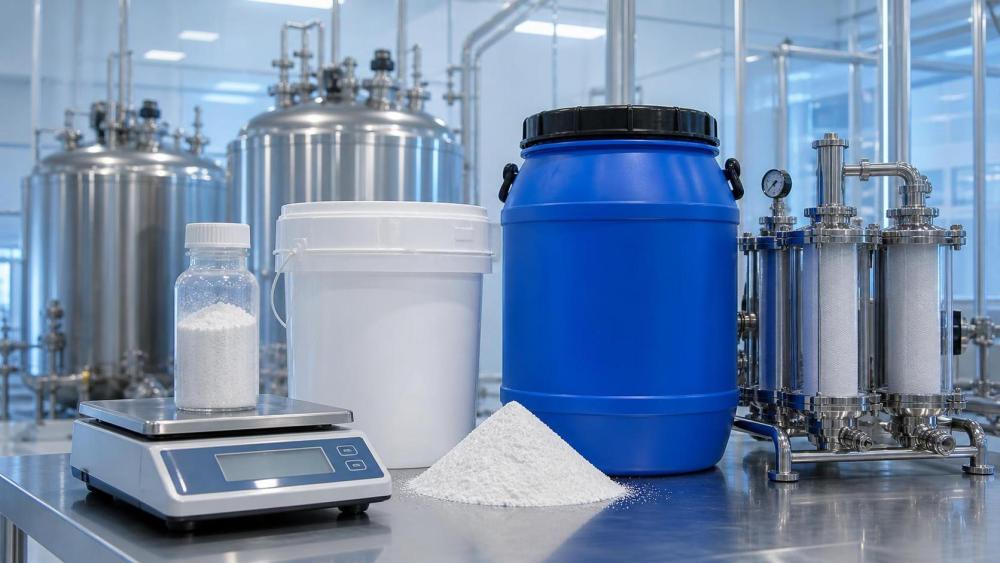
Purity and functional consistency are often priced more aggressively than simple assay concentration. For recombinant collagens, buyers usually need to look beyond protein percentage and ask whether the lot behaves the same in the intended system. In cosmetic emulsions, biomedical matrices, and nutri-beverage applications, viscosity response, film formation, thermal tolerance, and odor profile can matter as much as concentration. A material that passes a general protein test but shows batch-to-batch variation in molecular weight distribution may create reformulation work, which is part of total cost even if it does not appear on the invoice.
Molecular design is another major cost lever. Some recombinant collagens are engineered as short peptide fragments, while others are built to reproduce triple-helix behavior or specific binding motifs. The more closely the molecule needs to resemble native collagen functionality, the more demanding the design and purification process becomes. Crosslinkability, enzymatic stability, and dispersion behavior can all be tuned, but those adjustments are rarely free. If the application requires a particular gelling profile or compatibility with hyaluronic acid, peptides, salts, or surfactant systems, the supplier may need tighter process control and more stringent release testing.
Application format changes the price structure too. Bulk powder is not automatically cheaper than liquid if the powder needs advanced drying to preserve structure. Freeze drying, spray drying, and low-temperature concentration each carry different trade-offs in yield, throughput, and residual activity. A powder that flows well, resists caking, and dissolves quickly can reduce line losses and mixing time, but those properties usually reflect additional processing. Liquid grades may look simpler, yet they can require preservatives, pH control, cold-chain handling, or shorter shelf-life management.
Regulatory and quality documentation also shape recombinant collagens bulk price. If the ingredient is intended for food, personal care, or medical-adjacent use, the evidence package may need allergen statements, traceability records, method validation, microbiological data, and specification sheets that match the target market’s expectations. The cost is not only in the paperwork itself. It also sits in the laboratory time, retained samples, audit readiness, and batch release discipline behind the paperwork. Suppliers that can support broader documentation requirements generally price that capability into the material.
Procurement risk is easy to underestimate. A quote that looks favorable can become expensive if the supplier has irregular lead times, limited batch size, or frequent change control. Recombinant proteins are sensitive to process drift, and a small shift in fermentation performance can alter the entire lot profile. If the supply chain depends on one facility, one purification train, or one source of critical media components, the commercial price often carries a risk premium. That premium is not always stated explicitly, but it appears in minimum order quantities, flexible pricing bands, or restricted payment terms.
Transport and storage conditions matter more than many ingredient categories because recombinant collagens can be vulnerable to heat, humidity, and mechanical stress. Air freight, refrigerated shipping, desiccant packaging, and special handling all raise landed cost. Even when ambient shipment is possible, long transit times can affect quality margins and shorten usable shelf life. For global sourcing, the apparent difference between ex-works pricing and landed pricing can become substantial once customs clearance, insurance, temperature control, and inland transfer are included.
Order size affects bulk price, but not in a simple linear way. Larger commitments often reduce per-kilogram cost because they improve production planning and lower packaging overhead. Still, unusually large orders can expose the buyer to inventory risk if the material is being qualified for a new formulation or if the demand forecast is uncertain. Some suppliers will price small pilot lots at a premium because they interrupt normal production runs, while others will charge more for custom lots that require dedicated tank cleaning, separate labeling, or restricted changeover schedules. The relevant question is not only “how much volume” but “how much operational disruption.”
Comparison across suppliers is often distorted by specification language. One supplier may quote a broad technical grade while another quotes a narrow functional grade with tighter limits on impurities and better reproducibility. Without matching assay method, particle size, moisture content, solution behavior, and storage stability, the comparison can be misleading. A lower quoted price may reflect looser control rather than a better manufacturing cost base. That matters because recombinant collagen performance is usually tied to the chain length, folding state, and residual process impurities, not just the label claim.
Application testing should be treated as part of the purchase economics. If the collagen is destined for creams, serums, gels, edible systems, or structured nutrition formats, the real cost includes time spent on dispersion trials, pH adjustment, sensory checks, and stability observation under relevant conditions. A material that seems expensive on paper may reduce troubleshooting later if it integrates cleanly with salts, humectants, emulsifiers, acids, or heat exposure. In contrast, a cheaper grade that foams excessively, gels unpredictably, or loses function in the final matrix can push the total sourcing cost well above the initial quote.
Minimum order quantity, lead time, and contract structure also affect price in practice. A supplier that can reserve fermentation capacity, hold safety stock, or support staggered shipments may charge more than one selling from open inventory. For procurement planning, that difference should be read as a supply assurance cost rather than a pure material premium. In ingredients with sensitive quality profiles, the ability to repeat the same lot characteristics over time can be more valuable than a marginal discount. The most useful comparison is usually between delivered cost, qualification burden, and expected performance in the actual formulation route.
The most common mistake is treating recombinant collagens bulk price as a single line item. It is really a bundle of process cost, analytical burden, packing, transport, documentation, and formulation risk. When those elements are separated clearly, the quote becomes easier to interpret, and the cheapest number is less likely to win by accident.
Related News
- How to assess recombinant collagen ingredients for cream stabilityOct 02, 2026Cosmeceutical Formulator
- How to assess an anti-aging ingredients manufacturer’s batch consistencySep 17, 2026Cosmeceutical Formulator
- How to verify cosmetic peptide delivery compliance before launchAug 30, 2026Cosmeceutical Formulator
- When do biomimetic actives in North America justify a premium in anti-aging formulasAug 25, 2026Cosmeceutical Formulator
Related News
- 00
0000-00
Verifying halal status of hydrocolloid ingredients in the Middle East - 00
0000-00
How to interpret active matter on a surfactant specification sheet - 00
0000-00
What Quality Checks Should You Run on Fragrance Ingredient Suppliers? - 00
0000-00
How to assess a flavor chemistry manufacturer's batch consistency - 00
0000-00
What drives fragrance ingredients price changes in bulk orders?
Cosmeceutical Formulator
Weekly Insights
Stay ahead with our curated technology reports delivered every Monday.