





As beauty consumers demand visible efficacy, cleaner labels, and stronger safety proof, anti-aging cosmetic compounds are becoming a strategic battleground for premium formulation in 2026.
The next wave is not only about adding peptides or bioactive molecules.
It is about matching transdermal science, compliance readiness, sensory design, and ingredient economics to each commercial scenario.
For FFAI, the opportunity sits behind the label, where molecular efficacy must become credible, stable, safe, and desirable.
Scenario Background: Why 2026 Changes the Use of Anti-Aging Cosmetic Compounds
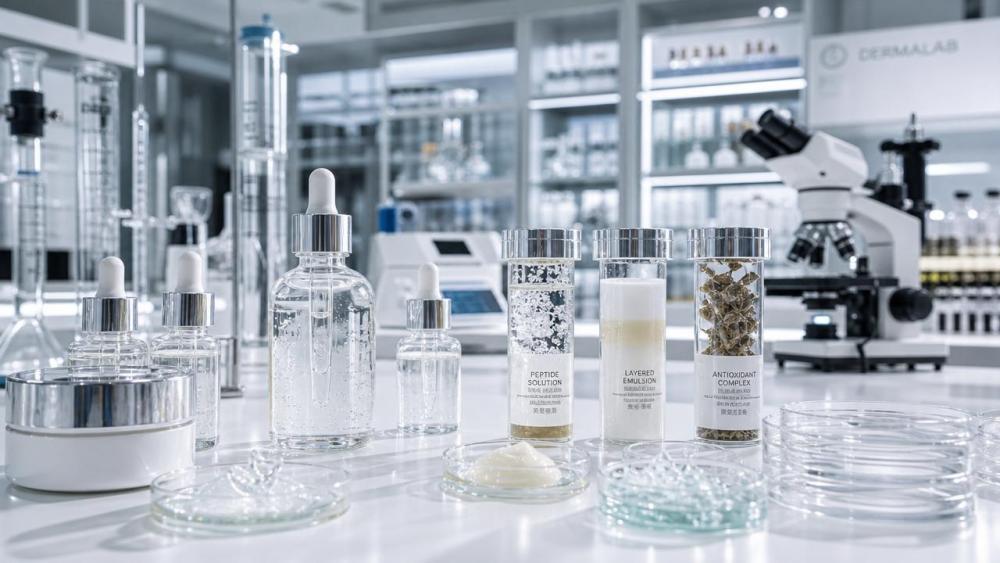
In 2026, anti-aging cosmetic compounds are judged by scenario performance, not by fashionable ingredient names alone.
A peptide serum, a barrier cream, and a luxury emulsion require different efficacy evidence, texture logic, and regulatory narratives.
This shift matters because scientific anti-aging is moving from promise-based storytelling to measurable formulation architecture.
Consumers now compare before-and-after claims, irritation risk, ingredient origin, and visible skin feel within the same purchase decision.
FFAI sees five forces reshaping the premium active market.
- Higher demand for clinical-style substantiation without drug-like positioning.
- More interest in biomimetic peptides, recombinant collagen, and postbiotic actives.
- Stricter screening of fragrance allergens, preservatives, and residual solvents.
- Greater need for elegant sensory systems that hide active instability.
- Sharper cost-to-premium analysis before adopting expensive molecules.
Therefore, anti-aging cosmetic compounds must be selected by use case, claim ambition, skin biology, and market positioning.
Scenario One: Peptide-Driven Serums for Visible Firmness Claims
Peptide serums remain a leading scenario for anti-aging cosmetic compounds because they support premium claims with strong scientific language.
The core judgment point is not whether a formula contains peptides.
The key question is whether the peptide system can survive processing, storage, and skin-surface enzymatic stress.
Signal peptides, carrier peptides, and neurotransmitter-inspired peptides work through different biological routes.
Combining them without interaction mapping may create marketing richness but weak biological focus.
In this scenario, anti-aging cosmetic compounds should be evaluated through molecular weight, charge profile, solubility, and delivery compatibility.
FFAI’s transdermal view emphasizes the stratum corneum as a defensive wall, not a passive membrane.
Penetration enhancers, liposomes, lamellar emulsions, and mild exfoliating acids can improve access.
However, irritation risk rises when too many penetration strategies are stacked together.
Core Judgment Points for Peptide Scenarios
- Match peptide function to one clear claim, such as firmness, elasticity, or wrinkle appearance.
- Confirm compatibility with preservatives, chelators, electrolytes, and acidic actives.
- Use stability testing at elevated temperature and light exposure.
- Avoid aggressive fragrance loads that undermine sensitive-skin positioning.
Scenario Two: Barrier Repair Creams for Mature and Reactive Skin
Barrier repair creams are becoming a safer growth scenario for anti-aging cosmetic compounds in mature, dry, and reactive skin categories.
Here, the most important demand is not fast stimulation.
The priority is restoring comfort while supporting long-term resilience and smoother texture.
Ceramides, cholesterol, fatty acids, ectoin, panthenol, beta-glucan, and niacinamide often outperform more aggressive anti-aging strategies.
These anti-aging cosmetic compounds work best when the emulsion structure resembles skin lipid organization.
A cream can fail even with excellent actives if the sensory phase feels waxy, heavy, or occlusive.
This is where FFAI links rheology, surfactant behavior, and active delivery.
Thickeners and emulsifiers are not supporting characters.
They shape consumer perception, active release, preservative efficiency, and premium acceptance.
For barrier scenarios, clean-label pressure is also stronger.
Low-allergen fragrance systems, biodegradable emulsifiers, and transparent preservation choices help reduce trust friction.
Scenario Three: Luxury Emulsions Built Around Bioactive Storytelling
Luxury emulsions use anti-aging cosmetic compounds to create both perceived sophistication and defensible product pricing.
This scenario often features Pro-Xylane-inspired molecules, recombinant collagen, exosomes-inspired complexes, fermented extracts, and advanced antioxidants.
The formula must deliver a complete sensory arc.
First touch, glide, absorption, after-feel, and fragrance evolution all influence the perception of efficacy.
The central judgment point is whether expensive actives create a credible premium moat.
A high-cost molecule needs a measurable role, a stable format, and a narrative that survives compliance review.
Anti-aging cosmetic compounds in luxury formats should not be chosen only for rarity.
They must integrate with texture, packaging, claim language, and global notification requirements.
For example, oxygen-sensitive antioxidants may need airless packaging, opaque containers, or encapsulation.
Without these controls, formula prestige collapses during shelf-life testing.
Scenario Four: Clean Beauty Lines Balancing Safety and Performance
Clean beauty has matured beyond simple “free-from” lists.
In 2026, this scenario demands anti-aging cosmetic compounds with traceable origin, low irritation potential, and credible performance data.
Natural does not automatically mean stable, gentle, or effective.
Botanical antioxidants can vary by harvest, extraction solvent, storage condition, and residual impurity profile.
Fermented ingredients may offer elegant positioning, but require microbiological control and documentation discipline.
The key decision is when to use nature-identical molecules instead of unstable plant extracts.
Nature-identical actives can preserve clean storytelling while improving batch consistency and safety predictability.
Anti-aging cosmetic compounds for clean beauty also need preservative strategy from the beginning.
Reducing preservatives without changing water activity, pH, packaging, and manufacturing hygiene creates avoidable risk.
Different Scenario Demands for Anti-Aging Cosmetic Compounds
This comparison shows why anti-aging cosmetic compounds cannot follow one universal selection rule.
Each scenario needs a different balance between biological mechanism, sensory quality, compliance exposure, and cost recovery.
Scenario Fit Recommendations for 2026 Formula Development
FFAI recommends building formula decisions from scenario maps before ingredient screening begins.
This avoids overloading formulas with fashionable anti-aging cosmetic compounds that compete instead of cooperate.
- Define the primary skin-change claim before selecting actives.
- Map biological targets, including collagen support, barrier recovery, pigmentation balance, or oxidative stress.
- Screen compounds for solubility, pH tolerance, heat tolerance, and preservative compatibility.
- Select delivery systems that match irritation tolerance and product texture.
- Test the sensory profile against the price tier and usage ritual.
- Prepare documentation for CPNP, regional ingredient rules, and claim substantiation.
For premium formulas, anti-aging cosmetic compounds should be evaluated with a cost-to-premium lens.
An expensive active is justified only when it improves claims, differentiation, stability, or perceived luxury.
For accessible formulas, the smarter route may be multifunctional compounds with strong skin tolerance.
Niacinamide, panthenol, antioxidants, and barrier lipids can create reliable performance without excessive formula complexity.
Common Misjudgments When Using Anti-Aging Cosmetic Compounds
One common mistake is treating ingredient concentration as the only proof of performance.
For many anti-aging cosmetic compounds, delivery, stability, and skin compatibility matter more than headline percentage.
Another misjudgment is ignoring the base formula.
A poorly designed emulsion can reduce active availability, destabilize preservatives, or create unpleasant residue.
A third error is copying clinical language without compliance filtering.
Cosmetic claims must avoid disease treatment or structural drug implications in many jurisdictions.
A fourth risk is fragrance conflict.
A beautiful scent can improve usage pleasure, but allergens may weaken sensitive-skin credibility.
Finally, teams often underestimate packaging.
Air, light, metal ions, and repeated finger contact can damage advanced anti-aging cosmetic compounds during real use.
Action Guide: Turning 2026 Trends into Safer Premium Formulas
The practical next step is to connect every formula brief with a scenario-based active matrix.
Start with the target claim, then verify whether the chosen anti-aging cosmetic compounds can support it under real conditions.
FFAI’s intelligence approach combines molecular science, sensory formulation, regulatory monitoring, and ingredient pricing logic.
This helps transform active selection from trend chasing into a defensible innovation system.
For 2026, the strongest formulas will not be the longest ingredient lists.
They will be the formulas where every compound has a role, every claim has support, and every sensory detail strengthens trust.
Use anti-aging cosmetic compounds as molecular scalpels, not decorative labels.
With disciplined scenario matching, scientific anti-aging can become safer, more premium, and more commercially resilient.
Related News
- How to evaluate anti-aging cosmetic compounds for wrinkle careOct 01, 2026Cosmeceutical Formulator
- How scientific anti-aging skincare targets wrinkles at the cellular levelSep 22, 2026Cosmeceutical Formulator
- What drives Pro-Xylane price differences between cosmetic suppliers?Sep 09, 2026Cosmeceutical Formulator
- Pro-Xylane in Skincare: What Sets Its Anti-Wrinkle Claims ApartJul 15, 2026Cosmeceutical Formulator
Related News
- 00
0000-00
Can biomimetic peptides in cosmetics reduce the look of wrinkles? - 00
0000-00
How to assess a bio-based thickener manufacturer's batch consistency - 00
0000-00
Verifying halal status of hydrocolloid ingredients in the Middle East - 00
0000-00
How to interpret active matter on a surfactant specification sheet - 00
0000-00
How Do You Test Hydrocolloid Viscosity After Changing a Thickener?
Cosmeceutical Formulator
Weekly Insights
Stay ahead with our curated technology reports delivered every Monday.