





As premium beauty markets become more efficacy-driven, anti-aging cosmetic compounds are moving from marketing language to measurable claim support. For enterprise decision-makers, understanding how peptides, Pro-Xylane, and other advanced actives align with wrinkle reduction, compliance, and formulation value is now essential. This article explores the science, commercial relevance, and competitive advantages behind compounds that help substantiate modern wrinkle claims.
What Enterprise Buyers Are Really Evaluating Behind Wrinkle Claims
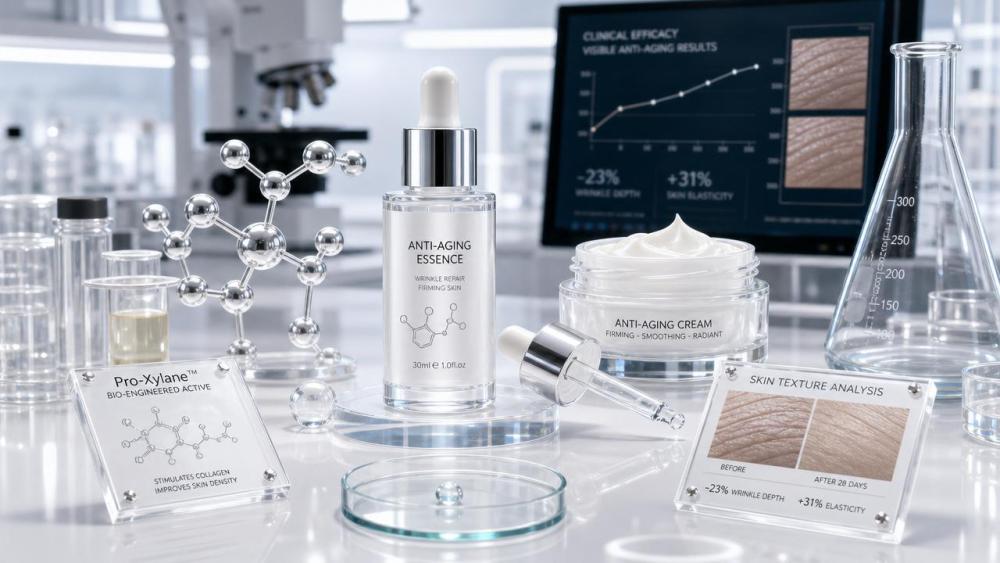
When decision-makers search for anti-aging cosmetic compounds, they are usually not looking for ingredient lists alone. They want to know which actives can credibly support wrinkle claims and justify premium positioning.
The core commercial question is straightforward: which compounds have enough scientific support, formulation feasibility, and regulatory defensibility to reduce business risk while improving product differentiation?
For brands, contract manufacturers, and ingredient suppliers, wrinkle-related claims sit at the intersection of biology, consumer perception, legal exposure, and margin structure. A compound may look promising in vitro yet fail commercially.
That is why the most valuable evaluation framework goes beyond “does it work.” It also asks whether the active survives the formula, penetrates effectively, supports storytelling, and fits target markets.
Why Anti-Aging Cosmetic Compounds Matter More in Premium FMCG Beauty
In prestige and masstige skincare, anti-aging cosmetic compounds increasingly serve as the technology backbone of value creation. They influence not only performance expectations, but also pricing power and brand credibility.
Consumers now expect visible results, not vague rejuvenation language. Retailers, online marketplaces, and regulators are also paying closer attention to whether wrinkle claims are supported by meaningful evidence.
As a result, advanced actives have shifted from decorative formula additions to strategic assets. The right compound can anchor a hero SKU, strengthen clinical narratives, and support cross-market expansion.
For enterprise leaders, this means ingredient selection affects far more than R&D. It influences claim architecture, launch timelines, procurement strategy, and whether the final product can defend its premium.
Which Compounds Most Often Support Wrinkle Reduction Positioning
Several classes of anti-aging cosmetic compounds are commonly used to support wrinkle-oriented claims, but they do not all work through the same mechanism or deliver the same quality of evidence.
Peptides remain among the most commercially significant groups. Signal peptides may stimulate extracellular matrix components, while neurotransmitter-inspired peptides are often positioned around expression line appearance.
Pro-xylane is another well-known premium active, often associated with skin matrix support and hydration-related improvements in visible skin texture. Its commercial value comes from strong brand recognition and premium alignment.
Retinoid-related ingredients are also widely respected for wrinkle improvement, though irritation, stability, and regional regulatory constraints may limit broader use in some business models.
Niacinamide, certain antioxidants, hyaluronic acid systems, and botanical actives can also contribute to anti-wrinkle performance. However, their role is often stronger in support formulas than in core premium claim leadership.
The practical takeaway is that no single compound wins in all cases. The best selection depends on target claim strength, desired sensory profile, price tier, and acceptable compliance complexity.
How Peptides Create Business Value Beyond Marketing Appeal
Peptides continue to attract enterprise attention because they offer a strong combination of scientific sophistication, premium consumer perception, and flexible positioning across creams, serums, and eye treatments.
From a biological perspective, many peptides are designed to interact with pathways related to collagen support, barrier recovery, or visible skin smoothness. That makes them useful for wrinkle-related narratives.
From a business perspective, peptides help brands communicate advanced formulation science without relying solely on harsher or more controversial actives. This can expand appeal among sensitive-skin and prestige-focused consumers.
They are also adaptable in portfolio strategy. A company may use one peptide as a hero active in a flagship serum and combine it with hydrators, antioxidants, or delivery systems in supporting SKUs.
Still, enterprise buyers should evaluate peptide quality carefully. Sequence design, purity, supplier consistency, dose relevance, and encapsulation approach all affect whether a peptide performs in market reality.
Peptides can support a wrinkle claim effectively, but only when the formula design preserves activity and the supporting data reflects real-world topical use rather than laboratory promise alone.
Where Pro-Xylane and Similar Premium Actives Fit in a Claim Strategy
Pro-xylane and comparable high-end actives often play a different role from generic anti-aging ingredients. They function as prestige markers that connect efficacy messaging with a luxury innovation story.
For decision-makers, that matters because consumers in premium beauty do not buy actives only for biochemical performance. They also buy the confidence associated with patented, proprietary, or highly differentiated technologies.
Compounds in this category are particularly useful when a brand wants to support claims around visible wrinkle reduction, firmness, plumpness, and skin quality improvement without overreliance on aggressive exfoliation.
However, these ingredients must be judged on total formula economics. A premium active with strong branding value may still fail if it inflates cost of goods without improving conversion, retention, or price realization.
The best use case is often a flagship or high-margin line where the active supports both efficacy substantiation and emotional premiumization. In that context, the compound becomes part of the brand moat.
What Evidence Is Strong Enough to Support Modern Wrinkle Claims
One of the biggest mistakes in anti-aging product planning is assuming that any published ingredient study is enough to support a finished-product wrinkle claim. Enterprise buyers need a stricter standard.
Useful evidence generally falls into layers: mechanistic data, in vitro testing, ex vivo or instrumental studies, supplier dossiers, and controlled human use studies. The closer the data is to finished-product performance, the better.
For wrinkle claims, instrumental evaluations such as profilometry, image analysis, skin roughness measurement, and dermatologist grading often carry more practical value than vague self-assessment alone.
Consumer perception data still matters, especially for marketing. Yet from a risk perspective, subjective responses should ideally reinforce, not replace, objective measurements.
It is also important to distinguish between ingredient-level evidence and formula-level evidence. A peptide may have solid supplier data, but the final emulsion may alter delivery, stability, or effective concentration.
Decision-makers should therefore ask suppliers specific questions: What concentration was tested? In what vehicle? Over what timeline? On how many participants? Under which claim language assumptions?
How Formulation Reality Can Strengthen or Destroy Ingredient Performance
Even excellent anti-aging cosmetic compounds can underperform when formulation conditions are poorly matched to their chemistry. This is where commercial promise often breaks down before launch.
Stability is a major issue. Some actives degrade under light, oxygen, heat, or incompatible pH conditions. Others interact poorly with surfactants, preservatives, or fragrance systems.
Delivery is equally important. An ingredient that remains on the surface without effective bioavailability may improve moisturization yet fail to support deeper wrinkle-reduction expectations.
Texture also matters more than many technical teams admit. If the final serum pills, feels sticky, or layers badly with sunscreens and makeup, consumer adherence drops and efficacy perception suffers.
That is why the strongest programs integrate active selection with delivery systems, emulsifier choice, packaging protection, and sensory engineering from the beginning, not as separate downstream tasks.
In premium skincare, good science must survive contact with real usage conditions. Otherwise, even a costly active becomes an expensive line item rather than a performance driver.
Compliance and Claim Risk: What Leaders Should Not Overlook
Wrinkle claims are commercially powerful, but they attract scrutiny. For enterprise leaders, compliance is not a side issue; it is central to preserving launch viability and protecting brand equity.
Different jurisdictions approach cosmetic claims differently, especially where language suggests structural skin repair or pharmaceutical-like activity. What is acceptable in one market may trigger challenge in another.
That means anti-aging cosmetic compounds should be selected with both efficacy and claim flexibility in mind. An active that requires aggressive wording to justify its cost may create unnecessary regulatory pressure.
Ingredient documentation is also critical. Safety files, usage guidance, impurity profiles, allergen considerations, and notification readiness all affect how quickly a product can move across regions.
For B2B buyers, the best suppliers do more than sell actives. They provide defensible technical dossiers, testing guidance, and realistic claim language boundaries that reduce legal and reputational exposure.
How to Judge ROI When Premium Actives Are Expensive
High-end wrinkle compounds can dramatically raise formula costs, so procurement decisions should be tied to measurable commercial outcomes rather than innovation enthusiasm alone.
A useful ROI model includes cost per effective dose, expected shelf-level differentiation, claim strength, margin impact, consumer willingness to pay, and the active’s contribution to repeat purchase behavior.
In some cases, a very expensive hero active is justified because it transforms the product into a premium flagship. In others, a balanced combination of mid-cost actives may produce better portfolio economics.
Leaders should also consider whether the active improves channel performance. Prestige retail, clinic-led distribution, and cross-border ecommerce may reward scientific storytelling more than mass channels do.
Another overlooked factor is portfolio leverage. If one validated compound can support multiple SKUs, campaigns, and regional launches, its strategic value may exceed what a single product P&L suggests.
A Practical Selection Framework for Enterprise Decision-Makers
For most organizations, the best path is not to chase every fashionable molecule. It is to build a disciplined screening process for anti-aging cosmetic compounds tied to business objectives.
Start with the desired claim outcome. Is the product aiming for fine-line reduction, deeper wrinkle appearance improvement, firmness support, or an overall “younger-looking skin” narrative?
Then evaluate evidence quality, formulation compatibility, sensory impact, regulatory fit, supply reliability, and target price architecture. Each criterion should be weighted according to the brand’s market position.
Next, validate whether the active needs a supporting system. Many compounds perform better when paired with humectants, barrier-support agents, or delivery technologies that improve visible outcomes.
Finally, align technical choice with commercial storytelling. The best ingredient is not always the most complex one, but the one that can be truthfully explained, clinically supported, and profitably sold.
Conclusion: The Best Wrinkle-Supporting Compounds Combine Science, Fit, and Defensibility
Anti-aging cosmetic compounds create value when they do more than sound advanced. They must support credible wrinkle claims, fit the formula environment, meet compliance expectations, and strengthen business performance.
Peptides, Pro-xylane, and other premium actives can absolutely justify attention from enterprise buyers. But their real worth depends on evidence quality, formulation execution, and how well they align with product strategy.
For decision-makers in beauty and FMCG, the winning approach is not simply buying stronger actives. It is building a sharper system for selecting compounds that deliver measurable efficacy and durable brand advantage.
In an increasingly evidence-driven market, the most successful wrinkle claims will come from companies that connect molecular science, regulatory discipline, and commercial intelligence into one coherent formulation strategy.
Related News
- How to evaluate anti-aging cosmetic compounds for wrinkle careOct 01, 2026Cosmeceutical Formulator
- How scientific anti-aging skincare targets wrinkles at the cellular levelSep 22, 2026Cosmeceutical Formulator
- What drives Pro-Xylane price differences between cosmetic suppliers?Sep 09, 2026Cosmeceutical Formulator
- Pro-Xylane in Skincare: What Sets Its Anti-Wrinkle Claims ApartJul 15, 2026Cosmeceutical Formulator
Related News
- 00
0000-00
Can biomimetic peptides in cosmetics reduce the look of wrinkles? - 00
0000-00
How to assess a bio-based thickener manufacturer's batch consistency - 00
0000-00
Verifying halal status of hydrocolloid ingredients in the Middle East - 00
0000-00
How to interpret active matter on a surfactant specification sheet - 00
0000-00
How Do You Test Hydrocolloid Viscosity After Changing a Thickener?
Cosmeceutical Formulator
Weekly Insights
Stay ahead with our curated technology reports delivered every Monday.