





Cosmetic Actives: Efficacy Claims and Formulation Risks
For technical evaluators, cosmetic actives are no longer judged by ingredient prestige alone, but by measurable efficacy and formulation behavior.
Peptides, retinoid alternatives, Pro-Xylane, antioxidants, and recombinant biomaterials may support premium anti-aging positioning.
Yet every active molecule also carries risks related to degradation, incompatibility, penetration, sensory compromise, and claim substantiation.
A credible assessment of cosmetic actives must connect molecular evidence, formula architecture, manufacturing reality, and regulatory defensibility.
Definition and Evaluation Scope of Cosmetic Actives
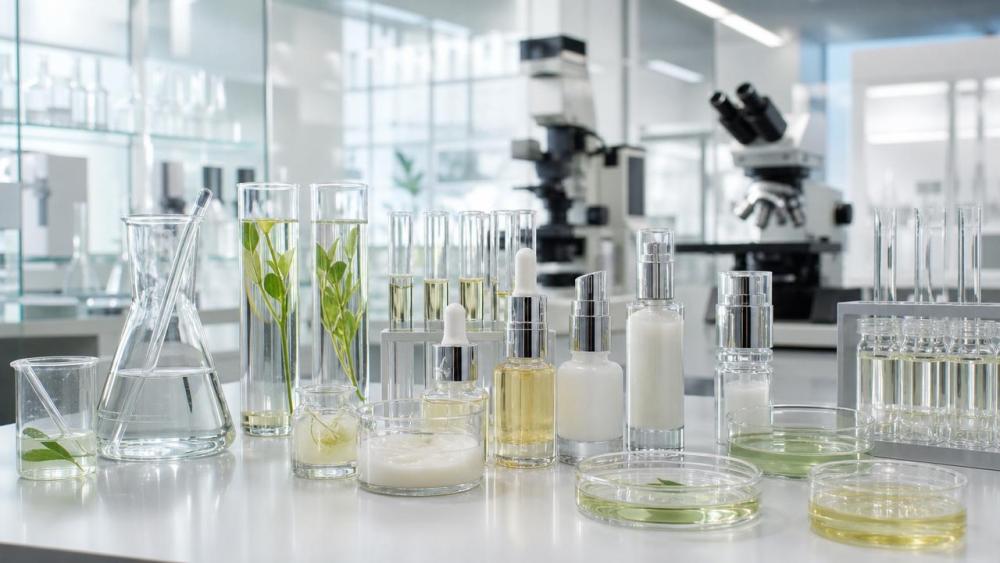
Cosmetic actives are ingredients selected to deliver a visible or perceivable benefit beyond basic cleansing, coloring, or fragrance.
They may target hydration, wrinkles, dullness, barrier support, pigmentation appearance, scalp comfort, or antioxidant protection.
In premium skin care, cosmetic actives often become the scientific center of the product story.
However, an active name on a label is not equal to biological relevance or consumer-visible performance.
The practical question is whether the active remains stable, available, compatible, and supportable at the intended use level.
This is where cosmetic actives differ from simple concept ingredients or marketing trace components.
A serious evaluation considers concentration, purity, delivery form, skin interaction, formula matrix, and evidence hierarchy.
Core Criteria for Technical Assessment
- Identity: confirmed structure, grade, impurity profile, and supplier documentation.
- Dose: realistic use level compared with published or supplier-supported efficacy data.
- Stability: resistance to heat, light, oxygen, water, and pH drift.
- Compatibility: behavior with emulsifiers, preservatives, salts, oils, polymers, and fragrances.
- Claims: language supported by tests, regulations, and category boundaries.
Industry Background and Current Focus Points
The global beauty sector is moving from decorative claims toward evidence-led performance narratives.
This shift raises the technical burden for cosmetic actives used in anti-aging, brightening, barrier, and sensitive-skin formulas.
Premium brands must explain why an active works, how it is delivered, and why the formula remains safe.
Regulatory expectations also push companies away from vague medicinal language and unsupported transformation claims.
For global launches, the same cosmetic actives may face different limits, notification requirements, and claim interpretations.
Efficacy Claims and Evidence Hierarchy
Efficacy claims for cosmetic actives should be built from evidence, not from fashionable ingredient names.
A supplier brochure may be useful, but it rarely replaces finished-formula verification.
The evidence chain begins with ingredient identity and ends with consumer-relevant testing under realistic use conditions.
For peptides, cell studies may suggest signaling activity, but skin penetration and dosage still require scrutiny.
For antioxidants, radical-scavenging assays do not automatically prove visible wrinkle or pollution-defense performance.
For retinoid alternatives, gentleness claims must be balanced against meaningful endpoints and irritation monitoring.
Evidence Levels Commonly Used
- Analytical confirmation of active identity and concentration.
- In vitro screening related to the proposed mechanism.
- Ex vivo or reconstructed skin models for closer biological relevance.
- Clinical or instrumental testing on the finished formula.
- Consumer perception studies supporting sensory or appearance claims.
The strongest claims for cosmetic actives usually combine instrumental data with controlled consumer-use evidence.
Before launch, claim wording should be checked against cosmetic boundaries and local regulatory expectations.
Formulation Risks That Affect Active Performance
Formulation risk is often underestimated because cosmetic actives are assessed separately from the final matrix.
A molecule that performs in a model system may fail inside an emulsion, gel, serum, or anhydrous balm.
The main risks include chemical degradation, physical instability, loss of bioavailability, and sensory incompatibility.
Peptides may hydrolyze, oxidize, bind to polymers, or interact with metal ions.
Vitamin C derivatives may require specific pH windows, chelation, and oxygen control.
Botanical antioxidants may introduce color drift, odor instability, and batch variability.
Recombinant collagen-like materials may face viscosity changes, preservation challenges, and temperature sensitivity.
Common Risk Sources
- pH mismatch between active stability and skin-feel requirements.
- Oxidation triggered by light, air, metals, or high processing temperature.
- Preservative conflict with proteins, peptides, gums, or charged systems.
- Solubility limits causing crystallization, haze, sediment, or reduced availability.
- Packaging interactions that reduce active concentration during shelf life.
These issues can weaken cosmetic actives even when the initial formula looks visually acceptable.
Accelerated stability, real-time stability, and assay-based tracking should be planned early.
Typical Active Categories and Application Logic
Cosmetic actives can be grouped by intended benefit, but formulation logic often differs within the same benefit category.
A wrinkle claim may rely on hydration, optical smoothing, barrier reinforcement, or biological signaling.
Understanding this distinction helps prevent exaggerated positioning and poor ingredient combinations.
The best cosmetic actives are selected for strategic fit, not simply for novelty.
They should reinforce the product format, price tier, sensory profile, and claim architecture.
Business Value of a Compliance-Aware Active Strategy
A disciplined approach to cosmetic actives creates value beyond formula performance.
It reduces reformulation risk, supports international expansion, and strengthens trust in premium product claims.
For global FMCG and beauty portfolios, compliance-aware ingredient intelligence is a competitive asset.
It helps align R&D, regulatory, marketing, procurement, and quality teams around a defensible technical narrative.
This is especially important when cosmetic actives carry high ingredient costs or limited supplier options.
A premium active that fails stability testing can erase timeline advantages and damage launch credibility.
A well-documented active platform can support line extensions, regional adaptations, and stronger consumer education.
Operational Benefits
- Clearer selection of hero ingredients and supporting ingredients.
- Lower risk of claim rejection or corrective labeling.
- Improved supplier qualification through comparable technical criteria.
- Better preservation and packaging decisions from early risk mapping.
- Stronger connection between sensory experience and measurable benefit.
Practical Recommendations for Safer Formulation Decisions
Cosmetic actives should be evaluated before the formula identity becomes locked.
Early screening avoids costly redesign when the active conflicts with pH, emulsifier choice, or preservation system.
A useful workflow starts with technical due diligence and ends with claim-ready documentation.
- Define the exact consumer benefit and measurable endpoint.
- Check permitted use, notification needs, and regional claim limits.
- Request full specification, safety data, allergen information, and impurity controls.
- Assess stability across pH, temperature, light, and oxygen exposure.
- Test compatibility with preservatives, fragrance, chelators, polymers, and packaging.
- Confirm the active level after processing and storage.
- Design finished-formula tests that match intended claims.
When several cosmetic actives are combined, interaction mapping becomes essential.
Synergy is attractive, but antagonism, irritation accumulation, and instability are more common than expected.
Simple formulas with fewer well-supported cosmetic actives often outperform crowded formulas with weak evidence.
Action Path for Active Ingredient Intelligence
A successful active strategy starts with a disciplined question: what must this ingredient prove in the final formula?
From there, teams can build a dossier covering chemistry, stability, safety, efficacy, sensory impact, and compliance.
FFAI tracks cosmetic actives through molecular science, regulatory intelligence, supplier documentation, and formulation risk interpretation.
The goal is not to chase every emerging molecule, but to identify defensible actives with real commercial value.
For premium beauty development, cosmetic actives should be treated as technical investments, not decorative label claims.
Before selecting the next hero ingredient, review its evidence, stability, compatibility, and claim pathway with equal rigor.
That approach turns cosmetic actives into credible formulation assets and protects long-term product trust.
Related News
- How to evaluate anti-aging cosmetic compounds for wrinkle careOct 01, 2026Cosmeceutical Formulator
- How scientific anti-aging skincare targets wrinkles at the cellular levelSep 22, 2026Cosmeceutical Formulator
- What drives Pro-Xylane price differences between cosmetic suppliers?Sep 09, 2026Cosmeceutical Formulator
- Pro-Xylane in Skincare: What Sets Its Anti-Wrinkle Claims ApartJul 15, 2026Cosmeceutical Formulator
Related News
- 00
0000-00
Can biomimetic peptides in cosmetics reduce the look of wrinkles? - 00
0000-00
How to assess a bio-based thickener manufacturer's batch consistency - 00
0000-00
Verifying halal status of hydrocolloid ingredients in the Middle East - 00
0000-00
How to interpret active matter on a surfactant specification sheet - 00
0000-00
How Do You Test Hydrocolloid Viscosity After Changing a Thickener?
Cosmeceutical Formulator
Weekly Insights
Stay ahead with our curated technology reports delivered every Monday.