





On May 11, 2026, the General Administration of Customs of the People’s Republic of China implemented Announcement No. 61, updating the Administrative Measures for Inspection and Quarantine Supervision of Imported and Exported Cosmetics. The revision introduces enhanced regulatory requirements for high-end cosmetic active ingredients—including Pro-Xylane, anti-wrinkle peptides, and high-purity hyaluronic acid—making it essential for importers, raw material buyers, and contract manufacturers serving the Chinese cosmetics market to reassess compliance readiness.
Event Overview
Effective May 11, 2026, Customs General Administration Announcement No. 61 formally updates the Administrative Measures for Inspection and Quarantine Supervision of Imported and Exported Cosmetics. The updated measures establish a new regulatory framework for imported cosmetic active ingredients, centered on three pillars: classification and grading, remote inspection, and electronic label traceability. Importers must verify that their Chinese suppliers are connected to the Customs ‘Cosmetic Raw Material Traceability Code System’, and must submit a process validation package per batch, compliant with IFRA and ISO 22716 standards.
Industries Affected by the Revision
Direct Trading Enterprises
Importers of cosmetic active ingredients face immediate procedural changes: mandatory pre-shipment verification of supplier system integration, additional documentation for each consignment, and stricter eligibility criteria for customs clearance. Non-compliant shipments risk detention or rejection at entry points.
Raw Material Procurement Enterprises
Domestic cosmetic brands and R&D-driven formulators sourcing active ingredients internationally must now validate not only product specifications but also upstream manufacturing compliance. The requirement for IFRA/ISO 22716-aligned process validation packages shifts procurement due diligence from quality assurance to full supply chain governance.
Contract Manufacturing Organizations (CMOs) and Fill-Finish Facilities
Manufacturers relying on imported actives for finished products must ensure traceability alignment across all tiers—from foreign supplier to domestic warehouse to production line. Any gap in electronic labeling or missing validation documentation may disrupt batch release and delay commercialization timelines.
Supply Chain Service Providers
Logistics providers, customs brokers, and traceability platform vendors are directly impacted by the new technical mandates. Integration with the Customs ‘Cosmetic Raw Material Traceability Code System’ becomes a prerequisite service capability—not an optional add-on—for handling regulated actives.
What Relevant Enterprises or Practitioners Should Focus On
Monitor official implementation guidance and system rollout timelines
The announcement confirms the regulatory framework but does not detail technical interface specifications, phased enforcement schedules, or exceptions for transitional batches. Enterprises should track follow-up notices from Customs and the National Medical Products Administration (NMPA) for operational clarity.
Prioritize compliance readiness for high-value, high-risk actives
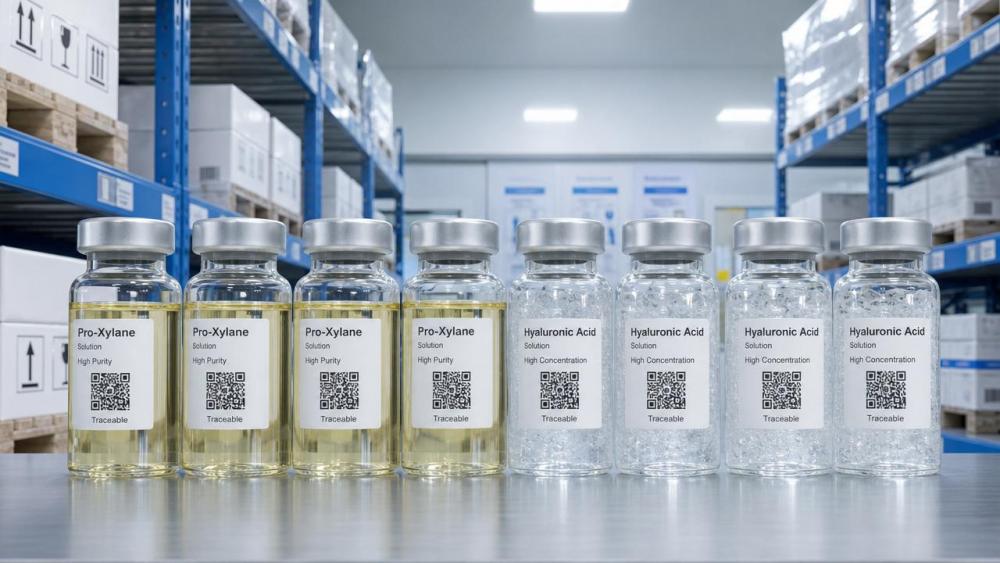
Pro-Xylane, anti-wrinkle peptides, and high-purity hyaluronic acid are explicitly named as subject to the new regime. Companies should map current import volumes and sourcing contracts for these categories—and assess whether existing suppliers can produce and submit IFRA/ISO 22716-compliant process validation packages.
Distinguish policy intent from enforceable obligations
The regulation mandates supplier connection to the traceability system and submission of process validation documents—but does not specify whether retroactive validation applies to inventory already in transit or warehoused prior to May 11, 2026. This distinction remains subject to further clarification and should inform short-term inventory planning.
Initiate cross-functional alignment between procurement, QA/QC, and regulatory affairs teams
Preparing required documentation and verifying supplier system access involves coordination across departments. Establishing internal workflows for document review, electronic label assignment, and batch-level traceability reconciliation is recommended before Q3 2026.
Editorial Perspective / Industry Observation
Observably, this revision signals a structural shift—not just a procedural update—in how China regulates high-value cosmetic inputs. It reflects a growing emphasis on end-to-end accountability rather than endpoint testing alone. Analysis shows the framework aligns more closely with EU and ASEAN GMP expectations, suggesting long-term convergence rather than isolated tightening. However, the current stage is best understood as a regulatory signal: while enforcement began May 11, 2026, full operational maturity of the traceability infrastructure and consistent application across ports remain under observation.
Conclusion
Announcement No. 61 marks a step toward harmonizing China’s cosmetic ingredient oversight with international GMP benchmarks—raising entry barriers for non-compliant suppliers while creating incentives for supply chain modernization. It is not yet a fully stabilized regime, but rather an evolving compliance landscape. Enterprises are better advised to treat it as a directional benchmark requiring staged adaptation—not as a static rulebook with universally defined execution paths.
Information Source:
• General Administration of Customs of the People’s Republic of China, Announcement No. 61 (2026)
Note: Technical implementation details—including API specifications for the ‘Cosmetic Raw Material Traceability Code System’, enforcement thresholds, and transitional arrangements—are still pending official publication and require ongoing monitoring.
Related News
- How to evaluate anti-aging cosmetic compounds for wrinkle careOct 01, 2026Cosmeceutical Formulator
- How scientific anti-aging skincare targets wrinkles at the cellular levelSep 22, 2026Cosmeceutical Formulator
- What drives Pro-Xylane price differences between cosmetic suppliers?Sep 09, 2026Cosmeceutical Formulator
- Pro-Xylane in Skincare: What Sets Its Anti-Wrinkle Claims ApartJul 15, 2026Cosmeceutical Formulator
Related News
- 00
0000-00
Verifying halal status of hydrocolloid ingredients in the Middle East - 00
0000-00
How to interpret active matter on a surfactant specification sheet - 00
0000-00
What Quality Checks Should You Run on Fragrance Ingredient Suppliers? - 00
0000-00
How to assess a flavor chemistry manufacturer's batch consistency - 00
0000-00
What drives fragrance ingredients price changes in bulk orders?
Cosmeceutical Formulator
Weekly Insights
Stay ahead with our curated technology reports delivered every Monday.