





Choosing a cosmetic active delivery system for whitening is no longer a narrow formulation decision. It sits at the intersection of stability science, skin bioavailability, sensory design, cost control, and compliance strategy. In whitening products, many brightening molecules are chemically fragile, poorly soluble, or easily deactivated by light, oxygen, heat, and incompatible excipients. A well-chosen delivery platform helps preserve activity, guide release, and support safer product performance in crowded global FMCG markets.
Why stability matters more in whitening formulas
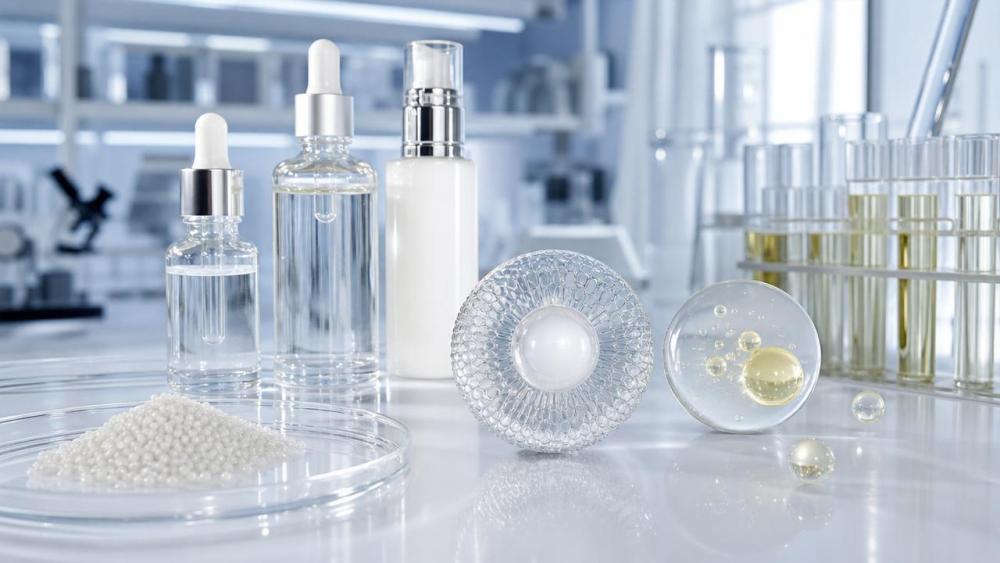
Whitening claims often depend on ingredients with known instability challenges. Vitamin C derivatives, glutathione, certain phenolic compounds, and botanical brighteners can degrade before they ever reach viable skin targets.
That makes a cosmetic active delivery system for whitening more than a marketing layer. It becomes a protection tool that shields actives during processing, storage, transport, and consumer use.
This issue also reflects a broader trend seen across FFAI coverage. Whether protecting food antioxidants from oxidation or preserving high-end cosmetic actives from hydrolysis, formulation value increasingly depends on molecular survival.
In practical terms, stability affects shelf life, claim support, batch consistency, and return risk. It also shapes whether a premium brightening concept remains commercially credible after scale-up.
What a cosmetic active delivery system for whitening actually does
A cosmetic active delivery system for whitening is the structural vehicle that carries, protects, and releases brightening actives on skin. The system may be lipid-based, polymer-based, vesicular, particulate, or emulsion-driven.
Its job is usually threefold. First, isolate the active from destabilizing conditions. Second, improve deposition or penetration. Third, moderate release so irritation and waste are reduced.
Not every whitening ingredient needs the same approach. A water-soluble antioxidant faces different constraints than an oil-soluble inhibitor of melanin transfer. Carrier selection should follow molecular behavior, not category fashion.
This is where evaluators need a clear distinction between efficacy claims and delivery logic. A sophisticated carrier is useful only when it solves a real instability, permeability, or compatibility problem.
The delivery technologies most often considered
Several platforms are commonly assessed when building a cosmetic active delivery system for whitening. Each offers advantages, but each also introduces technical trade-offs.
The best option depends on the whitening pathway being targeted. Tyrosinase inhibition, antioxidant defense, anti-inflammatory tone correction, and barrier-supported brightening do not behave identically.
How to evaluate the fit between active and carrier
A strong cosmetic active delivery system for whitening starts with the active itself. Solubility profile, pH sensitivity, oxidation pathway, molecular weight, logP, and target site should be mapped before discussing platform branding.
Check degradation pathways first
If the molecule mainly oxidizes, oxygen exclusion matters more than delayed release. If it hydrolyzes, water management and pH control become the real design priorities.
Define the desired depth of action
Some brightening ingredients only need strong surface residence. Others perform better with controlled movement into upper epidermal layers. Deeper is not always better, especially for irritation-sensitive formulas.
Measure compatibility with the full base
Encapsulation can fail after blending into the final emulsion, gel, or essence. Electrolytes, fragrances, thickeners, preservatives, and surfactants may disrupt the delivery structure.
This is one reason cross-category intelligence matters. FFAI’s wider lens on thickeners, antioxidants, surfactants, and sensory chemistry is relevant because whitening performance is rarely determined by the active alone.
The business case behind better delivery design
An advanced cosmetic active delivery system for whitening can support higher realized efficacy with lower nominal dosage. That can improve cost efficiency when the active is expensive or supply is volatile.
It can also reduce color drift, odor change, precipitation, and consumer complaints. Those issues often damage a whitening launch faster than weak marketing support.
Premium beauty brands also rely on delivery systems to justify differentiated claims. Stable performance, refined skin feel, and visible consistency create a stronger moat than simply adding another known brightener.
For export-oriented products, the business value extends further. Packaging compatibility, climate resilience, and documentation quality influence whether a formula moves smoothly across different regulatory and retail environments.
Current industry pressure points
Several market signals are shaping how the cosmetic active delivery system for whitening is assessed today.
- Clean label expectations are moving into beauty, pushing interest toward safer-feeling carriers and lower additive burden.
- Sensitive-skin positioning requires lower irritation while preserving visible brightening outcomes.
- Regulatory scrutiny is increasing around claims, nanomaterials, and ingredient transparency.
- Climate and logistics stress create harder real-world stability conditions than lab storage alone.
- Consumers increasingly expect both fast sensory elegance and long-term scientific credibility.
In that context, delivery design is becoming a formulation governance issue, not just an R&D preference.
A practical screening framework
When narrowing options, it helps to rank each cosmetic active delivery system for whitening against a short but rigorous checklist.
- Protection: Does the system reduce oxidation, hydrolysis, or photodegradation in meaningful testing?
- Release behavior: Is the active available at the right rate, or trapped too tightly?
- Formula fit: Does it remain stable with pH, salts, emulsifiers, fragrance, and preservative choices?
- Sensory impact: Does it change tackiness, whitening cast, drag, or residue?
- Manufacturing feasibility: Can it survive shear, heat exposure, filling, and scale variability?
- Documentation: Are safety, claims support, and regional compliance materials sufficient?
This framework keeps evaluation grounded. It also prevents overvaluing visually attractive technologies that add complexity without improving commercial performance.
Where mistakes usually happen
A frequent mistake is assuming that smaller particles automatically mean better whitening results. Improved penetration without controlled exposure can increase irritation, instability, or regulatory burden.
Another common issue is testing the carrier in isolation. A cosmetic active delivery system for whitening may look excellent in a supplier dossier but behave differently inside the final consumer-ready base.
There is also a tendency to focus on one benchmark, such as assay retention, while ignoring packaging interaction or sensory deterioration. A stable active in an unpleasant formula still underperforms commercially.
More careful programs combine accelerated stability, in-use simulation, compatibility review, and realistic claim planning early in development.
What to examine next
The next step is usually not choosing the most complex carrier. It is defining the whitening mechanism, identifying the dominant failure mode, and matching the delivery system to that problem with evidence.
A useful review path includes side-by-side stability data, release behavior, base compatibility, and regional compliance readiness. That makes the cosmetic active delivery system for whitening easier to compare across suppliers and concepts.
When this evaluation is done well, the result is not just a brighter formula on paper. It is a product with stronger technical integrity, clearer market positioning, and fewer surprises after launch.
Related News
- How to evaluate anti-aging cosmetic compounds for wrinkle careOct 01, 2026Cosmeceutical Formulator
- How scientific anti-aging skincare targets wrinkles at the cellular levelSep 22, 2026Cosmeceutical Formulator
- What drives Pro-Xylane price differences between cosmetic suppliers?Sep 09, 2026Cosmeceutical Formulator
- Pro-Xylane in Skincare: What Sets Its Anti-Wrinkle Claims ApartJul 15, 2026Cosmeceutical Formulator
Related News
- 00
0000-00
Can biomimetic peptides in cosmetics reduce the look of wrinkles? - 00
0000-00
How to assess a bio-based thickener manufacturer's batch consistency - 00
0000-00
Verifying halal status of hydrocolloid ingredients in the Middle East - 00
0000-00
How to interpret active matter on a surfactant specification sheet - 00
0000-00
How Do You Test Hydrocolloid Viscosity After Changing a Thickener?
Cosmeceutical Formulator
Weekly Insights
Stay ahead with our curated technology reports delivered every Monday.