





In transdermal penetration research, not every chart or percentage carries equal decision value. For formulators, buyers, and technical scouts, the real question is which transdermal penetration data actually predicts efficacy, safety, and commercial relevance. This article cuts through headline numbers to show what matters most when evaluating cosmetic actives, fragrance carriers, and functional ingredients in real-world product development.
What decision-makers actually want from transdermal penetration data
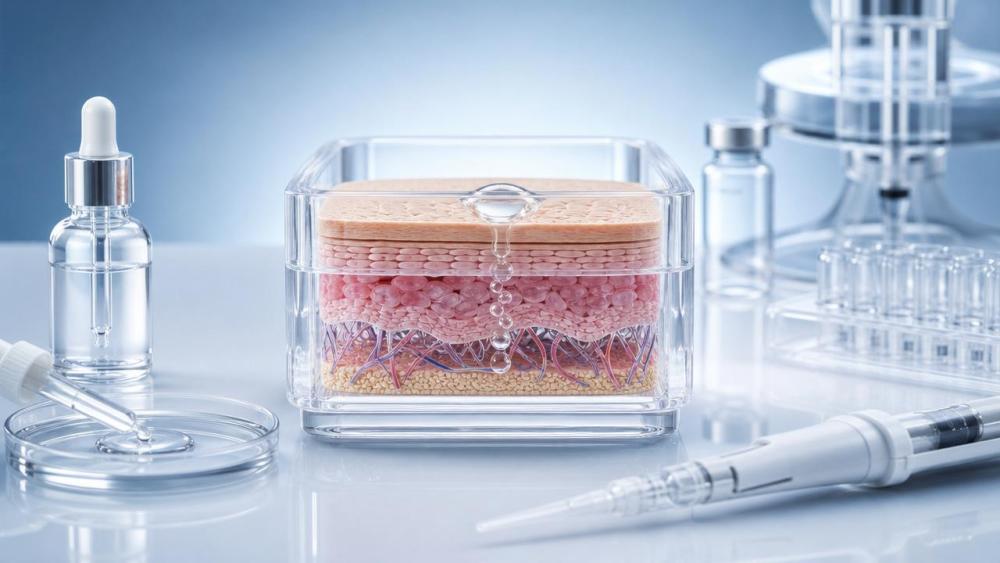
The core search intent behind “transdermal penetration” is rarely academic curiosity alone. Most readers want to judge whether a test result is useful enough to support formulation, sourcing, safety review, or market positioning.
For information researchers, the biggest concern is simple: which numbers indicate real performance, and which ones are only laboratory artifacts. A high penetration percentage sounds impressive, but often says little without context.
That is why the most valuable transdermal penetration data is not the most dramatic result. It is the data that links ingredient behavior to biological target depth, dosage realism, safety margin, and formulation compatibility.
Why “high penetration” is not automatically good data
Many reports present penetration as a race, implying that more is always better. In reality, the right level of skin passage depends on the product category, target layer, active mechanism, and regulatory risk profile.
For a moisturizing polymer or a film-forming ingredient, deep passage may be unnecessary or even undesirable. For an anti-aging peptide, meaningful delivery into viable epidermis may matter more than total mass crossing the full skin barrier.
In fragrance systems, the question can be even more nuanced. Some aroma compounds should remain mostly near the surface for sensory bloom, while some carrier technologies aim to alter release rate rather than maximize deep skin transport.
So when reviewing transdermal penetration studies, the first filter is not “How high is the number?” It is “Does this level and location of penetration match the intended function of the ingredient?”
Which transdermal penetration data points matter most
The most decision-relevant data usually starts with penetration depth by skin layer. Knowing whether a substance remains in the stratum corneum, reaches viable epidermis, enters dermis, or passes fully through the membrane changes the interpretation completely.
Layer-specific distribution matters because efficacy claims often depend on where the ingredient acts. A retinoid alternative targeting surface renewal needs different localization than a peptide marketed for dermal matrix support.
Second, flux over time is often more useful than a single endpoint percentage. A one-time number at 24 hours can hide whether delivery was fast, delayed, unstable, or front-loaded in a way that affects irritation risk.
Third, total recovered mass is critical. Good studies usually account for the applied dose across donor compartment, skin layers, receptor fluid, washing residues, and analytical losses. Weak mass balance often signals unreliable conclusions.
Fourth, dose relevance matters. If a test uses an unrealistically high concentration or a vehicle that would never survive commercial formulation constraints, the penetration result may have limited business value.
Fifth, variability matters more than many marketers admit. Reproducibility across skin donors, batches, and test conditions tells you whether an ingredient’s performance is dependable enough for product development and scale-up.
How to read the test model before trusting the result
No transdermal penetration result should be judged without understanding the model behind it. The same ingredient can show very different behavior in Franz diffusion cells, reconstructed skin models, tape stripping studies, or in vivo assessments.
Franz diffusion cells are widely used and useful, especially for comparative screening. However, they are still controlled systems, and the receptor fluid, membrane integrity, occlusion level, and dosing format can strongly influence outcomes.
Human ex vivo skin is often more commercially relevant than synthetic membranes, but source differences matter. Thickness, anatomical site, donor age, storage history, and barrier condition can change penetration behavior significantly.
Reconstructed skin models may help early screening and ethical testing strategies, yet they may not fully mirror native barrier lipid organization. Their results can be directionally useful, but sometimes less predictive for final market formulations.
In vivo methods can provide stronger real-world relevance, but they also add complexity, cost, and ethical constraints. For many business decisions, the best approach is not one model, but a coherent sequence of complementary models.
Why the formulation system can matter more than the active itself
One of the most overlooked truths in transdermal penetration work is that an ingredient rarely penetrates alone. Solvents, emulsifiers, surfactants, encapsulation systems, pH, viscosity, and film formation can all reshape skin delivery.
That means a supplier claim based only on the neat active or a simplified lab vehicle may be misleading. What matters commercially is performance inside a realistic formula architecture, not just under optimized showcase conditions.
For example, glycols may increase delivery of some low-molecular compounds, while certain thickeners may reduce mobility. Liposomes, nanoemulsions, and microencapsulation may improve localization, but not always increase total penetration.
In premium cosmetic actives, this distinction is crucial. Buyers are not only asking whether the molecule can cross the barrier. They are asking whether it can do so in a stable, compliant, sensory-acceptable, scalable finished product.
What safety-related penetration data should never be ignored
Penetration data is not only about proving efficacy. It is also essential for identifying risk. The deeper an ingredient travels, the more carefully formulators must consider systemic exposure, sensitization pathways, cumulative use, and vulnerable populations.
For preservatives, fragrance allergens, and potent bioactives, the key issue may be controlled exposure rather than maximum delivery. A result showing significant receptor-fluid passage can trigger very different safety questions than simple stratum corneum retention.
Decision-makers should look for data tied to margin of safety thinking: absorbed dose estimates, repeated-use considerations, irritation correlation, and whether penetration changes on damaged, shaved, diseased, or compromised skin.
This is particularly relevant in anti-aging and dermocosmetic development. Ingredients designed to influence visible skin biology may create stronger claims, but they also require stronger understanding of where they go and what that implies.
How to separate marketing-friendly numbers from commercially useful evidence
Some test reports are built to impress, not to inform. They highlight relative improvement percentages without showing baseline values, omit controls, avoid disclosure of application dose, or compare against weak reference systems.
A claim such as “300% better transdermal penetration” may sound strong, but if the baseline was negligible, the absolute gain may still be commercially irrelevant. Relative uplift without absolute context often creates false confidence.
Another red flag is missing analytical detail. If the method does not specify detection technology, quantification limits, calibration quality, and recovery procedures, it becomes hard to know whether the reported penetration is truly robust.
Strong evidence usually includes a clear protocol, realistic application conditions, replicate data, statistical treatment, skin integrity checks, and a rationale connecting penetration results to the ingredient’s intended benefit.
For sourcing teams and technical intelligence readers, commercially useful evidence should answer one practical question: does this dataset reduce uncertainty enough to justify further development, reformulation, validation, or purchase?
What good transdermal penetration evidence looks like for different ingredient categories
For high-end cosmetic actives, the strongest data usually combines localization by layer, time-course delivery, stability in formulation, and linkage to mechanism. Showing that an active reaches the right depth is more persuasive than claiming maximal passage.
For fragrance carriers and sensorial technologies, useful evidence may focus on controlled deposition, evaporation behavior, and skin-surface persistence rather than deep transport alone. Desired performance may be sensory optimization, not systemic movement.
For cleansing or surfactant-related systems, penetration studies often matter most when assessing irritation modulation, barrier interaction, or enhanced delivery of co-applied substances. The concern may be indirect penetration effects rather than active efficacy.
For preservatives or functional support ingredients, data is often strongest when framed around safety and retention profile. If a molecule is intended to protect the formula rather than act biologically in skin, deep penetration may weaken its value proposition.
A practical checklist for evaluating transdermal penetration reports
When reviewing a report, start with the target question. What exact skin layer or biological site is relevant to the intended claim? If the study does not answer that, the rest of the numbers may have limited value.
Next, verify the model and test conditions. Was the membrane relevant, intact, and well characterized? Was the dose realistic? Was the formula commercially plausible? Were occlusion and contact time representative of use?
Then examine the output quality. Look for layer-specific recovery, receptor-fluid data, time points, replicates, variability, controls, and total mass balance. Ask whether the conclusions follow from the data, or exceed it.
After that, connect the data to business reality. Can the same result survive manufacturing constraints, packaging interactions, ingredient cost targets, and regulatory expectations in the intended market?
Finally, assess what remains unknown. Good penetration data does not eliminate all risk, but it should narrow the key uncertainties. If a report creates more questions than answers, it is not yet decision-grade evidence.
Final takeaway: the best data is the data that matches the claim, the formula, and the risk profile
When evaluating transdermal penetration, the most important data is rarely a single headline percentage. What matters is where the ingredient goes, how fast it gets there, under what conditions, and whether that pattern supports function and safety.
For information researchers and technical scouts, the smartest approach is to prioritize relevance over drama. Layer-specific distribution, realistic formulation context, reproducibility, and exposure implications usually matter far more than oversized penetration claims.
In short, useful transdermal penetration evidence should help you make a better decision, not just admire a stronger number. If the data aligns with mechanism, application reality, and compliance logic, it has real commercial value.
Related News
- How to evaluate anti-aging cosmetic compounds for wrinkle careOct 01, 2026Cosmeceutical Formulator
- How scientific anti-aging skincare targets wrinkles at the cellular levelSep 22, 2026Cosmeceutical Formulator
- What drives Pro-Xylane price differences between cosmetic suppliers?Sep 09, 2026Cosmeceutical Formulator
- Pro-Xylane in Skincare: What Sets Its Anti-Wrinkle Claims ApartJul 15, 2026Cosmeceutical Formulator
Related News
- 00
0000-00
Verifying halal status of hydrocolloid ingredients in the Middle East - 00
0000-00
How to interpret active matter on a surfactant specification sheet - 00
0000-00
What Quality Checks Should You Run on Fragrance Ingredient Suppliers? - 00
0000-00
How to assess a flavor chemistry manufacturer's batch consistency - 00
0000-00
What drives fragrance ingredients price changes in bulk orders?
Cosmeceutical Formulator
Weekly Insights
Stay ahead with our curated technology reports delivered every Monday.