





On July 24, 2026, the U.S. FDA put a new compliance signal into the market by launching GRAS e-Portal v3.1 and creating a dedicated supplemental category for high-purity hyaluronic acid. The change matters beyond a routine filing update: it affects how overseas manufacturers, import-facing buyers, and compliance teams prepare market entry for premium skincare and functional food ingredients, especially where approval timing, technical documentation, and supplier qualification are closely tied to procurement and delivery plans.
A filing change with direct access for overseas suppliers
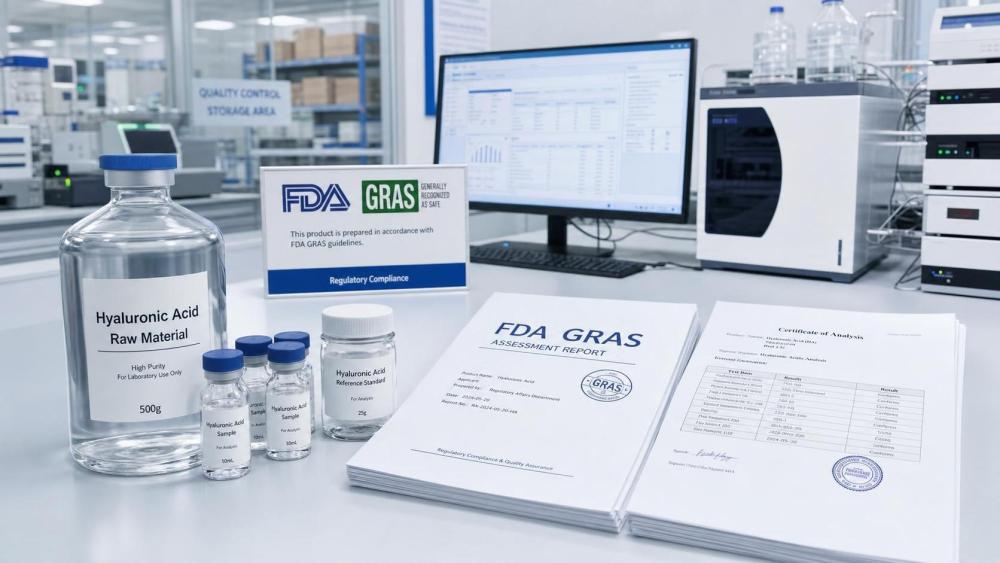
According to the provided event summary, the FDA formally activated the new GRAS notification electronic portal, GRAS e-Portal v3.1, at 00:00 on July 24, 2026. In this update, High-purity Hyaluronic Acid was listed separately under the “Cosmetic & Food-Contact Supplemental Category.”
The same summary states that overseas manufacturers may now directly submit a full safety data package through this route. The required package includes microbial limits, endotoxin data, molecular weight distribution, and thermal stability verification reports. The stated effect of this change is a shorter certification timeline of 8 to 12 weeks, with direct implications for the compliance access pace of importers handling high-end skincare and functional food ingredients.
Where the rule change is likely to be felt first
Import planning is becoming more document-driven
From an industry perspective, import-oriented buyers and raw material procurement teams are likely to feel the change early because the new path shifts attention toward the completeness and readiness of technical files before purchase and onboarding decisions are finalized. What deserves closer attention is whether supplier files can support direct electronic submission with the specified safety elements, since incomplete dossiers could still affect purchasing rhythm even if the formal pathway is faster.
Overseas manufacturers face a more explicit submission threshold
Analysis shows that the update is relevant for foreign producers because it creates a more direct regulatory interface rather than leaving market access entirely dependent on downstream intermediaries. The practical impact is likely to fall on dossier assembly, internal validation, and consistency across microbiological, endotoxin, molecular weight, and thermal stability records. For these suppliers, the rule change is less about marketing access in the abstract and more about whether technical evidence is organized in a submission-ready form.
Testing and compliance support functions may need tighter alignment
Observably, laboratories, regulatory consultants, and compliance support providers connected to HA ingredient trade may also see workflow changes. Their role is likely to concentrate on the format, comparability, and completeness of the reports referenced in the new submission route. The immediate issue is not simply producing test results, but ensuring that the supporting documentation matches the regulatory expectations implied by the portal-based filing process.
What companies should watch in current execution
Check whether existing supplier files are portal-ready
Analysis shows that companies handling high-purity HA should first review whether current technical files actually cover the four data areas named in the event summary: microbial limits, endotoxins, molecular weight distribution, and thermal stability verification. A supplier may already have quality records, but that does not automatically mean the records are structured for direct electronic submission.
Revisit procurement and onboarding timelines
What deserves closer attention is the effect on purchasing calendars and launch sequencing. Because the stated certification window has been shortened to 8 to 12 weeks, companies may need to reassess when they lock in supplier selection, when they request supporting documents, and how they sequence import compliance against production or sales delivery commitments. This should be treated as a planning issue, not as a guaranteed processing outcome for every filing.
Track official wording and practical review expectations
Observably, the rule change creates a clearer route, but the provided information does not include detailed review practice, formatting requirements, or any later interpretive guidance. Companies should therefore continue watching for official wording, execution standards, and any adjustments in how this category is handled in practice, especially where internal compliance sign-off depends on stable regulatory interpretation.
Watch downstream contract and specification language
From an industry perspective, firms should also examine whether tender documents, purchase specifications, supplier qualification forms, and quality traceability records need updating to reflect the new submission path. This is particularly relevant where customers or import-side compliance teams expect evidence that a material can support the revised GRAS filing route.
Why this looks like an execution signal, not just a policy note
Analysis shows that this development is better understood as an operational rule change rather than a broad policy statement. The reason is that the update combines three concrete elements at once: a live electronic portal, a distinct category for high-purity HA, and an express opening for direct overseas submission. Together, these features suggest that the issue for the market is not whether the subject has entered regulatory discussion, but how quickly participants can adapt their files, review processes, and supplier screening to the new submission structure.
At the same time, it is more appropriate to understand this as a change that has entered execution but still requires observation. The provided information confirms the opening of the route and the expected timeline effect, yet it does not establish how consistently the pathway will be applied across different submissions or how market participants will adjust their operating practices after the initial rollout.
How this update is best understood today
At this stage, the FDA portal update points to a more defined compliance path for high-purity hyaluronic acid, with immediate relevance for overseas suppliers and import-linked ingredient buyers. The main industry significance lies in faster potential market entry tied to more explicit documentation expectations.
A neutral reading is that this is a landed procedural change with real execution consequences, but not one that should be overstated beyond the facts provided. It is more appropriate to understand this as an active compliance and trade-access signal that may reshape procurement and filing rhythm, while the finer points of implementation still need continued attention.
Basis of this article and what still needs verification
This article is generated from the user-provided news title, event date, and event summary. For developments of this kind, commonly relevant source types include official regulatory announcements, notices published by supervisory authorities, trade or customs-related releases, industry association updates, standard-setting documents, and reporting by authoritative media.
No specific official source link was provided in the input, so the underlying official publication should still be verified on an ongoing basis. Further observation is also needed around detailed implementation language, certification review practice, changes in tender or specification documents, market feedback, and how companies execute against the new filing path in practice.
Related News
- How high purity actives for serums reduce formula instability riskSep 30, 2026Cosmeceutical Formulator
- How to evaluate ingredient solution references for skincare claimsSep 27, 2026Cosmeceutical Formulator
- What does hyaluronic acid serum grade mean for cosmetic formulators?Sep 05, 2026Cosmeceutical Formulator
- Which transdermal delivery ingredients for skincare improve actives absorption without raising irritation riskAug 17, 2026Cosmeceutical Formulator
Related News
- 00
0000-00
Verifying halal status of hydrocolloid ingredients in the Middle East - 00
0000-00
How to interpret active matter on a surfactant specification sheet - 00
0000-00
What Quality Checks Should You Run on Fragrance Ingredient Suppliers? - 00
0000-00
How to assess a flavor chemistry manufacturer's batch consistency - 00
0000-00
What drives fragrance ingredients price changes in bulk orders?
Cosmeceutical Formulator
Weekly Insights
Stay ahead with our curated technology reports delivered every Monday.