





On June 27, 2026, a new compliance trigger entered the injectable-grade hyaluronic acid trade: Korea’s K-FDA made REACH-SVHC screening across 233 items mandatory for all injectable-grade HA raw materials. Within days, this rule change was reflected in export pricing for high-purity HA from China, drawing attention from exporters, procurement teams, quality functions, and delivery planners because the issue is not only price movement, but also how testing, cleanroom readiness, and release documentation may affect short-term supply execution.
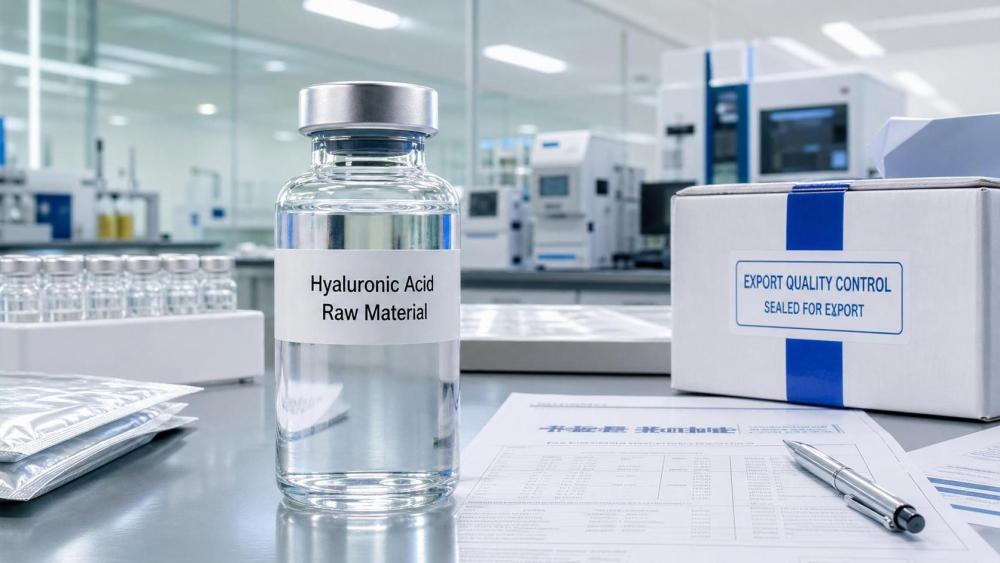
A compliance requirement quickly moved into export pricing
According to the ICIS FMCG Ingredients Price Index published on June 29, 2026, global FOB China quotations for High-purity Hyaluronic Acid with purity of at least 95% and molecular weight of 1,200–1,800 kDa rose 8.6% week on week to $825–$890/kg.
The stated driver was a K-FDA requirement, made mandatory on June 27, that all injectable-grade HA raw materials must pass REACH-SVHC screening covering 233 items.
The same event summary states that leading Chinese suppliers responded by urgently upgrading GMP workshop cleanliness grades and adding testing, which in turn tightened short-term supply.
Where the pressure is likely to appear first
Export transactions may face tighter pre-shipment review
From an industry perspective, exporters are likely to feel the impact first because the new requirement directly affects whether injectable-grade HA raw materials can move smoothly into a regulated downstream use case. The main pressure points are likely to be pre-shipment testing alignment, document completeness, and shipment timing. What deserves closer attention is whether buyers begin asking for updated screening evidence, revised quality files, or clearer release conditions before confirming orders.
Procurement teams may need to reassess supply availability
For raw material buyers, the issue is not limited to the quoted price increase. Analysis shows the combination of additional screening and urgent GMP cleanliness upgrades can affect available supply in the short term. Procurement teams should therefore pay closer attention to whether suppliers can maintain agreed specifications, testing readiness, and delivery windows under the new compliance condition.
Manufacturing and quality functions may see more documentation work
Processing and manufacturing businesses using injectable-grade HA inputs may be affected through incoming material approval, batch release review, and quality traceability. Observably, when screening requirements become stricter, internal quality and regulatory teams often need to verify whether existing technical files, test reports, and supplier qualification records still match current market expectations. In this event, the practical concern is whether documentation and testing cycles begin to influence production scheduling.
Testing and compliance service providers may become more involved
Certification-related and testing service participants may also see increased demand because the event centers on mandatory screening and added testing. The immediate relevance is procedural rather than commercial: firms across the supply chain may need faster screening support, clearer report formats, and more consistent interpretation of compliance evidence for trade and quality purposes.
Practical points companies should keep under review
Check whether current supplier files still match the new requirement
Analysis shows companies handling injectable-grade HA should review whether supplier dossiers, batch-related records, and test documentation are sufficient under the K-FDA-triggered screening requirement described in the event summary. Since the input does not provide detailed execution rules, this is better treated as a review priority rather than a confirmed new documentation checklist.
Watch for changes in lead times and shipment commitments
Because leading suppliers reportedly upgraded GMP workshop cleanliness grades and added testing, businesses should pay close attention to possible changes in lead times, allocation practices, and delivery commitments. It is more appropriate to understand this as an operational risk signal linked to compliance work, not yet as proof of a long-term supply reset.
Review procurement terms for injectable-grade material
Buyers and traders may need to revisit procurement terms related to specification confirmation, testing evidence, batch acceptance, and delivery timing. What deserves closer attention is whether commercial discussions begin to incorporate more explicit compliance-related conditions, especially for injectable-grade material tied to regulated end use.
Follow later wording and market-side interpretation
The event summary confirms the mandatory screening trigger and the immediate supply response, but it does not provide the full downstream execution language. For that reason, companies should keep tracking later official wording, practical interpretation in transactions, and any updates that affect technical documentation, tender requirements, or customer acceptance standards.
Why this looks like an execution signal, not just a price story
Observably, this development is more than a weekly quotation move. The reported 8.6% rise in FOB China offers happened alongside a clearly identified regulatory trigger and a documented supplier response in testing and GMP cleanliness upgrades. Analysis shows that makes the event more useful as an execution signal for compliance-driven supply tightening than as a standalone pricing headline.
At the same time, it would be premature to treat the event as a complete redefinition of trade conditions across all HA transactions. The input supports a near-term effect in injectable-grade raw material supply and export offers, but the full market reach, duration, and uniformity of enforcement still require observation.
How this event is best understood now
At this stage, the most balanced reading is that a specific regulatory requirement has already begun affecting real trade behavior in high-purity injectable-grade HA, particularly in testing, workshop controls, and short-term availability. For industry participants, the key takeaway is not only that prices moved, but that compliance work has become part of immediate supply execution.
It is more appropriate to understand this event as a landed compliance signal with active market consequences, while still keeping later enforcement practice, document expectations, and delivery impacts under continued review.
Basis of this article and what still needs verification
This article is generated from the user-provided news title, event date, and event summary. For events of this type, commonly relevant source categories may include official regulatory notices, releases from supervisory authorities, customs or trade administration information, industry association updates, standard-setting documents, and reporting from established market media.
No specific official source link was provided in the input, so the official source path and any later detailed implementation documents still need to be verified on an ongoing basis. Observably, the areas that warrant continued follow-up include detailed policy wording, certification and testing interpretation, tender or procurement document changes, industry feedback, and how companies are executing the requirement in practice.
Related News
- How high purity actives for serums reduce formula instability riskSep 30, 2026Cosmeceutical Formulator
- How to evaluate ingredient solution references for skincare claimsSep 27, 2026Cosmeceutical Formulator
- What does hyaluronic acid serum grade mean for cosmetic formulators?Sep 05, 2026Cosmeceutical Formulator
- Which transdermal delivery ingredients for skincare improve actives absorption without raising irritation riskAug 17, 2026Cosmeceutical Formulator
Related News
- 00
0000-00
Verifying halal status of hydrocolloid ingredients in the Middle East - 00
0000-00
How to interpret active matter on a surfactant specification sheet - 00
0000-00
What Quality Checks Should You Run on Fragrance Ingredient Suppliers? - 00
0000-00
How to assess a flavor chemistry manufacturer's batch consistency - 00
0000-00
What drives fragrance ingredients price changes in bulk orders?
Cosmeceutical Formulator
Weekly Insights
Stay ahead with our curated technology reports delivered every Monday.