





Effective May 30, 2026, China’s General Administration of Customs (GACC) has mandated 100% pre-export compliance verification for all high-purity hyaluronic acid (HA) products — defined as ≥95% purity — destined for the European Union. This measure directly affects exporters, ingredient suppliers, and formulators in the cosmetic, dermal filler, and biomedical raw material sectors, as it introduces mandatory documentary review and laboratory testing prior to shipment.
Event Overview
On May 30, 2026, GACC issued the Urgent Notice on Strengthening Supervision of Exported High-Purity Sodium Hyaluronate to the EU. The notice stipulates that, effective immediately, all export declarations for sodium hyaluronate with purity ≥95% bound for the EU must undergo 100% documentary verification and random laboratory sampling. Testing focuses on three parameters: molecular weight distribution (by Gel Permeation Chromatography, GPC), endotoxin levels (via Limulus Amebocyte Lysate, LAL assay), and microbial limits — all assessed against Annex II of the EU Cosmetics Regulation (EC) No 1223/2009.
Industries Affected by This Measure
Direct Exporters (Trading Companies): These entities bear primary responsibility for customs declaration and regulatory compliance. Under the new rule, every shipment triggers full documentation scrutiny and potential lab hold, extending lead times and increasing cost exposure from retesting or rejection.
Raw Material Suppliers (HA Producers): Manufacturers of high-purity HA must now ensure batch-level test reports align precisely with EU Annex II requirements — not just internal QC standards. Absence of validated GPC profiles or LAL-certified endotoxin data may block downstream export eligibility.
Contract Manufacturers & Formulators: Entities incorporating high-purity HA into finished cosmetic or medical devices face upstream supply chain risk. If their HA supplier lacks EU-compliant certification, production schedules and product registrations in the EU may be delayed or invalidated.
Distribution & Logistics Providers: Freight forwarders and customs brokers handling HA exports must now verify technical documentation before filing — including certified test reports and specifications matching declared purity grade — adding a layer of technical due diligence beyond standard HS code classification.
Regulatory & Compliance Service Providers: Firms offering EU regulatory support (e.g., Responsible Person services, CPNP notifications) will see increased demand for pre-submission verification of HA raw material dossiers, particularly around GPC methodology validation and endotoxin traceability.
What Enterprises and Practitioners Should Monitor and Do Now
Track official implementation guidance from GACC and EU authorities
GACC’s notice is labeled “urgent” but does not specify testing turnaround timelines, accredited lab criteria, or appeal procedures for non-conforming results. Observably, stakeholders should monitor follow-up circulars or FAQs expected in early June 2026 — especially regarding accepted GPC protocols and LAL assay validation requirements.
Verify purity grade labeling and supporting test reports for all EU-bound HA shipments
Analysis shows that “≥95% purity” is a threshold-based trigger — meaning even minor discrepancies in certificate wording (e.g., “94.8%”, “≥95% by HPLC”) could determine whether a batch falls under 100% verification. Enterprises should audit current CoAs and ensure alignment with GACC’s declared definition before shipment.
Distinguish between regulatory signal and operational reality
This measure is better understood as an enforcement escalation rather than a new regulatory standard: EU Annex II requirements have long applied; what changed is the verification mechanism. Current more relevant concern is capacity — whether designated labs can absorb the surge in required GPC/LAL testing without multi-week delays.
Prepare documentation and communication protocols with EU importers
Exporters should proactively share updated test reports and process descriptions with EU-based Responsible Persons or importers. Doing so helps preempt CPNP registration issues and supports joint troubleshooting if a shipment is detained for documentation mismatch.
Editorial Perspective / Industry Observation
This notice is best interpreted as a targeted enforcement action — not a policy shift — reflecting heightened EU market surveillance of cosmetic ingredients with biological origin. Observably, it signals GACC’s intent to strengthen upstream accountability in response to recent EU non-compliance notifications involving HA-based products. Analysis suggests this is less about introducing new safety thresholds and more about closing gaps in verification rigor. From an industry perspective, sustained attention is warranted because similar 100% checks could extend to other biopolymer ingredients (e.g., collagen, chitosan) if enforcement proves operationally scalable.
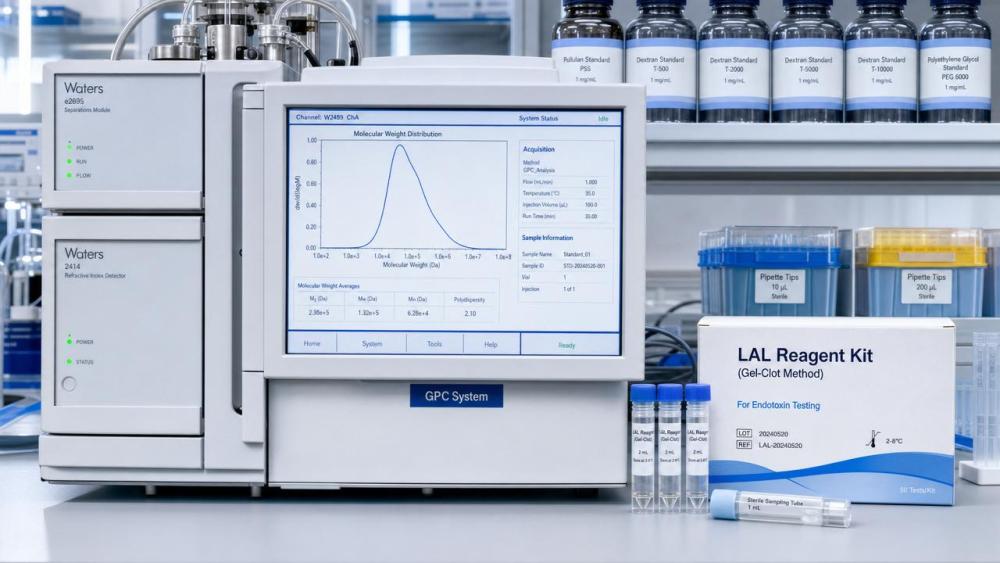
Concluding, this measure underscores the growing importance of harmonized technical documentation across the HA supply chain — particularly where purity, molecular characteristics, and biological contaminants intersect with regulatory definitions. It does not change EU requirements themselves, but significantly raises the evidentiary bar for demonstrating compliance at the point of Chinese export. Currently, it is more appropriately understood as a procedural tightening with immediate operational consequences — not a revision of substantive standards.
Source: General Administration of Customs of the People’s Republic of China, Urgent Notice on Strengthening Supervision of Exported High-Purity Sodium Hyaluronate to the EU, issued May 30, 2026.
Further implementation details (e.g., list of accredited labs, average processing time, appeal process) remain pending and require ongoing observation.
Related News
- Can biomimetic peptides in cosmetics reduce the look of wrinkles?Oct 17, 2026Cosmeceutical Formulator
- How to assess a bio-based thickener manufacturer's batch consistencyOct 16, 2026Food Rheology Expert
- Verifying halal status of hydrocolloid ingredients in the Middle EastOct 15, 2026Food Rheology Expert
- How to interpret active matter on a surfactant specification sheetOct 14, 2026Prof. Elian Thorne
Related News
- 00
0000-00
Can biomimetic peptides in cosmetics reduce the look of wrinkles? - 00
0000-00
How to assess a bio-based thickener manufacturer's batch consistency - 00
0000-00
Verifying halal status of hydrocolloid ingredients in the Middle East - 00
0000-00
How to interpret active matter on a surfactant specification sheet - 00
0000-00
How Do You Test Hydrocolloid Viscosity After Changing a Thickener?
Industry Global
Weekly Insights
Stay ahead with our curated technology reports delivered every Monday.