





Aroma Chemical Solutions for Perfumes: Stability, Diffusion, and Cost Balance
For perfume buyers, aroma chemical solutions for perfumes shape far more than scent character.
They directly influence shelf stability, diffusion behavior, compliance exposure, and cost control across the full formula lifecycle.
That matters even more now.
Perfume launches move faster, raw material volatility remains real, and brand teams expect stronger performance from tighter development budgets.
In practical sourcing work, the best aroma chemical solutions for perfumes are rarely the cheapest line items.
They are the options that keep the formula stable, project well, and protect margin after reformulation, transport, and market scale-up.
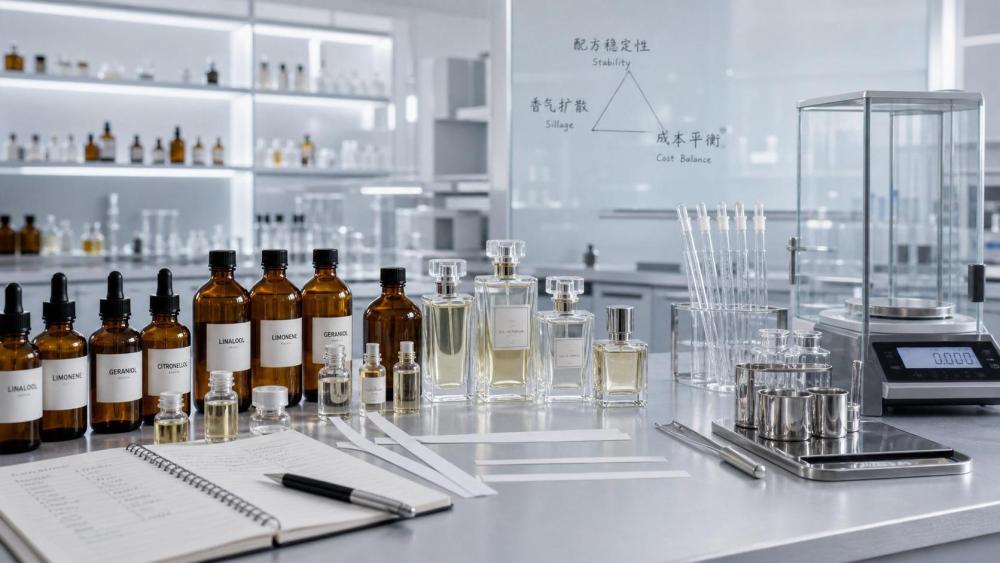
This is why procurement decisions need a wider lens than odor profile alone.
The commercial value sits in the balance between performance and total ownership cost.
Why aroma chemical solutions for perfumes now carry more purchasing risk
From recent market shifts, one clear signal stands out.
Perfume performance expectations are rising in both premium and masstige channels.
Consumers want cleaner openings, longer wear, and stronger emotional distinction.
At the same time, buyers face pressure from allergen review, IFRA-related limits, and fluctuating feedstock pricing.
This means aroma chemical solutions for perfumes must be assessed as performance systems, not isolated ingredients.
A low-cost material can become expensive if it creates haze, oxidation, weak diffusion, or repeated trial failures.
A higher-priced molecule may reduce dosage, improve substantivity, and cut the number of corrective iterations.
That is usually where the real business case appears.
What stability really means in perfume sourcing
Stability is often discussed too narrowly.
For aroma chemical solutions for perfumes, stability includes odor consistency, color retention, solvent compatibility, and storage resilience.
It also includes how the accord behaves inside the final alcohol base and pack format.
Several factors deserve close review during supplier comparison:
- Oxidation sensitivity during storage and shipping
- Discoloration under light or elevated temperature
- Solubility in ethanol and mixed perfume bases
- Interaction with UV filters, antioxidants, or fixatives
- Batch-to-batch odor drift at commercial scale
In actual business reviews, instability creates hidden cost faster than almost any other technical issue.
It can trigger returns, delayed launches, extra QC work, or urgent substitution projects.
Strong suppliers usually provide accelerated aging data, storage guidance, and realistic compatibility notes.
Those documents help separate robust aroma chemical solutions for perfumes from attractive samples that fail later.
How diffusion affects brand value and repeat purchase
Diffusion is the commercial face of fragrance performance.
If a perfume does not bloom properly, the brand loses impact at first spray and during wear.
That loss shows up in weaker trial conversion and lower repeat purchase confidence.
Well-selected aroma chemical solutions for perfumes support a clear evaporation curve from top note to dry-down.
They help the fragrance feel alive without becoming sharp, flat, or overly heavy.
This usually depends on molecular weight balance, volatility profile, and the use of effective diffusive materials or modern fixatives.
For sourcing teams, the key question is practical.
Does the chosen solution create projection at the right cost per bottle, or does it demand overdosing to be noticed?
That distinction strongly affects formula economics.
Balancing cost without sacrificing olfactory quality
Cost balance is rarely about replacing expensive materials with cheaper ones across the board.
That approach often damages signature, longevity, or compliance flexibility.
A better path is selective optimization inside the fragrance architecture.
The most effective aroma chemical solutions for perfumes usually improve the cost-performance ratio in one of four ways:
- They lower use level through stronger impact or better substantivity.
- They reduce dependence on scarce natural materials with unstable pricing.
- They simplify stabilization work and shorten development cycles.
- They support multi-market compliance with fewer reformulations.
This is where total cost of ownership becomes more useful than raw kilogram price.
A material that looks premium on paper can still lower cost per successful launch.
That is especially true when brand positioning depends on lasting sensory differentiation.
A practical evaluation framework for supplier comparison
A structured review helps avoid subjective buying decisions.
When comparing aroma chemical solutions for perfumes, a simple matrix often works well.
This kind of review is especially useful when suppliers offer similar scent directions with very different commercial profiles.
It keeps aroma chemical solutions for perfumes tied to measurable business outcomes.
Where intelligence support improves perfume purchasing decisions
This is where specialized market and formulation intelligence can create a real advantage.
FFAI tracks ingredient behavior across flavors, fragrances, preservation systems, and active compounds with a practical, cross-sector lens.
That matters because perfume chemistry rarely exists in isolation from broader FMCG constraints.
Documentation quality, compliance pathways, and price logic all influence sourcing success.
With aroma chemical solutions for perfumes, the strongest buying decision usually comes from combining three views.
- Molecular performance in the formula
- Regulatory and documentation readiness
- Commercial return after scale-up
This wider perspective reduces the chance of buying a material that smells promising but underdelivers in business terms.
Final decision points before supplier selection
Before closing a purchase decision, a short final checklist can save time and margin.
- Confirm stability data in the intended alcohol system and pack type.
- Test diffusion at realistic dosage, not only at creative evaluation strength.
- Review compliance documents for current and target export markets.
- Calculate total formula economics, including dosage and rework risk.
- Check supply continuity, lead times, and substitution scenarios.
The strongest aroma chemical solutions for perfumes are the ones that keep creative intent and commercial discipline aligned.
When stability, diffusion, and cost balance are reviewed together, sourcing becomes clearer and launch risk drops.
That is the point where perfume ingredients stop being simple raw materials and start acting like strategic assets.
Related News
- How to Choose Fragrance Ingredients for Diffusers That Stay Stable in Oil BasesAug 04, 2026Aromatics & Perfumery Fellow
- How to Choose Aroma Ingredients for Candles Based on Scent Throw and Wax CompatibilityAug 03, 2026Aromatics & Perfumery Fellow
- Home Diffuser Series Technical Guide for Fragrance BuyersJul 21, 2026Aromatics & Perfumery Fellow
- EU Bans More Microencapsulated Fragrance AllergensJul 16, 2026Aromatics & Perfumery Fellow
Related News
- 00
0000-00
Verifying halal status of hydrocolloid ingredients in the Middle East - 00
0000-00
How to interpret active matter on a surfactant specification sheet - 00
0000-00
What Quality Checks Should You Run on Fragrance Ingredient Suppliers? - 00
0000-00
How to assess a flavor chemistry manufacturer's batch consistency - 00
0000-00
What drives fragrance ingredients price changes in bulk orders?
Aromatics & Perfumery Fellow
Weekly Insights
Stay ahead with our curated technology reports delivered every Monday.