





On May 22, 2026, China introduced new export control requirements for three precursor chemicals by placing them on the management list for exports to specific countries and regions. Exports of these substances to the United States, Mexico, and Canada now require a license. For the industry, the immediate attention point is not only the regulatory change itself, but also its practical effect on exporters involved in microencapsulated fragrance materials and amino acid surfactant precursor chains, where shipment timing and documentation costs may come under pressure.
What the new control measure confirms
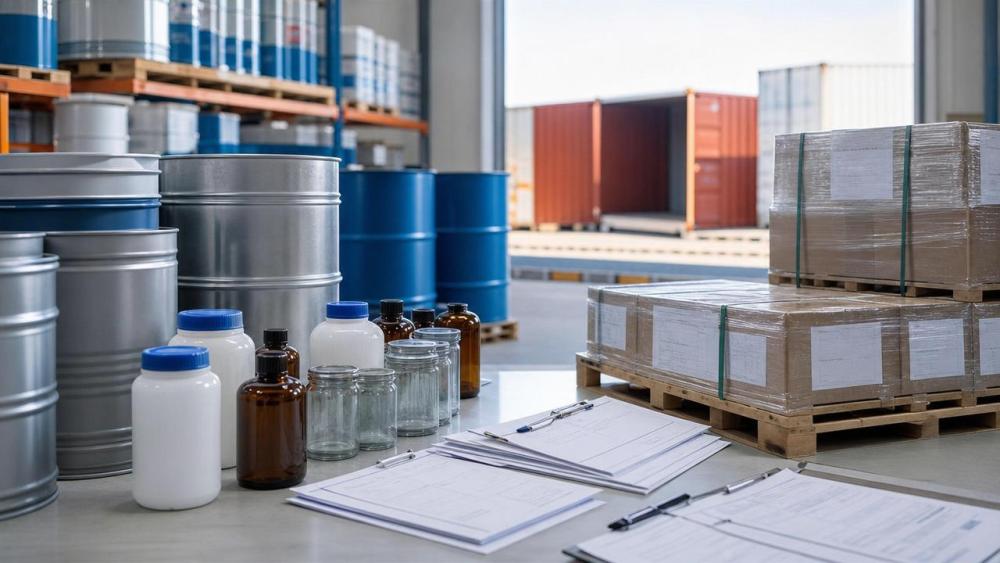
According to the information provided, five Chinese government departments have added three compounds, including methyl 1-Boc-4-oxo-3-piperidinecarboxylate, to the Catalogue of Precursor Chemicals Subject to Export Control to Specific Countries and Regions, effective May 22, 2026. From that date, exports of these chemicals to the United States, Mexico, and Canada must be carried out under a licensing requirement. The adjustment is described as focused on narcotics control, while the chemicals concerned are also used in fragrance microcapsule carrier applications and as precursor materials in the synthesis of amino acid surfactants.
Where the pressure may appear along the value chain
Exporters handling affected chemical shipments
From an industry perspective, direct exporters are likely to feel the first operational impact because the new requirement is tied to outbound shipments to specific markets. The main areas of pressure may include license preparation, supporting document checks, and coordination of shipment timing against customer delivery schedules.
Manufacturers tied to fragrance microcapsule materials
Analysis shows that producers connected to microencapsulated fragrance materials may need to pay closer attention where the controlled substances are part of upstream input arrangements. The impact may not be limited to the regulated item itself, but may extend to production planning and export order sequencing if documentation readiness affects dispatch timing.
Businesses linked to amino acid surfactant precursor chains
Observably, companies involved in amino acid surfactant-related precursor synthesis may also face a more compliance-intensive export process for relevant transactions to the three named markets. What deserves closer attention is whether existing order cycles and internal approval routines are still compatible with the added licensing step.
Supply chain and documentation service participants
Service providers supporting export execution may also be affected because document accuracy, classification clarity, and submission completeness become more important when a license is mandatory. In practice, this can raise coordination demands between suppliers, exporters, and downstream buyers.
What companies should watch now
Track how the rule is expressed and applied
What deserves closer attention is the distinction between the policy signal and its day-to-day implementation. Companies with shipments involving the affected substances should closely follow how the licensing requirement is described in official wording and how it is applied in actual export procedures.
Review exposure by product, market, and order book
Analysis shows that businesses should first identify whether their product lines, formulations, or upstream procurement arrangements touch the three listed chemicals, and whether current or pending orders involve the United States, Mexico, or Canada. This is the most direct way to judge short-term delivery exposure.
Recheck documents, lead times, and counterpart coordination
For operations teams, the practical issue is likely to be whether existing documentation sets, supplier materials, and internal review workflows are sufficient for a licensing-based export process. Customer communication may also become more important where delivery schedules need adjustment.
Prepare for higher compliance handling costs
From an industry perspective, the reported increase in documentation and compliance burden deserves attention even before broader market effects can be confirmed. Companies may need contingency planning around contract timing, shipment windows, and internal compliance resources.
Why this matters beyond a single rule change
As an editorial observation, this development is better understood first as an immediate compliance change with direct operational consequences for certain export flows, rather than as a fully defined long-term market outcome. The confirmed fact is the licensing requirement for exports to the three specified countries; the broader commercial effect still depends on how individual companies are exposed to the listed chemicals and how smoothly licensing workflows are integrated into routine trade execution.
How to read the signal at this stage
At this stage, it is more appropriate to understand the measure as a targeted regulatory adjustment that may reshape delivery rhythm and compliance workload for affected exporters, especially those linked to microencapsulated fragrance and amino acid surfactant supply chains. It should not yet be overstated as a universal change across the whole chemical trade, but it does warrant close monitoring wherever regulated substances intersect with North American orders.
Basis of this article and points for follow-up
This article is generated based on the user-provided news title, event date, and event summary. For this type of development, commonly relevant source categories may include official notices, company disclosures, industry association updates, authoritative media reporting, and standard-setting documents. A specific official source link was not provided in the input, so the exact source document still requires continued verification. Follow-up attention should remain on any further official wording, implementation details, and practical compliance requirements that affect export execution.
Related News
- How to Choose Fragrance Ingredients for Diffusers That Stay Stable in Oil BasesAug 04, 2026Aromatics & Perfumery Fellow
- How to Choose Aroma Ingredients for Candles Based on Scent Throw and Wax CompatibilityAug 03, 2026Aromatics & Perfumery Fellow
- Home Diffuser Series Technical Guide for Fragrance BuyersJul 21, 2026Aromatics & Perfumery Fellow
- EU Bans More Microencapsulated Fragrance AllergensJul 16, 2026Aromatics & Perfumery Fellow
Related News
- 00
0000-00
Verifying halal status of hydrocolloid ingredients in the Middle East - 00
0000-00
How to interpret active matter on a surfactant specification sheet - 00
0000-00
What Quality Checks Should You Run on Fragrance Ingredient Suppliers? - 00
0000-00
How to assess a flavor chemistry manufacturer's batch consistency - 00
0000-00
What drives fragrance ingredients price changes in bulk orders?
Aromatics & Perfumery Fellow
Weekly Insights
Stay ahead with our curated technology reports delivered every Monday.