





Controlled Release Flavors: When the Added Cost Delivers Real Product Value
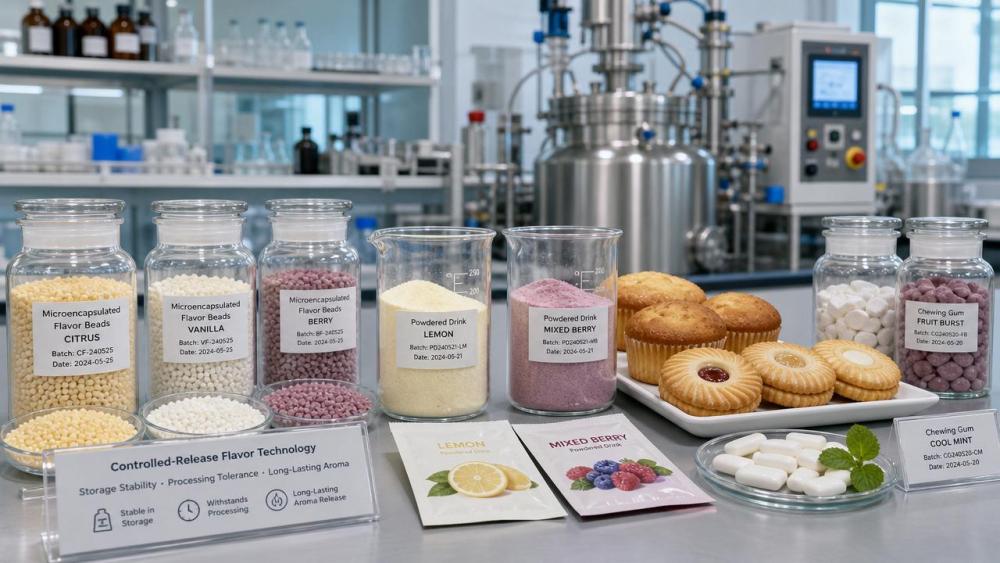
Controlled release flavors often look expensive at first review. For procurement and commercial teams, that higher line-item cost can feel difficult to defend.
The real question is not the purchase price alone. It is whether controlled release flavors create measurable value across shelf life, sensory stability, conversion, and premium positioning.
In many food, beverage, oral care, and wellness categories, flavor performance directly affects repeat purchase. A product that smells right at opening but fades too fast often underdelivers.
That is where controlled release flavors enter the business case. They are designed to protect volatile compounds, release aroma at the right moment, and keep the consumer experience more consistent.
From a cost perspective, this changes the conversation. Instead of asking, “Why is this ingredient more expensive?” teams can ask, “What downstream losses does it help prevent?”
That distinction matters in competitive categories. Sensory disappointment, reformulation risk, and short-lived flavor impact can erode margin faster than a premium ingredient ever appears on paper.
What Controlled Release Flavors Actually Do
Controlled release flavors are systems that delay, protect, or trigger flavor delivery. They usually rely on encapsulation, carrier design, or interaction with moisture, heat, chewing, or pH.
In plain terms, they help the right flavor note appear at the right time. That can happen during processing, storage, consumption, or even aftertaste.
This matters because many flavor compounds are fragile. They can evaporate, oxidize, react with other ingredients, or lose impact during heating and extended distribution.
A standard flavor may perform well in a simple bench trial. Yet the same formula may weaken after spray drying, baking, retort treatment, or six months in transit.
Controlled release flavors are often used to solve exactly those real-world failures. They support better flavor retention, cleaner top-note delivery, and more stable sensory perception.
Common commercial use cases
- Powdered beverages that lose aroma during storage
- Chewing gum and confectionery needing longer flavor duration
- Baked goods exposed to high heat and oxidation
- Protein products where off-notes need better masking over time
- Functional foods requiring flavor stability through complex matrices
When Higher Ingredient Cost Makes Financial Sense
Not every product needs controlled release flavors. The added cost makes sense when flavor is closely tied to product acceptance, pricing power, or operational consistency.
A useful procurement lens is total value delivered, not cost per kilogram alone. That includes waste reduction, complaint avoidance, premium claims support, and more predictable sensory quality.
For example, a cheaper flavor may require higher dosage to compensate for processing loss. It may still fail after storage, creating hidden cost that never appears in the initial quote.
By contrast, controlled release flavors may cost more per unit but perform better at lower effective use rates. In some cases, the total flavor economics become more favorable.
The stronger case appears when the product sits in long supply chains. Global distribution, climate variation, and inventory turnover all amplify the value of controlled flavor protection.
Signals that justify investment
- Frequent sensory drift between production and end-of-shelf-life
- High-temperature processing that damages aroma compounds
- Premium brands that rely on signature flavor identity
- Products with repeat purchase driven by flavor persistence
- Reformulations aimed at sugar reduction or clean label balance
Key Value Drivers Buyers Should Measure
A solid sourcing decision needs measurable criteria. Controlled release flavors should be evaluated against clear commercial outcomes, not broad innovation language.
The first value driver is flavor retention. Does the system preserve key aroma notes after processing and through shelf life?
The second is release timing. Does the flavor appear when consumers actually notice it, such as first sip, chew progression, or lingering finish?
The third is dosage efficiency. Some controlled release flavors can lower total addition levels because they use aroma more effectively.
The fourth is product differentiation. A more vivid and lasting flavor profile can support a premium claim or help the product stand apart in crowded shelves.
The fifth is manufacturing reliability. Stable flavor systems can reduce batch variation and simplify quality conversations across plants and regions.
A practical evaluation table
Where Controlled Release Flavors Deliver the Strongest ROI
The best return rarely comes from low-sensitivity products. It usually appears in products where flavor is fragile, high-value, or central to brand promise.
Confectionery is a strong example. Consumers expect flavor progression, not a quick burst followed by flat sweetness. Controlled release flavors can extend enjoyment and improve perceived quality.
Powdered drink mixes are another good case. Volatile top notes often fade during storage, especially in humid or warm conditions. Better retention can protect both taste and brand consistency.
Protein snacks and functional nutrition also benefit. These formats often carry bitter, metallic, or beany notes. Controlled release flavors can improve masking and better manage flavor perception over time.
Even premium bakery can justify the investment. If thermal stress destroys key aroma notes, the final eating experience may no longer match the product story sold on pack.
High-opportunity categories
- Chewing gum, mints, and lozenges
- Powdered beverages and instant mixes
- High-protein bars, shakes, and supplements
- Baked snacks and filled biscuits
- Premium dairy or plant-based desserts
Risk Checks Before You Approve the Spend
A higher price does not automatically mean higher value. Controlled release flavors need proper technical and commercial validation before approval.
First, confirm the release mechanism fits the application. A system designed for chewing may not perform well in a baked matrix or a reconstituted beverage.
Second, review regulatory and labeling implications. Carrier materials, encapsulation agents, and regional compliance requirements can affect launch feasibility.
Third, test storage conditions that reflect actual distribution. Lab success under mild conditions may not hold during export, warehousing, and retail exposure.
Fourth, compare cost in use against performance gains. Controlled release flavors should earn their place through better outcomes, not just technical novelty.
Finally, ask whether the supplier can support iterative optimization. Flavor release often depends on matrix interactions, so development partnership matters.
A simple sourcing checklist
- Define the exact sensory problem to solve
- Measure baseline loss with current flavor system
- Request application-specific controlled release flavors
- Run process, shelf-life, and sensory comparisons
- Model total cost versus commercial uplift
- Approve only when performance is repeatable
A Smarter Buying Decision Starts With the Right Value Model
Controlled release flavors are not a universal upgrade. They are a strategic tool for products where flavor timing, stability, and perception materially shape business results.
When evaluated only on unit price, they may seem hard to justify. When evaluated on margin protection, sensory consistency, and premium product performance, the picture often changes.
That is especially true in categories facing longer supply chains, tougher processing, and rising consumer expectations. Under those conditions, flavor failure becomes expensive.
The most effective buying approach is disciplined and practical. Test controlled release flavors against current benchmarks, quantify the business impact, and focus on value delivered at the finished product level.
If the system improves retention, extends sensory impact, supports premium positioning, or reduces reformulation risk, the extra cost may be one of the smartest ingredient investments available.
In actual procurement work, that is the real threshold. Controlled release flavors deserve approval when they do more than add technology—they protect product value in ways the market can feel.
Related News
- How to Choose Fragrance Ingredients for Diffusers That Stay Stable in Oil BasesAug 04, 2026Aromatics & Perfumery Fellow
- How to Choose Aroma Ingredients for Candles Based on Scent Throw and Wax CompatibilityAug 03, 2026Aromatics & Perfumery Fellow
- Home Diffuser Series Technical Guide for Fragrance BuyersJul 21, 2026Aromatics & Perfumery Fellow
- EU Bans More Microencapsulated Fragrance AllergensJul 16, 2026Aromatics & Perfumery Fellow
Related News
- 00
0000-00
What drives fragrance ingredients price changes in bulk orders? - 00
0000-00
How to assess a food antioxidants distributor’s traceability practices - 00
0000-00
How minimum order quantities shape private label ingredient sourcing costs - 00
0000-00
What drives personal care ingredient price volatility in sourcing - 00
0000-00
What drives micelles price differences in cosmetic formulations?
Aromatics & Perfumery Fellow
Weekly Insights
Stay ahead with our curated technology reports delivered every Monday.