





Why Flavor Loss in Garlic Powder Deserves More Attention
Garlic powder is often treated as a stable pantry ingredient, but its convenience can create a false sense of security. In homes, foodservice kitchens, and light manufacturing settings, operators may assume that a dry seasoning will hold its original aroma and impact for long periods with little care. In reality, flavor loss usually happens gradually, and by the time it becomes obvious, product performance has already changed. The result can be inconsistent taste, higher usage rates, unnecessary waste, and confusion over whether the issue comes from storage practices or from the material supplied in the first place.
This matters because garlic powder is used for repeatability. Whether it is added to snack coatings, seasoning blends, marinades, soup bases, or everyday cooking, users expect a predictable savory note and a clean garlic profile. When that profile fades, recipes often drift without immediate detection. For quality control teams and safety managers, this can create avoidable variation across batches. For end consumers, it can simply mean food tastes flat even when the same recipe is followed.
In many settings, flavor decline is not caused by a single dramatic failure but by ordinary habits: containers left open near heat, oversized packs used too slowly, poor stock rotation, and procurement decisions based only on price or mesh size. Understanding these practical errors helps separate normal shelf-life decline from preventable handling mistakes.
What Causes Garlic Powder to Lose Flavor
The flavor of garlic powder depends on volatile aromatic compounds that are sensitive to air, moisture, light, and temperature fluctuation. Once a package is opened, oxidation begins to reduce aroma intensity. Moisture exposure can also change flowability, encourage clumping, and dull the clean, dry profile that users expect. Even when the product remains safe to use, it may no longer perform well in formulations that rely on a defined garlic note.
Another issue is cross-environment exposure. In busy kitchens or production rooms, seasoning containers may be opened repeatedly over steam, near fryers, or beside wash areas. Dry ingredients absorb surrounding conditions more easily than many users realize. The powder may still look acceptable, yet sensory quality can decline faster than expected. This is one reason flavor complaints are sometimes misread as supplier inconsistency when storage conditions are actually the main cause.
At the same time, supplier quality still matters. If the powder starts with weak aroma, uneven particle size, or inconsistent moisture control, even good storage may not preserve the performance users need. Practical management therefore requires attention to both ends of the chain: what arrives and how it is handled afterward.
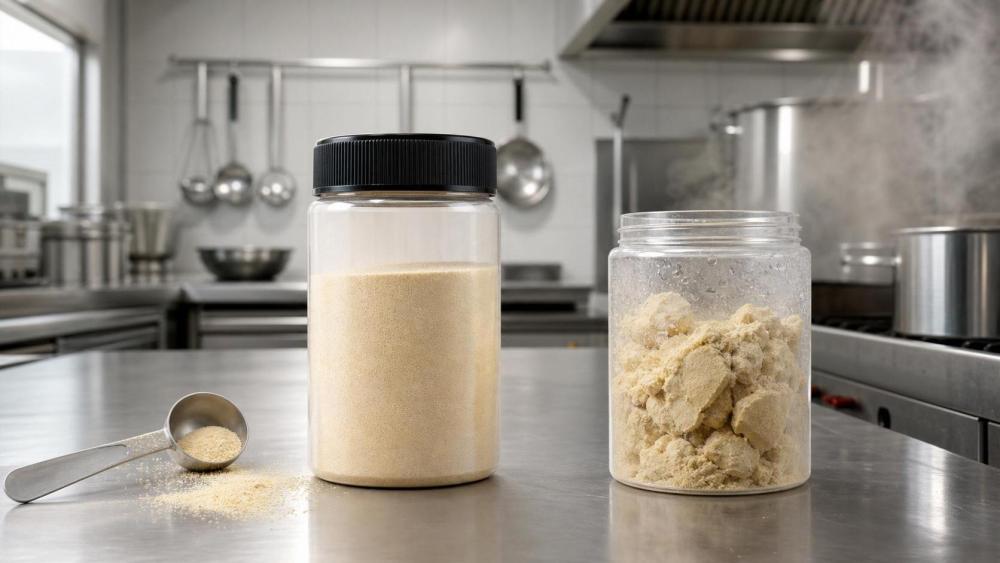
Common Storage Mistakes in Daily Use
One of the most frequent mistakes is storing garlic powder close to heat sources. Shelves above cook lines, near ovens, or beside processing equipment may seem convenient, but repeated temperature exposure can accelerate flavor breakdown. Even a sealed package can suffer when ambient conditions remain warm for long periods. In operating environments where speed matters, convenience often wins over storage discipline, and that choice usually shortens usable flavor life.
A second mistake is poor resealing after each use. Many teams rely on loosely closed lids, folded inner bags, or damaged zip seals. This allows air exchange and raises the chance of moisture pickup. Once clumping begins, users may shake harder, scoop deeper, or leave the package open longer, which further increases exposure. The issue is operationally small but cumulative.
Large pack sizes can also create hidden waste. Buying in bulk often looks efficient on paper, especially when unit cost drops at higher volume. But if turnover is slow, the material may spend too much time opened before full consumption. For smaller kitchens, seasonal businesses, or low-frequency production lines, a lower-cost kilogram can become more expensive in real use if flavor strength drops before the package is finished.
Another common mistake is using wet utensils or contaminated scoops. This introduces localized moisture and may affect both texture and aroma retention. In shared production spaces, operators sometimes move quickly between ingredients without resetting tools properly. The immediate concern may be hygiene, but there is also a flavor management consequence that can be overlooked during routine operations.
Finally, many users fail to monitor first-open date. Dry seasonings are often managed by delivery date alone, even though the practical quality window can change significantly after opening. Without a clear open-date system, teams may continue using stock that is technically in date but no longer strong enough for consistent results.
Why This Affects More Than Taste
Flavor loss is often treated as a culinary issue, but its impact reaches purchasing, production control, and customer experience. When garlic notes weaken, operators may compensate by increasing dosage. That changes cost per batch and can complicate formula control. In prepared foods or seasoning systems, even small adjustments can disturb balance with salt, onion, pepper, or sweet components. A product that once tasted rounded may start to feel thin or uneven.
For quality personnel, the challenge is traceability. If one batch underperforms, the team needs to know whether the root cause was storage abuse, stock age, packaging failure, or incoming raw material quality. Without clear checks, businesses may reject acceptable suppliers or keep unreliable ones. This is especially relevant where flavor consistency supports repeat orders, standardized menus, or private-label production.
Consumers also notice the downstream effect. They may not identify garlic powder as the source, but they recognize when a familiar product loses depth. In retail foods and foodservice, repeat satisfaction depends on consistency, not just ingredient inclusion on paper.
How to Evaluate Material Quality Before Storage Becomes the Problem
Storage control is only half the picture. Teams should also verify whether the incoming product is suitable for the intended use. A practical review of garlic powder should consider aroma strength on opening, uniformity of grind, absence of unusual discoloration, packaging integrity, and whether the delivered format matches real consumption speed. Material that arrives in overly large units or weak barrier packaging may create handling problems from day one.
Sensory checks remain useful because they reflect actual performance in use. Even without advanced lab testing, operators and quality staff can compare newly opened material against retained references or known acceptable lots. If aroma fades unusually fast after opening, the issue may point to excessive residual moisture, weak packaging protection, or unstable supplier processing. Businesses do not need to make extreme claims to act; they need a repeatable internal method for noticing drift early.
Procurement teams should also ask practical questions that connect purchasing to usage conditions. How long will one unit remain open? Is the package easy to reseal? Does the supplier provide lot clarity for traceability? Is the product intended for direct table use, blend manufacturing, or thermal processing? These details matter because flavor retention in daily handling depends as much on fit-for-use as on nominal specification.
Execution Points for Kitchens, Plants, and Retail Pack Operations
The most effective control measures are usually simple. Store containers in a cool, dry area away from direct heat and repeated steam exposure. Use tightly sealed packaging after every opening. Match pack size to realistic consumption rate rather than maximum discount tier. Mark first-open dates clearly and train operators to rotate based on opening status, not only arrival order.
Businesses that handle seasonings at scale may also benefit from a short verification checklist:
- Check aroma intensity when a new lot is opened.
- Inspect for clumping, discoloration, or signs of moisture pickup.
- Confirm that scoops and transfer tools are dry and clean.
- Review whether storage location exposes product to heat, light, or humidity.
- Compare pack size with actual daily or weekly usage.
For food businesses with multiple sites, standardizing these checks can reduce unnecessary debates between operations and purchasing. A clear procedure gives teams a better basis for deciding whether to adjust handling, review packaging format, or reassess supplier consistency.
A Small Ingredient with a Large Consistency Impact
Garlic powder often sits in the background of a formula, but that is exactly why flavor loss can go unnoticed until it starts affecting cost, repeatability, and user satisfaction. The most common storage mistakes are rarely technical failures; they are routine habits that build up over time. Heat exposure, loose resealing, oversized packs, wet utensils, and weak open-date control can all reduce performance long before a product appears unusable.
For operators, quality teams, and end users, the practical takeaway is straightforward: treat dry seasonings as active flavor ingredients rather than passive shelf items. Better storage discipline, paired with more careful supplier quality checks, usually gives a more reliable result than trying to correct fading flavor later in the process.
Related News
- How to Choose Fragrance Ingredients for Diffusers That Stay Stable in Oil BasesAug 04, 2026Aromatics & Perfumery Fellow
- How to Choose Aroma Ingredients for Candles Based on Scent Throw and Wax CompatibilityAug 03, 2026Aromatics & Perfumery Fellow
- Home Diffuser Series Technical Guide for Fragrance BuyersJul 21, 2026Aromatics & Perfumery Fellow
- EU Bans More Microencapsulated Fragrance AllergensJul 16, 2026Aromatics & Perfumery Fellow
Related News
- 00
0000-00
What drives fragrance ingredients price changes in bulk orders? - 00
0000-00
How to assess a food antioxidants distributor’s traceability practices - 00
0000-00
How minimum order quantities shape private label ingredient sourcing costs - 00
0000-00
What drives personal care ingredient price volatility in sourcing - 00
0000-00
What drives micelles price differences in cosmetic formulations?
Aromatics & Perfumery Fellow
Weekly Insights
Stay ahead with our curated technology reports delivered every Monday.