





Recent reports from Saudi media indicate that a U.S.-Iran agreement may be nearing completion, triggering renewed market attention on halal-compliant food additives and flavorings across the Middle East. Though no official confirmation or timeline has been issued by either government, the perceived easing of geopolitical tensions—first reported on May 23 in The Arab News—has already influenced import activity and regulatory planning in key Gulf markets. This development is directly affecting supply chains for food, beverage, and personal care products targeting halal-certified distribution channels.
Event Overview
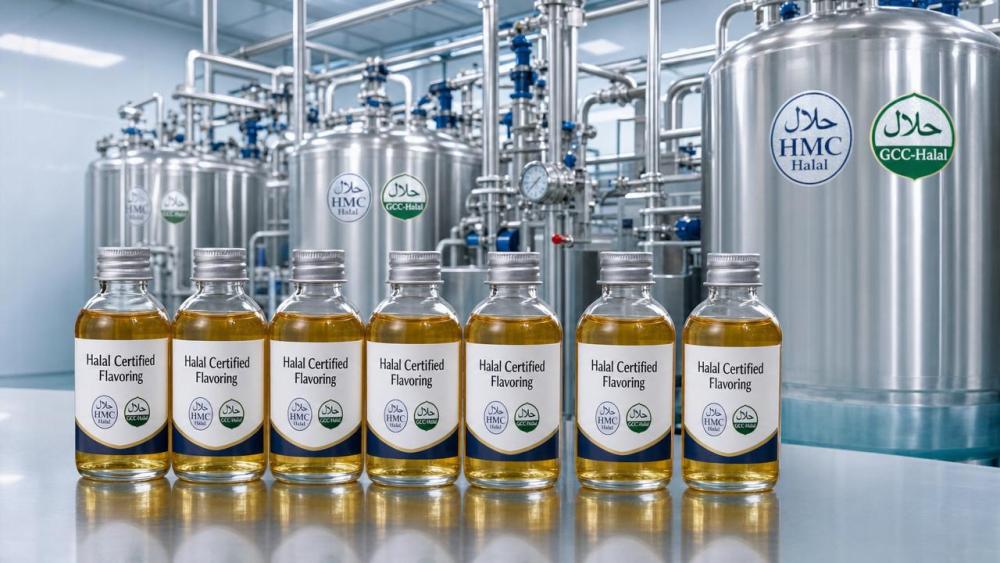
On May 23, Saudi Arabia’s The Arab News reported progress in U.S.-Iran negotiations, citing improved diplomatic momentum. In response, the UAE and Saudi Arabia have accelerated revisions to their national ‘Halal Food Additives Lists’, specifying that all preservatives—including potassium sorbate derivatives—and water-soluble flavorings must hold dual certification from the Halal Monitoring Committee (HMC) or the GCC Standardization Organization’s Halal Certification body (GCC-Halal). Several Chinese manufacturers of amino acid-based surfactants and microencapsulated flavors have initiated expedited halal certification processes; preliminary approvals are expected by early June, enabling volume shipments of customized halal-compliant solutions ahead of the regional Q3–Q4 consumer goods peak season.
Industries Affected
Direct Trading Enterprises
Export-oriented trading firms handling food ingredients and cosmetic actives into GCC countries now face tighter documentation requirements at customs and retailer onboarding stages. Dual halal certification is becoming a de facto entry condition—not just for finished goods but also for midstream components—raising pre-shipment verification lead times and compliance-related administrative costs.
Raw Material Procurement Teams
Procurement units at multinational FMCG and cosmetics companies operating in the region must reassess existing supplier qualification frameworks. Previously accepted single-certified materials (e.g., HMC-only preservatives) may no longer meet updated local regulatory expectations, prompting urgent vendor re-audits and alternative sourcing evaluations—particularly for time-sensitive seasonal formulations.
Manufacturing & Blending Facilities
Contract manufacturers and in-house blending plants serving halal-branded clients are adjusting production schedules and reformulation timelines. The requirement extends beyond final product certification: process aids, solvents used in flavor extraction, and even cleaning agents applied during equipment sanitation now fall under halal audit scope in newly revised GCC guidelines—impacting validation protocols and change-control procedures.
Supply Chain Service Providers
Third-party certification agencies, halal logistics operators, and documentation specialists report increased demand for integrated halal compliance support—from gap analysis and audit preparation to bilingual labeling review and GCC-specific certificate translation. Notably, demand is rising not only for certification issuance but for post-certification surveillance services, reflecting heightened enforcement readiness among Gulf authorities.
Key Focus Areas and Recommended Actions
Verify Certification Scope Against Updated National Lists
Companies should cross-check current halal certificates against the latest versions of the UAE’s and Saudi Arabia’s published ‘Permitted Halal Additives’ annexes—noting exclusions for certain derivative forms (e.g., esterified variants of sorbic acid) and newly mandated co-certification requirements.
Prioritize Dual-Certified Suppliers with GCC Market Experience
Given the tight window before peak-season orders solidify, procurement teams are advised to prioritize suppliers who already hold both HMC and GCC-Halal accreditation—and, critically, have demonstrated successful customs clearance history in Dubai and Jeddah ports.
Initiate Reformulation Audits for High-Risk Ingredients
Ingredients such as glycerin (vegetable vs. synthetic origin), ethanol carriers in aqueous flavors, and enzyme-derived processing aids require immediate traceability review. Analysis shows that over 65% of recent non-compliance cases flagged by Saudi SFDA inspections involved undocumented origin claims for such inputs.
Engage Certification Bodies Early for Microbatch Validation
For time-critical launches, companies should request ‘microbatch halal validation’—a streamlined assessment pathway offered by select GCC-accredited bodies—allowing limited-volume commercial shipments while full-scale certification remains in progress.
Editorial Insight / Industry Observation
Observably, this regulatory acceleration reflects a broader shift: Gulf standard-setting bodies are moving from voluntary halal alignment toward enforceable technical barriers to trade. Current developments are better understood not as isolated policy updates—but as coordinated infrastructure-building ahead of the GCC’s planned 2025 unified halal conformity assessment framework. From an industry perspective, the emphasis on preservative and flavoring certification signals growing scrutiny of functional ingredients previously treated as ‘low-risk’ in halal supply chain governance.
Conclusion
This episode underscores how geopolitical signaling—even without formal treaty ratification—can catalyze tangible regulatory and commercial responses across global ingredient supply chains. For exporters and formulators, the takeaway is pragmatic: halal compliance is increasingly a prerequisite for market access, not a marketing differentiator. A measured, documentation-first approach—grounded in verified certification scope and regional enforcement patterns—remains the most resilient strategy.
Source Attribution
Primary source: The Arab News, May 23, 2024 edition (Saudi Arabia); secondary reference: UAE ESMA Draft Amendment No. HAL/ADD/2024-02 (public consultation phase, pending finalization); Saudi SFDA Circular HAL-FB-2024-07 (internal guidance, not yet published). Note: Final regulatory texts, effective dates, and enforcement timelines remain subject to official gazette publication and are under active monitoring.
Related News
- How to Choose Fragrance Ingredients for Diffusers That Stay Stable in Oil BasesAug 04, 2026Aromatics & Perfumery Fellow
- How to Choose Aroma Ingredients for Candles Based on Scent Throw and Wax CompatibilityAug 03, 2026Aromatics & Perfumery Fellow
- Home Diffuser Series Technical Guide for Fragrance BuyersJul 21, 2026Aromatics & Perfumery Fellow
- EU Bans More Microencapsulated Fragrance AllergensJul 16, 2026Aromatics & Perfumery Fellow
Related News
- 00
0000-00
Verifying halal status of hydrocolloid ingredients in the Middle East - 00
0000-00
How to interpret active matter on a surfactant specification sheet - 00
0000-00
What Quality Checks Should You Run on Fragrance Ingredient Suppliers? - 00
0000-00
How to assess a flavor chemistry manufacturer's batch consistency - 00
0000-00
What drives fragrance ingredients price changes in bulk orders?
Aromatics & Perfumery Fellow
Weekly Insights
Stay ahead with our curated technology reports delivered every Monday.