





Choosing fragrance formulation fixative ingredients for longer wear is rarely a simple matter of slowing evaporation. In modern fragrance development, the fixative system also affects diffusion, note transition, formula stability, regulatory fit, and cost structure. For teams working across FMCG, personal care, and fine fragrance, that makes fixative selection a technical and commercial decision at the same time.
This is why fragrance formulation fixative ingredients deserve closer evaluation. A long-lasting perfume, body mist, fabric refresher, or scented cosmetic is judged not only by how long it remains detectable, but by how well it develops on skin, survives packaging, and stays aligned with safety expectations.
Why Fixatives Matter More Than Ever
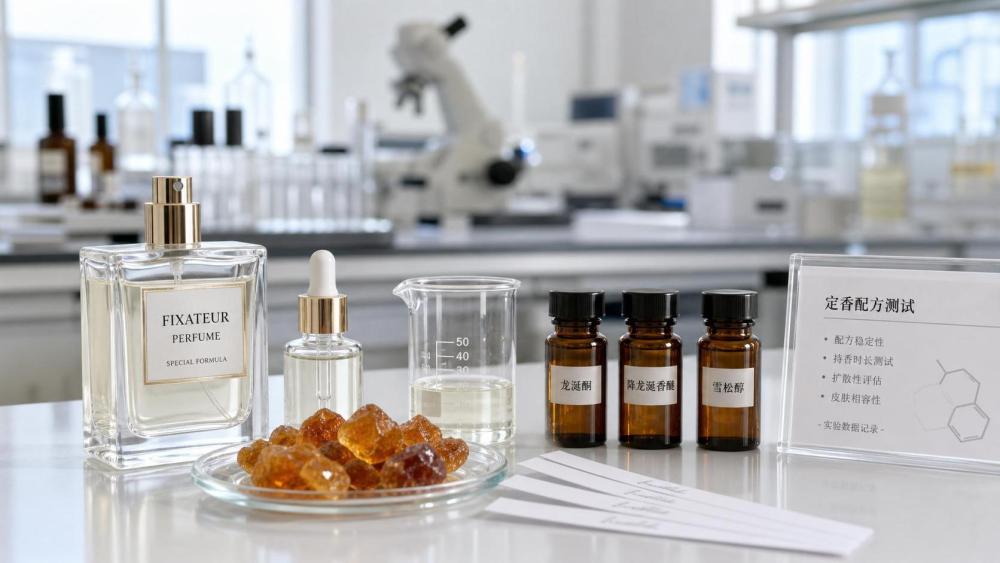
The current fragrance market is shaped by stronger scrutiny and higher performance demands. Consumers expect longer wear, cleaner ingredient stories, and more stable sensory profiles across sprays, creams, shampoos, and leave-on formats.
At the same time, formulation teams face pressure from IFRA guidance, regional cosmetic rules, volatility shifts in natural raw materials, and rising material costs. Fixatives sit at the center of those trade-offs.
From an FFAI perspective, this fits a broader pattern across taste, beauty, and active ingredients. Whether preserving food freshness or stabilizing peptide performance, the real competitive edge often comes from molecular control, not headline marketing claims.
What Fragrance Formulation Fixative Ingredients Actually Do
A fixative is not one single ingredient class. It is a functional role played by materials that reduce the rapid loss of more volatile aroma molecules and support a more controlled release profile.
In practice, fragrance formulation fixative ingredients can:
- slow top-note flash-off
- extend heart and base note perception
- improve substantivity on skin, hair, or fabric
- support olfactory roundness and blend cohesion
- enhance compatibility with solvents and carriers
That means the evaluation should move beyond a narrow question of longevity. A material that improves ten-hour wear but muddies the opening, discolors a formula, or creates residue may fail the broader brief.
Core Categories Used in Longer-Wear Systems
Different product types call for different fragrance formulation fixative ingredients. Some are valued for tenacity, some for odor character, and others for solubility or regulatory practicality.
The best-performing systems often combine several of these rather than relying on one hero material.
How to Evaluate a Fixative System in Real Formulation Work
A practical assessment starts with the product format. Alcohol-based fine fragrance behaves differently from aqueous sprays, conditioners, deodorants, or emulsified skin care carrying a fragrance phase.
Look at evaporation as a curve, not a single endpoint
Longer wear should be measured across opening, mid-drydown, and late-stage residue. Some fragrance formulation fixative ingredients improve the final hours while flattening the first thirty minutes.
That is rarely acceptable in premium positioning. Sensory timing matters as much as overall duration.
Check matrix compatibility early
A fixative that works in ethanol may fail in surfactant systems or emulsions. Cloudiness, precipitation, viscosity drift, and package interaction can appear long before formal stability failure.
This matters in the wider FMCG context covered by FFAI, where fragrances increasingly move across hair care, skin care, home care, and hybrid beauty formats.
Separate odor contribution from fixation value
Some materials are technically effective but bring a strong balsamic, powdery, woody, or musky signature. That can be useful, but it can also distort the intended olfactory identity.
A fixative should be judged for both functional performance and sensory influence.
The Main Selection Criteria Behind Longer Wear
When comparing fragrance formulation fixative ingredients, several criteria usually decide whether a material remains viable after the first screening.
- Volatility profile: High-boiling materials usually support persistence, but excessive heaviness can suppress lift.
- Substrate affinity: Skin, hair, fabric, and hard surfaces retain aroma differently.
- Stability: Heat, light, oxygen, and pH can change both odor and performance.
- Regulatory fit: Allergen disclosure, regional restrictions, and intended use category must stay aligned.
- Cost-in-use: The right material is not always the cheapest per kilogram.
- Supply resilience: Natural-derived ingredients may carry seasonal variation or sourcing risk.
In other words, longer wear is a system outcome. It should be reviewed with formulation science, compliance, procurement logic, and sensory testing together.
Where Performance Expectations Change by Application
A fine fragrance often values elegant evolution and skin diffusion. A laundry scent booster may prioritize fabric substantivity after drying. A face cream may need a quieter scent with tight compatibility limits.
That shift changes how fragrance formulation fixative ingredients should be ranked.
A More Reliable Testing Approach
Good decisions usually come from comparative testing, not from supplier claims alone. Bench work should compare control and modified formulas under the same dosage, carrier, and storage conditions.
Useful test inputs include blotter evolution, skin wear, headspace data, accelerated stability, packaging contact, and sensory panel feedback. Even simple structured scoring can reveal when a fixative improves duration but damages character.
This is where intelligence-led review becomes valuable. FFAI’s broader lens across flavors, fragrances, active compounds, and compliance trends reflects a useful principle: performance data is strongest when chemistry, regulation, and market viability are read together.
What to Watch Next
The next wave of fragrance formulation fixative ingredients is being shaped by three pressures: cleaner label expectations, biodegradability, and more sophisticated delivery systems.
Natural-origin options are gaining attention, but they still need careful review for consistency and odor impact. Encapsulation and advanced deposition technologies can improve longer wear, though added complexity must justify itself.
For the next evaluation round, it helps to define the wear target, substrate, regulatory market, and acceptable sensory shift before screening materials. That creates a tighter shortlist and a more defensible decision on fragrance formulation fixative ingredients.
Longer wear is achievable, but only when fixation is treated as part of the full formulation architecture. That is usually the difference between a scent that merely lasts and one that performs well throughout its entire life on the product and the user.
Related News
- How to Choose Fragrance Ingredients for Diffusers That Stay Stable in Oil BasesAug 04, 2026Aromatics & Perfumery Fellow
- How to Choose Aroma Ingredients for Candles Based on Scent Throw and Wax CompatibilityAug 03, 2026Aromatics & Perfumery Fellow
- Home Diffuser Series Technical Guide for Fragrance BuyersJul 21, 2026Aromatics & Perfumery Fellow
- EU Bans More Microencapsulated Fragrance AllergensJul 16, 2026Aromatics & Perfumery Fellow
Related News
- 00
0000-00
Can biomimetic peptides in cosmetics reduce the look of wrinkles? - 00
0000-00
How to assess a bio-based thickener manufacturer's batch consistency - 00
0000-00
Verifying halal status of hydrocolloid ingredients in the Middle East - 00
0000-00
How to interpret active matter on a surfactant specification sheet - 00
0000-00
How Do You Test Hydrocolloid Viscosity After Changing a Thickener?
Aromatics & Perfumery Fellow
Weekly Insights
Stay ahead with our curated technology reports delivered every Monday.