





Olfactory Engineering for Longer-Lasting Freshness in Home Care Products
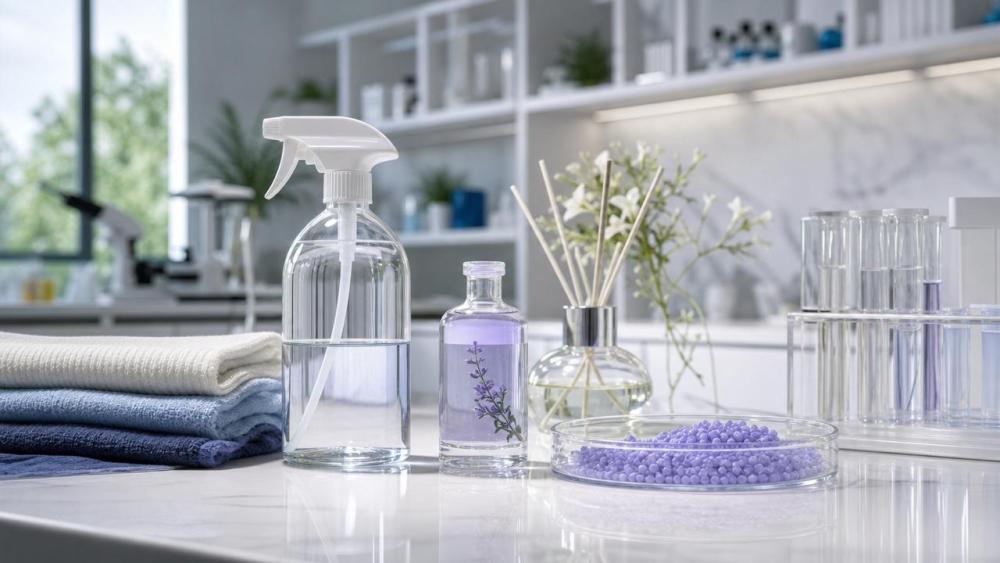
In home care product development, longer-lasting freshness is no longer a simple fragrance brief—it is a cross-functional engineering challenge.
Olfactory engineering helps align scent performance, surfactant compatibility, encapsulation systems, consumer perception, and regulatory safety into one measurable roadmap.
As brands compete for cleaner labels, stronger emotional appeal, and durable post-use freshness, aroma behavior becomes essential across laundry, surface care, and air care.
What Does Olfactory Engineering Mean in Home Care?
Olfactory engineering is the structured design of scent release, scent perception, and scent stability throughout a product’s real use journey.
It connects aroma chemistry with formulation science, packaging, consumer testing, and safety documentation.
In laundry care, olfactory engineering considers wash dilution, fabric binding, drying conditions, and delayed fragrance bloom.
In surface cleaners, it evaluates malodor masking, evaporation speed, residue perception, and room-filling freshness.
In air care, olfactory engineering balances diffusion strength, odor character, allergen limits, and sensory fatigue.
The goal is not simply stronger fragrance.
The goal is controlled freshness that feels pleasant, credible, and consistent across time.
This matters because freshness has become a performance cue.
A clean surface may fail emotionally if the scent disappears too quickly.
A washed textile may feel unfinished if it lacks a gentle dry-down signature.
Why Is Longer-Lasting Freshness Difficult to Achieve?
Longer-lasting freshness is difficult because fragrance molecules are not equal in volatility, polarity, or surface affinity.
Top notes create instant impact but evaporate quickly.
Base notes remain longer but can feel heavy, waxy, or less clean.
Olfactory engineering solves this tension by building a staged release profile.
A good home care scent should perform during opening, application, drying, storage, and later reactivation.
Surfactants add another challenge.
Micelles can trap aroma molecules, reduce headspace intensity, or shift fragrance balance.
Builders, enzymes, bleaches, preservatives, and pH systems may also degrade delicate notes.
For this reason, olfactory engineering must begin before final formula lock.
Late fragrance addition often causes rework, instability, or disappointing consumer perception.
Key Barriers to Durable Freshness
- High volatility of citrus, green, and aldehydic notes.
- Fragrance loss during rinsing, wiping, or drying.
- Interaction with anionic, nonionic, or amphoteric surfactants.
- Oxidation under heat, light, or alkaline conditions.
- Mismatch between analytical results and perceived freshness.
How Does Olfactory Engineering Improve Laundry Freshness?
Laundry is one of the most demanding fields for olfactory engineering.
A fragrance must survive dilution, mechanical agitation, rinse loss, drying heat, and fabric storage.
The scent must also remain pleasant on cotton, polyester, blends, towels, and activewear.
Encapsulation is a common solution, but capsules alone are not a complete strategy.
Olfactory engineering defines capsule shell chemistry, particle size, deposition aids, rupture force, and fragrance core composition.
For example, a detergent may need a bright bloom during washing.
A fabric conditioner may need a soft, lingering trail after drying.
Scent boosters may need stronger storage stability and delayed activation.
Each product requires a different olfactory engineering map.
The best designs combine free oil for first impression with encapsulated perfume for later freshness.
They also use substantivity-enhancing ingredients that help molecules attach to textile fibers.
However, excessive deposition can create overpowering scent, residue concerns, or allergen exposure issues.
How Should Surface Care and Air Care Use Olfactory Engineering?
Surface care requires a different freshness logic from laundry.
The fragrance must suggest cleanliness without interfering with disinfection, degreasing, or streak-free appearance.
Olfactory engineering helps balance instant room impact with controlled evaporation after wiping.
Kitchen cleaners often need citrus, herbal, or ozonic profiles that communicate grease removal.
Bathroom cleaners may require cooling, floral, marine, or antimicrobial-coded notes.
Floor cleaners need persistence without producing slippery residue or heavy perfume build-up.
Air care depends heavily on diffusion physics.
A reed diffuser, aerosol, gel, plug-in, and fabric mist each releases molecules differently.
Olfactory engineering compares headspace concentration, odor threshold, solvent system, airflow, and room size.
It also reduces olfactory fatigue, where users stop noticing a fragrance after continuous exposure.
A successful scent may need pulses, contrast, or slow transitions rather than constant intensity.
Which Ingredients and Technologies Support Olfactory Engineering?
Effective olfactory engineering combines aroma molecules with carriers, stabilizers, and controlled-release systems.
The fragrance oil is only one part of the freshness architecture.
Microcapsules can protect perfume and release it through friction, pressure, or moisture.
Cyclodextrins can trap malodor molecules and release pleasant notes gradually.
Polymeric deposition aids can improve fabric attachment during rinse cycles.
Antioxidants can protect unstable terpenes, aldehydes, and essential oil fractions.
Solubilizers help disperse fragrance in transparent liquids, sprays, and concentrates.
Yet each technology brings trade-offs.
Capsules may raise biodegradability, microplastic, or labeling concerns depending on shell chemistry.
Essential oils may support natural positioning but can increase allergen and oxidation risk.
High-impact aroma chemicals may reduce dosage but require precise safety evaluation.
Technology Comparison for Freshness Design
How Can Freshness Performance Be Measured Reliably?
Olfactory engineering needs both instrumental data and human sensory evidence.
Gas chromatography can reveal remaining fragrance components after storage, washing, or evaporation.
Headspace analysis shows what consumers may actually smell above a product or treated surface.
However, chemistry data alone cannot define freshness success.
A low-dose molecule with a low odor threshold may dominate perception.
A technically persistent scent may feel artificial, dusty, or unsuitable for the cleaning context.
Therefore, olfactory engineering should include trained panels and consumer validation.
Testing should cover immediate bloom, wet stage, dry stage, storage stage, and reactivation.
It should also compare different climates, water hardness, textile types, and dosage habits.
Practical Freshness Test Checklist
- Define freshness moments before selecting aroma materials.
- Test fragrance stability inside the final formula.
- Measure headspace at realistic use temperatures.
- Evaluate treated fabrics or surfaces after time delay.
- Confirm sensory preference against competitive benchmarks.
What Regulatory and Clean-Label Risks Should Be Considered?
Olfactory engineering must work within safety, allergen, environmental, and regional compliance boundaries.
Fragrance performance cannot justify unclear documentation or avoidable exposure concerns.
IFRA standards, allergen declarations, VOC limits, detergent regulations, and biocide claims may affect design choices.
Clean-label expectations also influence the fragrance brief.
Natural essential oils may sound simpler, but they are chemically complex.
They can contain allergens, photo-reactive compounds, or oxidation products that require control.
Synthetic aroma molecules can offer purity, consistency, and lower dosage.
Yet they must match brand positioning and disclosure expectations.
Good olfactory engineering avoids false choices between naturalness and safety.
It builds evidence for both sensory benefit and responsible formulation.
FAQ Summary: Fast Answers on Olfactory Engineering
How Should an Olfactory Engineering Roadmap Be Built?
A practical roadmap begins with the freshness claim.
Claims such as “24-hour freshness,” “odor neutralizing,” or “fresh after drying” require different evidence.
Next, define the product matrix, user behavior, and target application surface.
Then select fragrance architecture, release technology, and stability protection.
Olfactory engineering should also include cost modeling.
Encapsulation, premium aroma chemicals, and extra testing can raise development cost.
Still, these costs may reduce reformulation cycles and improve repeat purchase potential.
The roadmap should finish with documentation for compliance, quality control, and scale-up.
Pilot batches should be tested before full commercial fragrance commitment.
Packaging compatibility should not be ignored, especially for sprays, concentrates, and high-solvent systems.
Conclusion: Turning Freshness into a Measurable Advantage
Longer-lasting freshness now depends on disciplined olfactory engineering, not fragrance intuition alone.
The strongest home care concepts connect molecular design with consumer emotion and regulatory confidence.
For laundry, surface care, and air care, olfactory engineering creates a clearer path from scent idea to market-ready performance.
The next step is to map the target freshness moments, screen compatible technologies, and validate results under real-use conditions.
With rigorous intelligence and sensory science, olfactory engineering can transform freshness into a durable product signature.
Related News
- How to Choose Fragrance Ingredients for Diffusers That Stay Stable in Oil BasesAug 04, 2026Aromatics & Perfumery Fellow
- How to Choose Aroma Ingredients for Candles Based on Scent Throw and Wax CompatibilityAug 03, 2026Aromatics & Perfumery Fellow
- Home Diffuser Series Technical Guide for Fragrance BuyersJul 21, 2026Aromatics & Perfumery Fellow
- EU Bans More Microencapsulated Fragrance AllergensJul 16, 2026Aromatics & Perfumery Fellow
Related News
- 00
0000-00
Verifying halal status of hydrocolloid ingredients in the Middle East - 00
0000-00
How to interpret active matter on a surfactant specification sheet - 00
0000-00
What Quality Checks Should You Run on Fragrance Ingredient Suppliers? - 00
0000-00
How to assess a flavor chemistry manufacturer's batch consistency - 00
0000-00
What drives fragrance ingredients price changes in bulk orders?
Aromatics & Perfumery Fellow
Weekly Insights
Stay ahead with our curated technology reports delivered every Monday.