





Choosing Flavor Enhancers for Better Product Stability
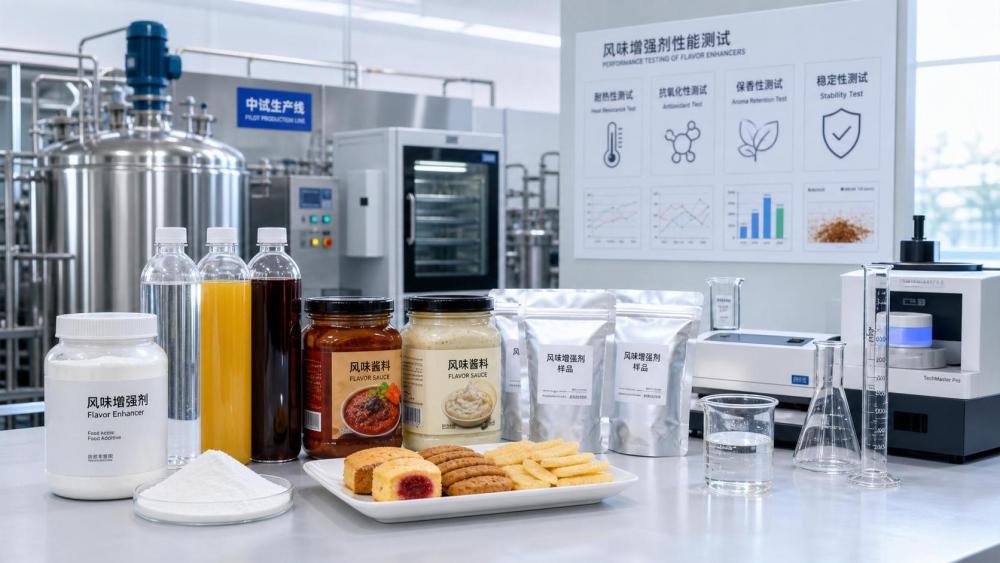
Choosing the right flavor enhancers is not only about taste.
It is also a practical step toward better product stability, safer processing, and more reliable consumer experience.
In real production, flavor enhancers influence far more than a final flavor note.
They can affect heat resistance, pH balance, oxidation behavior, moisture response, and flavor retention during storage.
That matters in beverages, snacks, sauces, dairy products, baked goods, and even health-focused FMCG formats.
From a practical view, better flavor enhancers help reduce rework, complaint risk, and batch inconsistency.
They also support clean label goals when chosen with formulation discipline.
This is why flavor enhancer selection should be tied to stability, not just sensory intensity.
A stable product keeps its intended taste profile through filling, transport, shelf display, and consumer use.
That is the real benchmark behind smart use of flavor enhancers.
Why Flavor Enhancers Matter for Stability
A flavor system can fail even when microbiological safety remains under control.
Common issues include fading aroma, bitter buildup, sulfur loss, sweetness drift, and off-notes after storage.
Flavor enhancers help bridge those weak points by supporting perception and balancing losses.
For example, umami boosters can maintain savory depth when sodium is reduced.
Masking enhancers can soften oxidation notes in protein drinks or fortified snacks.
Mouthfeel-supporting flavor enhancers can make low-fat products feel fuller without destabilizing texture.
The more important signal today is that consumers notice inconsistency quickly.
A product that tastes bright on day one but flat by week six weakens trust.
That means flavor enhancers now play a quality assurance role as much as a sensory role.
Key Stability Pressures in FMCG Products
- Heat processing can degrade delicate top notes and create cooked off-notes.
- Low pH systems may sharpen harshness or suppress sweetness balance.
- Oxidation can trigger rancid, cardboard, or metallic flavor changes.
- Water activity shifts may alter release, absorption, or flavor persistence.
- Packaging interactions can absorb aroma compounds or change headspace behavior.
When these pressures are understood early, flavor enhancers become part of a stability strategy.
How to Choose Flavor Enhancers by Application
The best flavor enhancers depend on the product matrix, process conditions, and shelf-life target.
A solution that works in a dry seasoning may fail in a retorted sauce.
So the first step is matching enhancer type to actual use conditions.
For Beverages and Liquid Systems
Choose flavor enhancers with good solubility and low haze risk.
Check how they behave in acidic, hot-fill, or aseptic conditions.
Maskers are often useful in vitamin drinks, plant protein beverages, and functional shots.
For Savory Products
Umami-focused flavor enhancers help compensate for sodium reduction or raw material variability.
They work well in soups, noodles, sauces, frozen meals, and snack coatings.
Still, thermal stability and aftertaste should be screened carefully.
For Bakery and Snacks
Dry-format flavor enhancers should withstand baking or frying without collapsing.
Consider oil stability, seasoning adhesion, and flavor release during chewing.
This is often where encapsulated formats offer real value.
For Reduced Sugar or Reduced Fat Products
Flavor enhancers can rebuild body, roundness, and temporal taste profile.
That helps offset the sensory gaps created by nutritional reformulation.
The goal is not stronger flavor alone, but a more complete eating experience.
A Practical Selection Framework
In day-to-day operations, selection gets easier with a simple evaluation framework.
Instead of chasing trendy ingredients, focus on measurable fit.
Step 1: Define the Stability Problem
Pin down the exact issue before screening flavor enhancers.
Is the product losing impact, developing bitterness, or showing aroma drop after filling?
A clear problem statement prevents random formulation changes.
Step 2: Review Process and Matrix Conditions
Map temperature, shear, pH, fat level, water activity, and packaging type.
Flavor enhancers must survive the real process, not just bench-top tasting.
Step 3: Screen Sensory and Technical Fit
- Check initial impact, finish, and aftertaste.
- Compare performance after heat or storage stress.
- Review interaction with sweeteners, salts, acids, and hydrocolloids.
- Confirm dosage efficiency and label alignment.
Step 4: Validate Cost-in-Use
A cheaper enhancer is not always the lower-cost option.
If it requires higher dosage, causes rework, or shortens sensory shelf life, total cost rises.
The smarter measure is stable performance per finished unit.
Quick Comparison Table
Common Mistakes When Using Flavor Enhancers
Many stability problems come from good ingredients used in the wrong way.
The most frequent mistake is choosing flavor enhancers only through a fresh sample tasting.
That approach ignores process stress and real shelf conditions.
- Overdosing to chase intensity, then creating lingering aftertaste.
- Ignoring packaging impact on aroma retention or migration.
- Skipping interaction checks with preservatives or antioxidants.
- Using one flavor enhancer across all formats without adjustment.
- Failing to retest after raw material or process changes.
In practice, stable flavor performance comes from controlled trials and disciplined records.
Small changes in acid level or oil quality can shift enhancer behavior more than expected.
What Better Decisions Look Like
A stronger decision process usually follows a few consistent habits.
- Set a target flavor profile and a target shelf-life profile.
- Shortlist flavor enhancers by matrix and process compatibility.
- Run accelerated and real-time stability checks.
- Compare sensory results with cost-in-use and label goals.
- Lock the formula only after repeatable batch confirmation.
This approach keeps flavor enhancers connected to commercial reality.
It also supports more resilient product launches in a market that rewards consistency.
Choosing flavor enhancers well means balancing sensory appeal, processing limits, and storage performance at the same time.
When that balance is achieved, stability improves, waste drops, and consumer trust grows.
Start with the real stability risk, test flavor enhancers under actual conditions, and build from evidence rather than assumption.
Related News
- When heat stable flavor formulations are needed for UHT beveragesOct 04, 2026Aromatics & Perfumery Fellow
- How heat stable flavor formulations prevent aroma loss in baked goodsOct 03, 2026Aromatics & Perfumery Fellow
- Using 4-vinyl guaiacol flavour standard to calibrate sensory panelsOct 02, 2026Aromatics & Perfumery Fellow
- Garlic Powder Flavor Profiles and Their Role in Seasoning BlendsSep 28, 2026Aromatics & Perfumery Fellow
Related News
- 00
0000-00
Verifying halal status of hydrocolloid ingredients in the Middle East - 00
0000-00
How to interpret active matter on a surfactant specification sheet - 00
0000-00
What Quality Checks Should You Run on Fragrance Ingredient Suppliers? - 00
0000-00
How to assess a flavor chemistry manufacturer's batch consistency - 00
0000-00
What drives fragrance ingredients price changes in bulk orders?
Aromatics & Perfumery Fellow
Weekly Insights
Stay ahead with our curated technology reports delivered every Monday.