





On July 10, 2026, the US FDA withdrew GRAS Notice No. GRN 1239 for water-soluble vanilla flavor blends that use propylene glycol as the primary solvent. The action puts immediate attention on beverage-oriented flavor systems, compliance documentation, and cross-border supply arrangements, especially for US importers sourcing soluble flavors from Asia. For the industry, the development matters not only because a prior GRAS pathway has been withdrawn, but because continued market compliance now depends on new submissions supported by additional toxicology data within a defined timeline.
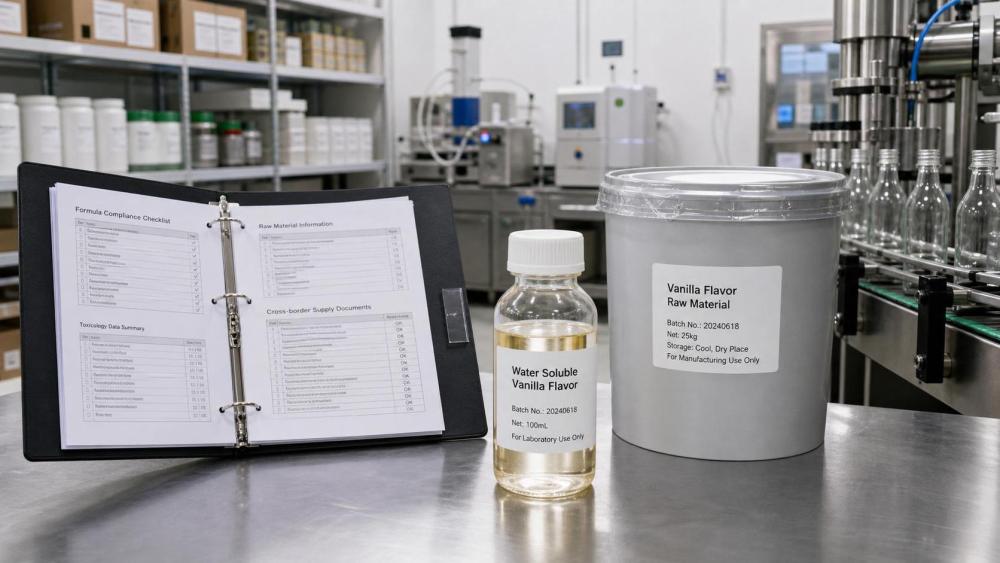
What the FDA action confirms
The confirmed facts are limited but commercially significant. The FDA has withdrawn GRAS Notice No. GRN 1239, which had been issued in 2024 and covered water-soluble vanilla flavor systems using propylene glycol as the main solvent.
According to the event summary provided, the reason cited by the FDA is insufficient long-term metabolic safety data for oral beverage applications. The same summary states that affected products must submit new GRAS dossiers, including 90-day rodent toxicity studies, by September 30, 2026 in order to remain compliant.
The summary also makes clear that US importers of Asian-sourced soluble flavors should immediately audit supplier GRAS documentation.
Where the pressure is likely to appear first
Import programs may face the earliest document checks
From an industry perspective, US importers are among the first parties likely to feel the practical effect of this withdrawal because the summary explicitly calls for immediate audits of supplier GRAS documentation. The main pressure point is document readiness: importers will need to verify whether products tied to the withdrawn notice have replacement compliance materials in progress or available.
Beverage-related flavor procurement may need tighter screening
Buyers and procurement teams handling water-soluble vanilla flavor systems for beverage use may be affected because the FDA concern specifically refers to oral beverage applications. In practice, the business impact is likely to center on ingredient approval status, supplier communication, and the ability to confirm whether an affected flavor system is covered by a compliant new dossier before purchase or continued use.
Flavor manufacturers and blenders may face submission and timing risk
Manufacturers producing or supplying these soluble vanilla blends may be affected most directly at the formulation-support and regulatory submission level. The requirement for new GRAS dossiers with 90-day rodent toxicity studies introduces a defined compliance task and a fixed date, which can affect submission scheduling, customer commitments, and product continuity planning.
Supply chain service providers may need closer coordination on records
Service providers involved in supply chain coordination, documentation handling, or customer compliance support may also need to pay closer attention. Observably, the key issue is less about logistics alone and more about whether technical files, declarations, and supplier-backed regulatory records remain aligned with customer requirements after the withdrawal.
What companies should watch now
Check whether any active SKU is linked to GRN 1239
A practical first step is identifying whether current water-soluble vanilla flavor products, especially those used in beverage applications, rely on the withdrawn GRAS Notice No. GRN 1239. This is a narrow but necessary review because the compliance consequence depends on whether a product is actually tied to the withdrawn notice.
Review supplier dossiers against the September 30 deadline
What deserves closer attention is the timing requirement attached to continued compliance. Companies should distinguish between a supplier stating that a new dossier will be filed and a supplier being able to show that a new submission package, including the required 90-day rodent toxicity study support, is in place or on track before September 30, 2026.
Separate regulatory signaling from immediate business claims
Analysis shows that the FDA withdrawal is a confirmed regulatory event, but each company still needs to map that event to actual product exposure. Not every vanilla flavor product is necessarily implicated; the immediate issue is whether a specific water-soluble vanilla system using propylene glycol as its primary solvent is covered by the withdrawn notice and intended for the cited beverage use context.
Prepare customer and internal communication records
For importers, distributors, and purchasing teams, this is also a documentation and communication issue. Companies may need updated supplier statements, dossier status confirmations, and clear internal records so that procurement, quality, and commercial teams are not working from inconsistent assumptions during the compliance review period.
Why this looks like more than a one-day notice
Analysis shows that this development is best understood as a targeted regulatory signal rather than a broad conclusion about all flavor systems or all propylene glycol uses. The immediate fact pattern is specific: a withdrawn GRAS notice, a stated concern about long-term metabolic safety data in oral beverage applications, and a requirement for new dossiers supported by 90-day rodent studies.
At the same time, it would be premature to treat this as a fully settled long-term market outcome beyond the affected notice and products. It is more appropriate to understand this as an active compliance situation with a clear deadline, where documentation quality and follow-through may matter as much as the initial withdrawal itself. Continued observation is warranted because the practical market effect will depend on how affected suppliers respond and whether replacement dossiers are completed in time.
How this development should be read today
At this stage, the industry significance lies in the combination of a withdrawn FDA GRAS notice and a concrete re-submission requirement tied to continued compliance. For companies in soluble flavor trade, sourcing, and beverage application chains, the issue is not abstract policy discussion; it is a near-term need to confirm product coverage, supplier readiness, and dossier status.
Observably, this is more appropriately read as a short-term compliance change with potential longer-term signaling value. The confirmed facts are already material enough for operational review, but the broader regulatory meaning still needs continued watching rather than overstatement.
Basis of this article and points for continued verification
This article is based on the user-provided news title, event date, and event summary concerning the FDA withdrawal of GRAS Notice No. GRN 1239 on July 10, 2026. No specific official source link was provided in the input, so the exact official source document link remains unconfirmed here and should be continuously verified in follow-up work.
For this type of industry update, commonly relevant source categories include official regulatory notices, company disclosures, industry association updates, authoritative media reporting, and technical or standards-related documentation. Continued attention should focus on any further FDA wording, supplier re-submission progress, and compliance documentation updates related to affected water-soluble vanilla flavor systems.
Related News
- When heat stable flavor formulations are needed for UHT beveragesOct 04, 2026Aromatics & Perfumery Fellow
- How heat stable flavor formulations prevent aroma loss in baked goodsOct 03, 2026Aromatics & Perfumery Fellow
- Using 4-vinyl guaiacol flavour standard to calibrate sensory panelsOct 02, 2026Aromatics & Perfumery Fellow
- Garlic Powder Flavor Profiles and Their Role in Seasoning BlendsSep 28, 2026Aromatics & Perfumery Fellow
Related News
- 00
0000-00
How to assess color stability from a natural food colors manufacturer - 00
0000-00
When does amino acid surfactant powder improve cleanser mildness? - 00
0000-00
How to verify a cosmetic nanotechnology supplier's safety documentation - 00
0000-00
How rheological thickeners for shampoo affect suspension stability - 00
0000-00
How to assess recombinant collagen ingredients for cream stability
Aromatics & Perfumery Fellow
Weekly Insights
Stay ahead with our curated technology reports delivered every Monday.