





Why does flavor stay vivid in one food but disappear in another?
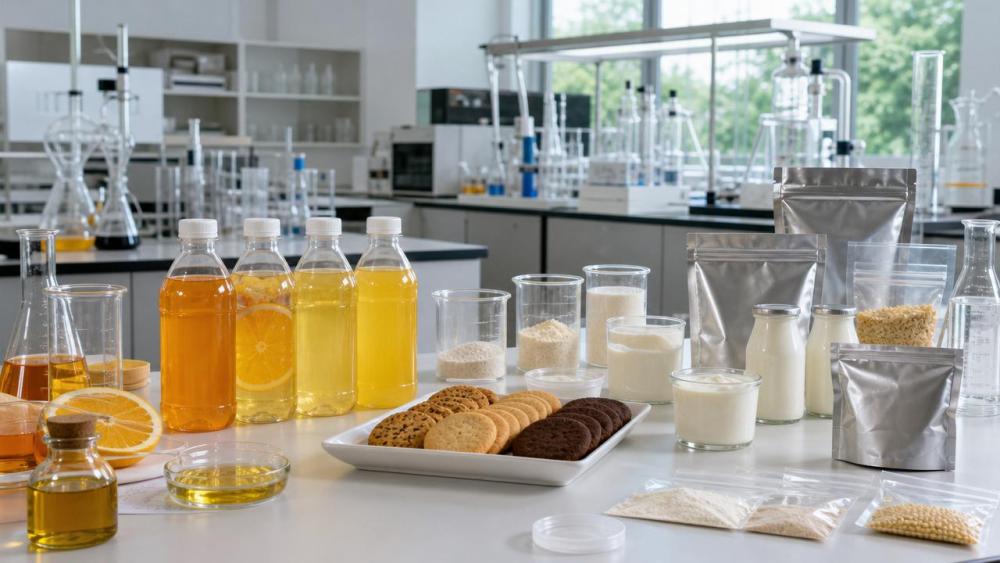
Flavor chemistry sits behind that difference. It explains why a citrus drink feels bright for months, while a baked snack can taste flat after storage.
At the most basic level, taste stability depends on molecules staying recognizable from production to consumption. Some are volatile, some oxidize easily, and some react with other ingredients.
This is why flavor chemistry matters across the broader FMCG landscape. It connects sensory performance with preservation, rheology, packaging, compliance, and shelf-life expectations.
FFAI often frames this well through its focus on antioxidants, thickeners, aroma systems, and safety intelligence. In practical terms, stable taste never comes from flavor compounds alone.
A stable profile usually reflects a coordinated system. The formula, process, matrix, oxygen control, and packaging all decide whether the intended taste survives real distribution conditions.
So when people ask about flavor chemistry, they are usually asking a deeper question: what makes flavor last without drifting, fading, or turning stale?
What exactly does flavor chemistry include?
It is broader than aroma design. Flavor chemistry studies the compounds that create taste and smell, and the reactions that change them over time.
That includes volatile aroma molecules, nonvolatile taste contributors, precursor compounds, and the food matrix that controls their release in the mouth and nose.
For example, aldehydes may deliver freshness at first. Yet they can oxidize, evaporate, or bind into other structures during heating and storage.
Texture also changes perception. Hydrocolloids, emulsifiers, and fat systems influence how quickly compounds are released, which can make the same flavor seem stronger or weaker.
In actual formulation work, flavor chemistry often intersects with preservation chemistry. Antioxidants protect sensitive notes, while moisture control and pH management slow unwanted reactions.
This is one reason FFAI’s cross-category view is useful. Food-grade antioxidants, thickeners, and fragrance intelligence are not isolated topics. They often solve the same stability problem from different angles.
A quick way to read flavor loss
When flavor changes, the cause usually falls into one of four buckets: chemical breakdown, physical loss, ingredient interaction, or poor protection during storage.
That table is simple, but it reflects a useful mindset. Flavor chemistry is easier to manage when taste change is treated as a diagnosable event, not a vague sensory complaint.
Which factors shape taste stability most in modern food systems?
Oxygen is often the first suspect. Even low exposure can degrade delicate oils, fruit notes, dairy character, and botanical profiles.
Heat comes next. High processing temperatures may destroy fresh top notes, but they can also build desired roasted or caramelized notes through Maillard chemistry.
Water activity matters more than many beginners expect. Too much available moisture can accelerate reactions, microbial risk, and aroma mobility inside the product.
pH is another control point. Acidic systems can protect some compounds, yet destabilize others. The effect depends on the flavor architecture and surrounding ingredients.
Packaging should not be treated as a final afterthought. Barrier performance, headspace oxygen, light protection, and seal integrity directly influence flavor chemistry outcomes.
In real applications, texture systems also matter. Thickeners and emulsions can retain aroma, delay release, or create a fuller sensory impression with the same flavor loading.
That is why FFAI’s interest in rheological thickeners is relevant here. Mouthfeel and stability are linked. A formula can taste different simply because the release pattern changed.
The main stability drivers worth checking first
- Volatility of the key aroma compounds
- Oxidation sensitivity of oils and extracts
- Thermal load during mixing, baking, or sterilization
- pH and water activity across storage
- Binding with proteins, starches, or packaging surfaces
- Barrier quality of the final package
Why do the same flavor compounds behave differently in beverages, snacks, and dairy?
Because flavor chemistry is matrix-dependent. A compound that stays bright in a low-fat drink may fade faster in a high-fat or baked system.
Fat can help hold certain aroma molecules, but it can also hide them until eating. Proteins may bind compounds and reduce perceived intensity.
In baked goods, prolonged heat and oxygen exposure create a harsher environment. In refrigerated dairy, oxidation and light can still create gradual sensory drift.
Acidic beverages bring another challenge. They can preserve microbial safety well, yet some citrus and botanical notes remain highly volatile and need stronger protection.
This is where applied flavor chemistry becomes practical rather than theoretical. The right system is selected by matrix behavior, not just by target taste on day one.
A good sensory profile at pilot scale is not enough. The better question is whether the profile still works after processing, transit, storage, and repeated opening.
How can flavor chemistry guide better formulation decisions?
A practical starting point is to identify the most fragile note in the profile. Stability work often succeeds or fails around that one vulnerable sensory signal.
Then check whether the issue is chemical or physical. If flavor disappears, is it reacting away, evaporating, or being trapped by the matrix?
From there, several levers become clearer. Encapsulation may reduce loss. Antioxidants may slow oxidation. Process timing may protect top notes better than formula changes.
Sometimes the best answer is structural, not aromatic. Adjusting viscosity, emulsion design, or fat phase distribution can improve flavor persistence without increasing dosage.
This kind of system thinking matches FFAI’s intelligence model. Shelf life, sensory experience, ingredient compliance, and cost logic should be evaluated together, not one by one.
In many cases, a slightly more expensive stabilization strategy reduces later reformulation, claim risk, and sensory inconsistency across markets.
Useful checks before locking a formula
- Test flavor at the end of shelf life, not only after production
- Compare open-pack and closed-pack stability
- Review interaction with preservatives, pigments, and sweeteners
- Simulate transport heat and light exposure
- Check regulatory acceptance for each market pathway
What are the most common misunderstandings about taste stability?
One common mistake is assuming stronger flavor means more stable flavor. Higher dosage may create impact early, but instability can still appear later.
Another misunderstanding is treating oxidation as only a fat problem. In flavor chemistry, oxidation can damage delicate aroma compounds long before rancidity becomes obvious.
People also underestimate packaging. A well-built flavor system can still fail if oxygen ingress, light exposure, or seal weakness are ignored.
There is also a clean-label misconception. Natural extracts may support label goals, but they are not automatically more stable than synthetic flavor systems.
In fact, some natural compounds are more reactive and variable. Better judgments come from stability data, not from origin alone.
A final blind spot involves sensory timing. If release in the mouth changes, people often report flavor loss, even when the total compound level remains similar.
So what should be reviewed next when assessing flavor chemistry?
Start with the full pathway of the product, not just the ingredient list. Flavor chemistry becomes clearer when process, matrix, packaging, and storage are reviewed together.
Map the target profile into three moments: fresh production, mid-shelf life, and end-of-life consumption. The gaps between those points reveal the real stability challenge.
It also helps to separate sensory goals from technical causes. “Less fresh” is a perception. The useful next step is identifying which molecules and conditions created that change.
For ongoing research, FFAI’s perspective is especially relevant because flavor chemistry rarely stands alone. Preservatives, thickeners, essential oils, and compliance pathways often shape the same final experience.
If the goal is better judgment, focus on a short checklist: volatile loss, oxidation risk, matrix binding, process stress, and package protection.
That approach turns flavor chemistry from an abstract concept into a practical framework for comparing formulations, testing shelf life, and reading sensory drift with more confidence.
Related News
- When heat stable flavor formulations are needed for UHT beveragesOct 04, 2026Aromatics & Perfumery Fellow
- How heat stable flavor formulations prevent aroma loss in baked goodsOct 03, 2026Aromatics & Perfumery Fellow
- Using 4-vinyl guaiacol flavour standard to calibrate sensory panelsOct 02, 2026Aromatics & Perfumery Fellow
- Garlic Powder Flavor Profiles and Their Role in Seasoning BlendsSep 28, 2026Aromatics & Perfumery Fellow
Related News
- 00
0000-00
Verifying halal status of hydrocolloid ingredients in the Middle East - 00
0000-00
How to interpret active matter on a surfactant specification sheet - 00
0000-00
What Quality Checks Should You Run on Fragrance Ingredient Suppliers? - 00
0000-00
How to assess a flavor chemistry manufacturer's batch consistency - 00
0000-00
What drives fragrance ingredients price changes in bulk orders?
Aromatics & Perfumery Fellow
Weekly Insights
Stay ahead with our curated technology reports delivered every Monday.