





Flavor Encapsulation Methods for Better Stability and Release
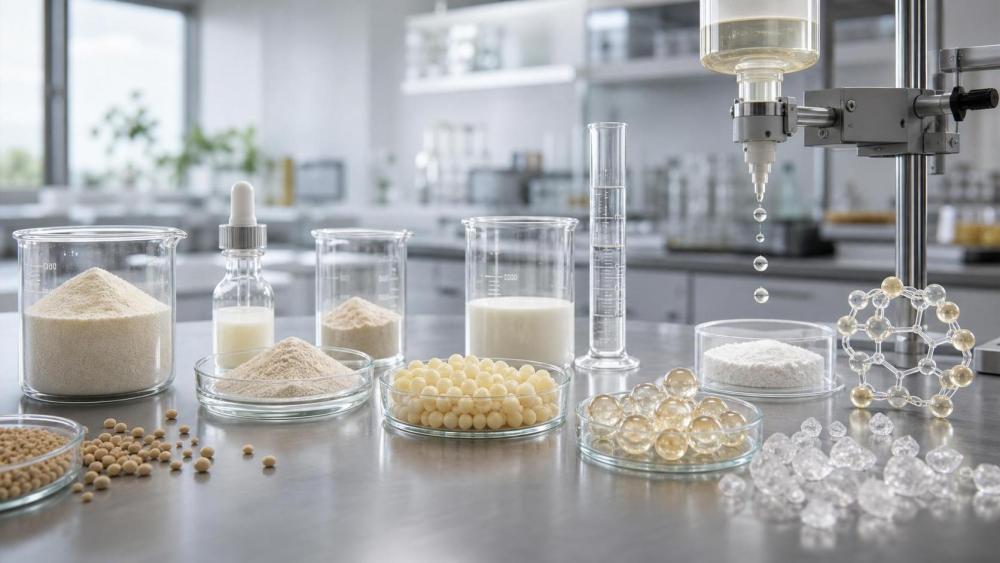
For technical evaluation, flavor encapsulation is rarely a cosmetic upgrade.
It directly affects oxidation control, volatile retention, thermal survival, and release timing.
That matters in beverages, snacks, dairy, supplements, and even cross-category sensory systems.
In practice, the best flavor encapsulation method depends on matrix stress, target shelf life, and cost limits.
It also shapes label strategy, processing windows, transport stability, and sensory consistency across markets.
This is why flavor encapsulation should be reviewed as a performance system, not a single ingredient choice.
Why flavor encapsulation matters in technical assessment
Most aroma compounds are volatile, hydrophobic, and chemically fragile.
They degrade under oxygen, light, moisture, shear, or heat.
Without flavor encapsulation, top notes often disappear long before the product reaches consumers.
Release can also happen too early, causing sensory loss during mixing, drying, or storage.
A good flavor encapsulation design addresses four evaluation questions.
- How well does it protect volatile compounds during processing?
- How stable is the system under humidity, temperature swings, and oxygen exposure?
- When and where does flavor release occur in the final application?
- Can the carrier system meet regulatory, labeling, and commercial constraints?
These questions help compare options beyond headline retention numbers.
They also reveal whether a method fits the real production environment.
Spray drying: the baseline flavor encapsulation method
Spray drying remains the most common flavor encapsulation route in food systems.
It converts an emulsion into dry particles using hot air and fast water removal.
Typical wall materials include maltodextrin, modified starch, gum arabic, and proteins.
Its main advantage is scale.
It is efficient, familiar, and usually cost-competitive for powdered beverages, seasonings, and bakery premixes.
What to check
- Emulsion droplet size and uniformity before drying.
- Inlet and outlet temperature impact on key aroma compounds.
- Surface oil level, which often predicts flavor loss and caking risk.
- Moisture content and glass transition behavior during storage.
Spray-dried flavor encapsulation works best when the aroma profile tolerates moderate thermal stress.
It is less ideal for extremely volatile top notes unless the formulation is optimized carefully.
Complex coacervation for high-value and sensitive flavors
Complex coacervation uses oppositely charged biopolymers to form a protective shell around droplets.
Gelatin with gum arabic is the classic example, though other protein-polysaccharide systems are used.
This flavor encapsulation method can deliver strong barrier properties and controlled release.
It is often selected for chewing gum, confectionery, dry mixes, and premium aroma systems.
Technical strengths
- Better retention of delicate volatiles than many simple dry carriers.
- Potential for triggered release by shear, hydration, or pH shift.
- Good fit for applications needing stronger sensory burst.
Technical concerns
- Process sensitivity to pH, ionic strength, and polymer ratio.
- Higher complexity in scale-up and batch consistency control.
- Possible label or allergen limitations depending on shell materials.
For technical screening, coacervation deserves attention when flavor impact justifies added process control.
Lipid-based flavor encapsulation for oxidation and release control
Lipid carriers protect flavors by embedding them in fats, waxes, or structured lipids.
Common formats include spray chilling, spray cooling, and solid lipid particles.
This flavor encapsulation approach is useful when water exposure must be minimized.
It can also delay release until melting, mastication, or baking progression.
Best-fit scenarios
- Powdered soups and seasonings exposed to humidity.
- Bakery systems needing flavor hold during dough handling.
- Nutraceutical products where odor masking matters.
The trade-off is that release may feel muted if melting behavior is poorly matched to use conditions.
That makes solid fat profile and polymorphism important review points.
Cyclodextrins and inclusion systems for selective molecular protection
Cyclodextrins form host-guest complexes with suitable aroma molecules.
This is a more selective flavor encapsulation strategy than bulk matrix trapping.
It helps reduce volatility, improve powder handling, and sometimes mask unwanted odor notes.
Applications often include functional foods, dry beverage systems, and specialty actives with aroma challenges.
Evaluation points
- Complexation efficiency for the target flavor molecules.
- Impact on dissolution speed and final sensory release.
- Regulatory status by market and permitted use level.
Cyclodextrin-based flavor encapsulation is rarely the cheapest route.
Still, it can be highly effective when a few unstable compounds drive product value.
Fluid-bed coating and layered particles for tailored release
Fluid-bed coating builds layers around powders or granules.
It is a practical flavor encapsulation option for staged release and particle engineering.
A core can hold flavor, while outer layers manage oxygen contact, moisture pickup, or dissolution timing.
This structure is useful in instant beverages, tableted systems, and dry culinary blends.
Compared with spray drying, it offers more release precision but usually at higher processing cost.
How to compare flavor encapsulation methods in practice
A strong assessment matrix should connect material science with commercial reality.
The table below highlights the practical comparison logic.
In real projects, no flavor encapsulation method wins on every criterion.
The right answer usually comes from matching failure mode to carrier design.
Critical decision criteria beyond retention data
Recent market shifts make evaluation more nuanced.
Clean label pressure can narrow wall material choices.
Global distribution also raises the bar for humidity and temperature resilience.
More importantly, sensory expectations are becoming less forgiving.
- Check compatibility with upstream emulsifiers and downstream processing.
- Review oxygen transmission, water activity response, and particle morphology.
- Confirm release behavior in the actual food matrix, not only in model systems.
- Assess regional compliance status for carriers, solvents, and processing aids.
- Model cost per delivered sensory unit, not cost per kilogram alone.
That final point is often where flavor encapsulation decisions become clearer.
A cheaper system that loses aroma early can become the expensive option at launch.
A practical selection path for better stability and release
Start by defining the dominant stress.
Is the main threat heat, oxidation, moisture, shear, or premature dissolution?
Then map the required release moment.
Should flavor appear during hydration, chewing, heating, or a delayed sensory finish?
From there, narrow the flavor encapsulation shortlist and verify it with application-level testing.
- Screen carrier compatibility with target aroma chemistry.
- Run accelerated stability under realistic humidity and temperature conditions.
- Measure retention, surface loss, and release kinetics.
- Validate sensory performance in the finished product matrix.
- Review scale-up, compliance, and delivered-value economics.
Flavor encapsulation works best when technical data and commercial context are read together.
That is the most reliable path to better stability, cleaner release, and repeatable sensory impact.
Related News
- When heat stable flavor formulations are needed for UHT beveragesOct 04, 2026Aromatics & Perfumery Fellow
- How heat stable flavor formulations prevent aroma loss in baked goodsOct 03, 2026Aromatics & Perfumery Fellow
- Using 4-vinyl guaiacol flavour standard to calibrate sensory panelsOct 02, 2026Aromatics & Perfumery Fellow
- Garlic Powder Flavor Profiles and Their Role in Seasoning BlendsSep 28, 2026Aromatics & Perfumery Fellow
Related News
- 00
0000-00
Verifying halal status of hydrocolloid ingredients in the Middle East - 00
0000-00
How to interpret active matter on a surfactant specification sheet - 00
0000-00
What Quality Checks Should You Run on Fragrance Ingredient Suppliers? - 00
0000-00
How to assess a flavor chemistry manufacturer's batch consistency - 00
0000-00
What drives fragrance ingredients price changes in bulk orders?
Aromatics & Perfumery Fellow
Weekly Insights
Stay ahead with our curated technology reports delivered every Monday.