





Flavor Masking Agent for Supplements: What Actually Works in Gummies and Powders
Finding the right flavor masking agent for supplements can decide whether a gummy gets repeat purchases or a powder gets abandoned after one try.
In practice, taste masking is rarely about covering one bad note.
It usually means managing bitterness, metallic notes, sulfur hints, lingering astringency, and texture at the same time.
That is why choosing a flavor masking agent for supplements needs a formulation view, not a simple flavor house shortcut.
For gummies and powders, what works best depends on the active load, sweetener system, water activity, process heat, and label positioning.
Why supplement flavors fail so often
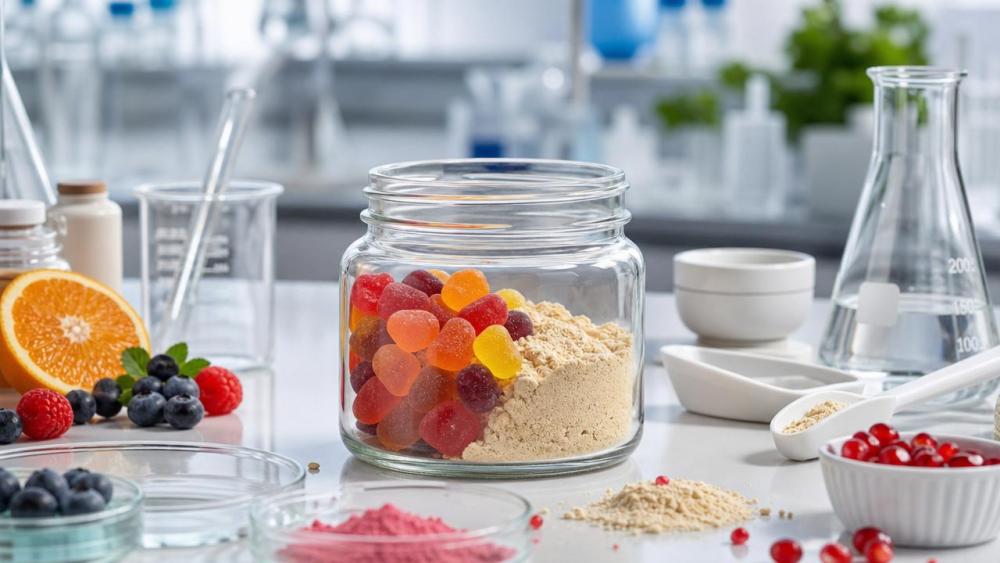
Many supplement actives taste worse than standard food ingredients.
Botanicals can be earthy and sharp.
Minerals often create metallic or chalky notes.
Amino acids, vitamins, and nootropics can leave a stubborn bitter tail.
Operators also face a second problem.
The off-notes often change during processing, storage, or reconstitution.
A blend that tastes acceptable on day one may become flat, sour, or medicinal after several weeks.
This is where a well-matched flavor masking agent for supplements becomes more useful than simply adding more sweetness.
What a flavor masking agent for supplements actually does
A strong masking system does more than cover flavor with another flavor.
It can reduce bitter perception, soften mineral harshness, shorten aftertaste, and improve top-note freshness.
Depending on the formula, it may include several tools working together.
- Natural or nature-identical flavor modulators
- Sweetness enhancers and temporal profile balancers
- Acids for brightness and bitterness control
- Salt or mineral balancing at low use levels
- Encapsulation systems for delayed release
- Texture modifiers that reduce chalkiness or dryness
In other words, the right flavor masking agent for supplements is often a system, not a single ingredient.
That matters because gummies and powders respond very differently to the same masking strategy.
What works best in gummies
Gummies have an advantage.
Their chew, sweetness, and fruit profile naturally help hide unpleasant notes.
Still, high active loads can quickly break that advantage.
A flavor masking agent for supplements in gummies works best when paired with the gummy matrix.
Best-performing approaches
- Use bold fruit profiles like berry, citrus, or tropical blends
- Build acid balance carefully to create brightness without sour burn
- Add bitterness blockers for vitamins, caffeine, and botanical extracts
- Use encapsulated actives when sulfur or fishy notes appear
- Adjust pectin or gelatin texture to reduce chalky perception
Where teams go wrong
A common mistake is pushing sweeteners too high.
That can make the front taste pleasant while leaving a stronger medicinal finish.
Another issue is flavor fade after heat exposure.
Some top notes disappear during cooking, which exposes the active taste later.
This means the best flavor masking agent for supplements in gummies must also be process-stable.
What works best in powders
Powders are less forgiving than gummies.
The moment consumers mix them with water, the flavor is fully exposed.
Any bitterness, dustiness, or metallic note becomes obvious fast.
That is why powder applications need a more precise flavor masking agent for supplements.
Most effective powder solutions
- Layer sweetness using sugar, polyols, or high-intensity sweeteners carefully
- Use acid systems that sharpen fruit notes and suppress bitterness
- Add creamy or juicy mouthfeel modulators to reduce thinness
- Choose encapsulated flavors for storage protection
- Match particle size to improve dispersion and reduce sandy texture
Why reconstitution matters
A powder can taste fine dry and still fail in water.
Some notes bloom only after hydration.
Others linger longer at low temperatures.
In actual operations, every flavor masking agent for supplements should be tested in the final drinking condition, not just in dry blend form.
How to choose the right masking strategy
From recent market shifts, cleaner labels now influence flavor choices more than before.
At the same time, higher active dosages make masking harder.
That means selection should balance sensory performance with regulatory and brand goals.
A good flavor masking agent for supplements should solve the main sensory problem without creating a second one.
For example, a strong blocker that flattens flavor may hurt consumer acceptance more than mild bitterness would.
Practical workflow for operators and formulators
The fastest route is a structured screening process.
This reduces trial waste and speeds up commercialization.
- Identify the dominant off-note in the active system first.
- Test the base formula without extra sweetness inflation.
- Screen two to three flavor families, not ten.
- Compare at least one dedicated flavor masking agent for supplements.
- Evaluate fresh samples and aged samples side by side.
- Check taste in the real use condition, including water temperature.
- Review label fit, cost-in-use, and supply consistency before scaling.
This process sounds basic, but it prevents many expensive reformulations later.
More importantly, it helps teams choose a flavor masking agent for supplements based on performance, not sample-room impressions.
Common risks to watch before launch
- Bitterness returns after storage because top notes fade
- Sweetness becomes sticky or artificial in high-intensity systems
- Acid addition improves flavor but destabilizes active ingredients
- Natural flavor direction limits masking power at high dosages
- Powders pass lab tasting but fail in larger consumer servings
- Gummies taste good early but toughen and expose off-notes later
These issues are manageable, but only if they are tested early.
That is also why sensory work should sit close to stability and process development, not apart from them.
Final takeaway
What actually works is rarely one magic flavor.
For gummies, success usually comes from combining bold profiles, acid balance, texture support, and selective blocking tools.
For powders, success depends more on hydration behavior, aftertaste control, and protection during storage.
The best flavor masking agent for supplements is the one that fits the active system, survives the process, supports label goals, and still tastes good at the point of use.
If the formula team starts with the real off-note, tests under real conditions, and screens with discipline, better sensory results usually follow much faster.
That approach leads to fewer rejected samples, stronger repeat purchase potential, and more confident formulation decisions.
Related News
- When heat stable flavor formulations are needed for UHT beveragesOct 04, 2026Aromatics & Perfumery Fellow
- How heat stable flavor formulations prevent aroma loss in baked goodsOct 03, 2026Aromatics & Perfumery Fellow
- Using 4-vinyl guaiacol flavour standard to calibrate sensory panelsOct 02, 2026Aromatics & Perfumery Fellow
- Garlic Powder Flavor Profiles and Their Role in Seasoning BlendsSep 28, 2026Aromatics & Perfumery Fellow
Related News
- 00
0000-00
Verifying halal status of hydrocolloid ingredients in the Middle East - 00
0000-00
How to interpret active matter on a surfactant specification sheet - 00
0000-00
What Quality Checks Should You Run on Fragrance Ingredient Suppliers? - 00
0000-00
How to assess a flavor chemistry manufacturer's batch consistency - 00
0000-00
What drives fragrance ingredients price changes in bulk orders?
Aromatics & Perfumery Fellow
Weekly Insights
Stay ahead with our curated technology reports delivered every Monday.