





For project managers and engineering leads, flavor masking is not just a sensory fix—it is a practical strategy for reducing reformulation risk, controlling timelines, and protecting launch budgets. This article explores flavor masking methods that help teams manage off-notes from actives, sweeteners, and functional ingredients while maintaining compliance, product performance, and cross-functional alignment in fast-moving FMCG development.
In food, beverage, nutraceutical, and adjacent FMCG programs, unpleasant bitterness, metallic notes, sulfur character, lingering cooling effects, or protein-related beany notes can delay scale-up by 2–8 weeks. When teams respond too late, they often trigger ingredient swaps, label changes, new stability checks, and repeated consumer validation. A stronger flavor masking strategy reduces those downstream disruptions.
For FFAI-oriented development teams working across flavors, preservation systems, thickeners, active ingredients, and compliance requirements, the real question is not whether flavor masking is needed. The question is which method lowers technical risk without creating new cost, regulatory, or supply-chain exposure. That is the lens used throughout this article.
Why flavor masking matters early in formulation planning
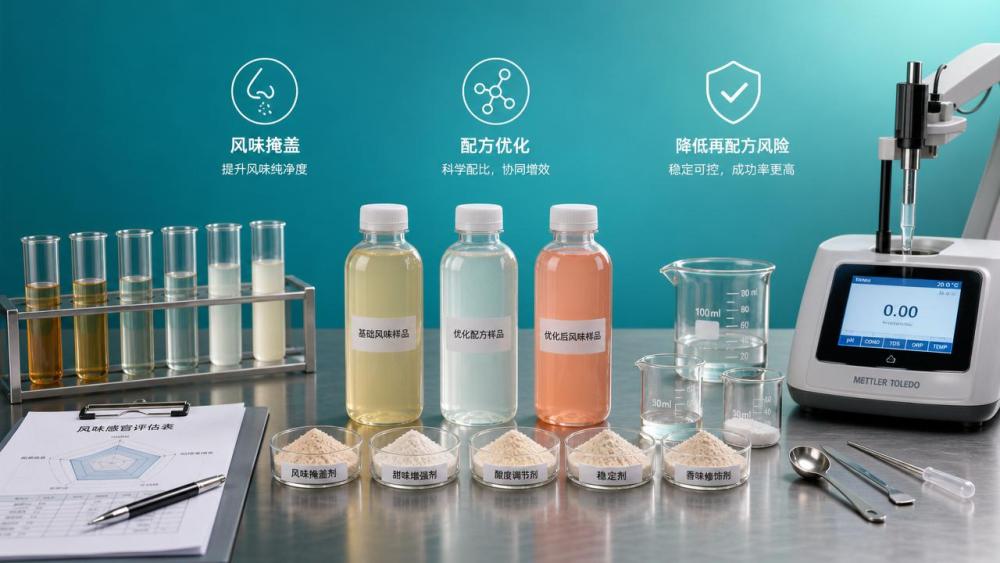
Many launch teams still treat flavor masking as a late sensory adjustment. In practice, that approach increases reformulation risk because off-notes usually originate from core system choices: active dosage, sweetener profile, preservative interactions, pH range, heat process, and packaging barrier performance. If those variables are not mapped in Phase 1, a minor taste defect can become a full project reset.
In a typical FMCG development cycle, teams move through 3 linked gates: bench feasibility, pilot validation, and commercial scale-up. Flavor masking decisions made before pilot work can save 1–3 formulation rounds. That matters when commercialization windows are narrow, especially in seasonal beverages, functional gummies, RTD nutrition, oral care, and premium wellness products.
Common off-note sources that drive reformulation
The most common triggers are high-intensity sweeteners, botanical extracts, vitamins, minerals, amino acids, proteins, preservatives, and some emulsifier systems. Each source creates a different sensory burden. Bitter notes may peak immediately, while metallic or astringent defects can appear 5–20 seconds later, changing the required flavor masking method.
- High-intensity sweeteners: bitter, licorice-like, or lingering aftertaste
- Minerals and fortification systems: metallic, chalky, or saline notes
- Plant proteins and botanicals: earthy, green, beany, or tannic character
- Preservatives and acids: sharpness, chemical edge, or aroma suppression
- Omega oils and sensitive lipids: oxidation-related fishy or fatty notes
Project-level consequences of poor masking decisions
When teams rely on over-flavoring alone, they may increase dosage by 15%–40% without solving the root interaction. That can hurt cost of goods, destabilize the aroma profile during 6–12 months of shelf life, or create mismatch between top notes and base notes after thermal processing. A fast sensory patch can therefore create a slower regulatory and manufacturing problem.
For engineering leads, the risk is broader than taste. Extra flavor load can affect viscosity, emulsion behavior, fill consistency, or packaging scalping. In high-value formulas containing peptides, antioxidants, essential oils, or premium actives, unnecessary reformulation also increases raw material exposure and validation burden.
The table below helps teams connect off-note type with likely technical cause and the most practical flavor masking direction during early screening.
A key takeaway is that flavor masking works best when linked to root-cause mapping. Teams that classify the off-note in the first 7–10 days of formulation usually avoid broader redesign later. That is especially relevant in projects involving clean label claims, global market adaptation, or premium ingredient economics.
Flavor masking methods that reduce reformulation risk
No single flavor masking method fits every formulation. The lowest-risk strategy usually combines 2 or 3 levers rather than one aggressive fix. For project managers, the objective is to improve sensory acceptance while preserving compliance status, process compatibility, and target cost range. That means choosing methods that are scalable, label-appropriate, and stable under actual manufacturing conditions.
1. Modulation instead of flavor overload
Using modulators to suppress bitterness, reduce metallic perception, or shorten lingering aftertaste is often more efficient than simply increasing flavor dosage. In many systems, a 0.05%–0.30% modulator layer can outperform a 20% increase in character flavor. This approach is especially useful in reduced-sugar beverages, fortified waters, chewables, and functional dairy alternatives.
2. Encapsulation for delayed release and protection
Encapsulation creates distance between the consumer’s first sensory impression and the active ingredient’s negative taste. It is practical when the offending compound is potent, unstable, or process-sensitive. Common use cases include bitter botanicals, omega systems, vitamins, minerals, and volatile actives exposed to 80°C–200°C processing or long shelf cycles.
3. Matrix design through texture, fat, and hydrocolloids
Texture can support flavor masking by changing perception speed and coating behavior. Hydrocolloids such as xanthan gum, pectin, or other rheology modifiers can reduce sharp onset, improve mouthfeel, and soften astringency. In some beverage or spoonable formats, a viscosity shift of only 50–150 cP materially changes how bitterness is perceived.
4. pH and acid profile optimization
Small pH adjustments, often within 0.2–0.5 units, can alter the expression of sourness, bitterness, and aroma release. Blending acidulants instead of relying on a single acid may reduce harshness while preserving microbial control. This is a common flavor masking route in gummies, liquid supplements, energy drinks, and preserved fruit systems.
5. Raw material form selection
Sometimes the best flavor masking decision is not a masking ingredient at all. Teams can reduce risk by changing the salt form, concentration format, particle size, or supplier grade of an active. A more neutral-tasting mineral source or a lower-oxidation oil system may cut the sensory burden before flavor work begins, reducing complexity across procurement and QA.
The following comparison table outlines where each flavor masking method fits best from a project execution perspective.
From a risk-control standpoint, modulation and raw material optimization are often the fastest first tests, while encapsulation is more strategic when the formula must survive heat, oxidation, or prolonged storage. Texture and pH methods are powerful but should be checked against process capability and quality specifications before scale-up.
How project teams should evaluate flavor masking options
A successful flavor masking program is cross-functional by design. R&D may own sensory direction, but engineering, procurement, quality, regulatory, and commercial teams all influence the final choice. The most practical evaluation model uses 4 filters: sensory effectiveness, formulation compatibility, compliance fit, and commercial viability.
A 5-step screening workflow
- Define the off-note precisely using timing, intensity, and persistence.
- Identify root causes across active load, pH, process, and oxidation pathways.
- Shortlist 2–4 flavor masking methods that fit the label and cost target.
- Run bench trials with sensory checks at 0 hour, 7 days, and accelerated storage.
- Confirm pilot performance under actual mixing, heating, and filling conditions.
Decision criteria that matter to engineering leads
Engineering teams should verify at least 6 items before approving a masking route: thermal stability, shear tolerance, dispersibility, pumpability, hold-time behavior, and packaging interaction. If a flavor masking system performs well only in static lab conditions, it may fail during 2-hour tank holds or high-shear recirculation.
Procurement should also check MOQ, dual sourcing potential, lead time, and price volatility. An elegant sensory fix with a 10–14 week lead time may be too risky for fast launch calendars. In many FMCG categories, a robust 80% solution is commercially safer than a fragile 95% sensory win.
Compliance and claim alignment
Flavor masking choices must align with the target market and claim architecture. Clean label positioning, natural flavor expectations, allergen controls, and export requirements can narrow the acceptable toolkit. Teams working across the US, EU, and Asia often need to pre-screen documentation in parallel, rather than after sensory approval, to avoid duplicate work.
This is where an intelligence-led approach adds value. If the formula also uses preservatives, antioxidants, hydrocolloids, essential oils, or cosmetic-adjacent active systems in ingestible or topical sensorial products, interactions should be assessed as a full matrix, not in isolation. That reduces the chance that one correction introduces another instability or claim conflict.
Common mistakes that increase reformulation risk
The first common mistake is evaluating flavor masking only at day 0. Many off-notes intensify after oxidation, pH drift, or aroma fade over 4–12 weeks. A formula that tastes acceptable in the lab may become unbalanced after transport simulation or exposure to light and oxygen.
The second mistake is ignoring texture and aroma architecture. Teams often focus on bitterness suppression but overlook mouthfeel, top-note lift, and finish cleanup. Consumers rarely experience taste attributes separately; they evaluate the whole sensory sequence in a few seconds.
The third mistake is treating cost in isolation. A low-cost masking ingredient that causes rework, extra validation, or regional delisting may increase total project cost by far more than its initial savings. Project managers should compare total implementation cost across 3 dimensions: ingredient spend, cycle time, and compliance workload.
Practical risk controls
- Set sensory checkpoints at bench, pilot, and post-stability stages
- Test under real process temperature and shear, not only room-temperature samples
- Review packaging impact on volatile retention and oxidation exposure
- Document acceptable sensory ranges before commercial handoff
- Keep 1 backup masking route in case lead times or regulations change
Where flavor masking creates strategic value for FFAI-focused teams
Across the FFAI landscape, flavor masking is not limited to classic foods and beverages. It also supports fortified systems, premium wellness products, preservation-heavy formulas, and sensorially demanding consumer goods where active efficacy must coexist with market-ready taste. That is increasingly important as brands push for cleaner labels, stronger actives, and faster innovation cycles.
When flavor masking is planned alongside antioxidant selection, rheology design, essential oil behavior, and active ingredient stability, teams gain better control over launch readiness. The result is not merely a better taste profile. It is a more predictable project path, fewer late-stage changes, and stronger confidence for commercial sign-off.
If your team is balancing sensory performance, compliance constraints, and cost discipline across complex FMCG formulations, a structured flavor masking review can reduce avoidable reformulation work and improve speed to market. Contact us to discuss your formulation challenge, request a tailored evaluation framework, or explore more ingredient and sensory intelligence solutions.
Related News
- When heat stable flavor formulations are needed for UHT beveragesOct 04, 2026Aromatics & Perfumery Fellow
- How heat stable flavor formulations prevent aroma loss in baked goodsOct 03, 2026Aromatics & Perfumery Fellow
- Using 4-vinyl guaiacol flavour standard to calibrate sensory panelsOct 02, 2026Aromatics & Perfumery Fellow
- Garlic Powder Flavor Profiles and Their Role in Seasoning BlendsSep 28, 2026Aromatics & Perfumery Fellow
Related News
- 00
0000-00
How to assess color stability from a natural food colors manufacturer - 00
0000-00
When does amino acid surfactant powder improve cleanser mildness? - 00
0000-00
How to verify a cosmetic nanotechnology supplier's safety documentation - 00
0000-00
How rheological thickeners for shampoo affect suspension stability - 00
0000-00
How to assess recombinant collagen ingredients for cream stability
Aromatics & Perfumery Fellow
Weekly Insights
Stay ahead with our curated technology reports delivered every Monday.