





Flavor Masking Supplier Checklist for Better Formula Performance
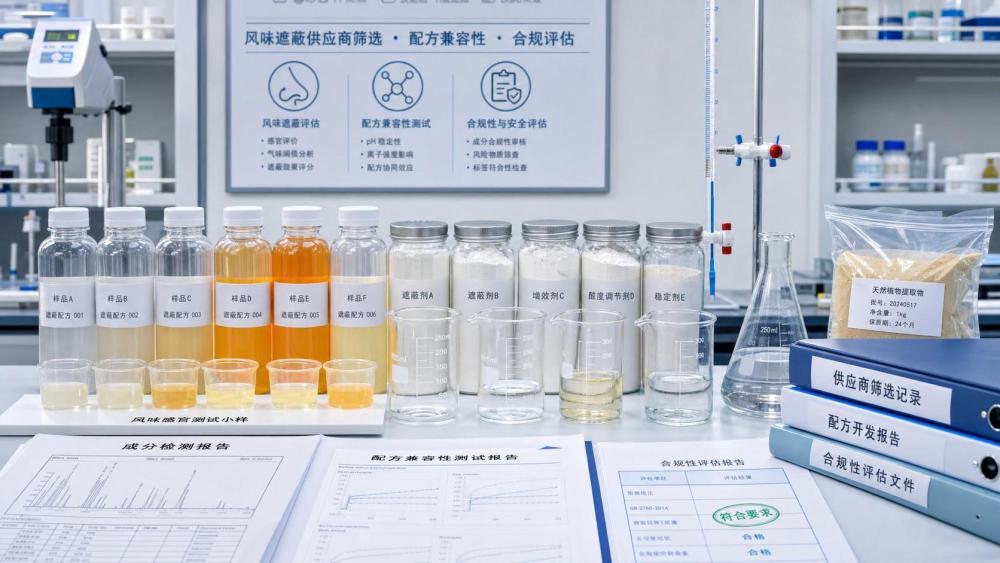
Choosing the right flavor masking supplier can shape stability, taste acceptance, compliance, and total formula cost.
That matters even more when one ingredient must work across food, nutraceutical, cosmetic, or health-focused products.
A weak masking system may solve bitterness, yet create haze, off-notes, sediment, or label problems later.
A strong flavor masking supplier helps reduce those tradeoffs before they become commercial losses.
For teams comparing offers, a practical checklist makes sourcing faster and far more defensible.
This guide breaks down what to verify, what to ask, and where formula risk usually hides.
Why a Flavor Masking Supplier Matters Beyond Taste
Most buyers first look at sensory improvement. That is necessary, but it is only part of the decision.
A capable flavor masking supplier should improve bitterness control without hurting processability or shelf life.
In actual development, masking often interacts with acids, sweeteners, proteins, botanicals, vitamins, and active ingredients.
That means supplier quality affects more than taste. It influences dosage, reformulation speed, claims, and production waste.
From a sourcing view, the best choice is rarely the lowest unit price.
The better question is simple: which flavor masking supplier lowers total formula cost while protecting launch success?
Core Checklist for Comparing a Flavor Masking Supplier
Use this checklist early. It helps remove weak candidates before technical trials consume time and budget.
1. Proven Performance in Your Application
Not every flavor masking supplier performs equally in every matrix.
A system that works in gummies may fail in ready-to-drink products or powdered sachets.
- Ask for case examples in formats close to your own formula.
- Check whether the supplier has handled bitter actives, metallic notes, or sulfur-like off-notes.
- Request sensory data, not just sales claims.
2. Compatibility With Actives and Processing
This is where many projects slow down.
A flavor masking supplier should explain how its solution behaves under heat, shear, pH shifts, and storage stress.
- Will it survive pasteurization or baking?
- Does it interact with peptides, minerals, caffeine, collagen, or botanical extracts?
- Can it stay effective after flavor top notes fade during shelf life?
3. Label, Regulatory, and Market Fit
Compliance risk can erase any savings from a cheap quote.
A serious flavor masking supplier should support documentation for target markets from the start.
- Confirm status for FDA, GRAS, FEMA, EU, and other destination requirements when relevant.
- Check allergen statements, solvent disclosures, and residual carrier details.
- Review whether the system supports clean label or natural positioning.
4. Cost in Use, Not Just Cost per Kilogram
This point deserves extra discipline.
One flavor masking supplier may quote higher, yet need a far lower inclusion rate.
Another may require sweetener compensation, aroma boosters, or extra stabilizers.
That changes the true cost picture fast.
Questions That Reveal Supplier Strength Early
Shortlisting becomes easier when questions are precise.
The answers usually show whether a flavor masking supplier understands formula reality or only offers a catalog solution.
- What off-notes does your system target best?
- What inclusion range typically works in similar formulas?
- Which failures have you seen in comparable applications?
- Can you support benchtop trials with adjusted versions?
- What documents can you provide before qualification?
- How stable is supply for the next twelve months?
Good suppliers answer directly. Weak ones usually stay vague on dosage, matrix limits, or documentation timing.
Red Flags When Reviewing a Flavor Masking Supplier
Recent market pressure has pushed more buyers toward fast substitutions and lower-cost alternatives.
That also means weak supplier behavior shows up earlier if you know where to look.
- Only generic brochures, with no application-specific performance evidence.
- No clear explanation of carrier system, solvent base, or stability limits.
- Big sensory claims, but no comparative trial method.
- Slow regulatory response or incomplete specification sheets.
- Pricing that changes sharply after sampling.
- Inconsistent minimum order quantities across regions.
If several of these appear together, the flavor masking supplier is likely to create downstream friction.
How to Compare Commercial Value Side by Side
A simple comparison grid keeps subjective impressions under control.
Use weighted scoring when choosing a flavor masking supplier for strategic programs.
This structure also helps internal alignment when technical and commercial priorities start pulling in different directions.
Where Market Intelligence Adds an Advantage
A flavor masking supplier should not be judged in isolation from wider ingredient trends.
More visible signals now include clean label pressure, active-fortified products, and stricter sensory expectations.
That is exactly where intelligence-led evaluation becomes useful.
Platforms such as FFAI track how flavor systems intersect with preservatives, thickeners, essential oils, and cosmetic actives.
That broader view helps identify whether a flavor masking supplier can support future reformulation, not just today's sample brief.
It also improves pricing decisions by connecting sensory performance with ingredient premium potential in the finished product.
A Practical Shortlist Process
To keep evaluation efficient, move in stages.
- Define the exact off-note, application matrix, and process conditions.
- Request technical documents and usage guidance from each flavor masking supplier.
- Run side-by-side trials at realistic dosage levels.
- Calculate cost in use, including any support ingredients.
- Review compliance fit for all intended markets.
- Score supply risk before commercial negotiation.
This approach keeps discussions grounded in evidence instead of preference.
Final Decision Criteria That Hold Up Over Time
The right flavor masking supplier should do three things well.
It should solve the sensory problem, fit the formula system, and support a stable commercial model.
When one of those pieces is weak, hidden costs usually appear later.
The strongest sourcing decisions come from structured comparison, direct technical questions, and realistic cost analysis.
Use this checklist to narrow candidates, pressure-test claims, and select a flavor masking supplier that improves formula performance in the real market.
Related News
- When heat stable flavor formulations are needed for UHT beveragesOct 04, 2026Aromatics & Perfumery Fellow
- How heat stable flavor formulations prevent aroma loss in baked goodsOct 03, 2026Aromatics & Perfumery Fellow
- Using 4-vinyl guaiacol flavour standard to calibrate sensory panelsOct 02, 2026Aromatics & Perfumery Fellow
- Garlic Powder Flavor Profiles and Their Role in Seasoning BlendsSep 28, 2026Aromatics & Perfumery Fellow
Related News
- 00
0000-00
What drives fragrance ingredients price changes in bulk orders? - 00
0000-00
How to assess a food antioxidants distributor’s traceability practices - 00
0000-00
How minimum order quantities shape private label ingredient sourcing costs - 00
0000-00
What drives personal care ingredient price volatility in sourcing - 00
0000-00
What drives micelles price differences in cosmetic formulations?
Aromatics & Perfumery Fellow
Weekly Insights
Stay ahead with our curated technology reports delivered every Monday.