





In formula R&D, scaling water-soluble flavors rarely fails for one obvious reason. It fails through small interactions between chemistry, process design, packaging, and compliance that only appear at production scale.
A lab prototype may look clear, taste balanced, and pass short-term checks. Yet commercial output can show haze, aroma loss, off-notes, tank residue, microbial stress, or label complications within weeks.
For FFAI, this is where formula R&D becomes strategic intelligence, not just bench work. Hidden risks must be mapped early, because every delay in flavor scale-up can multiply cost and market exposure.
Why formula R&D is facing a tougher scale-up environment
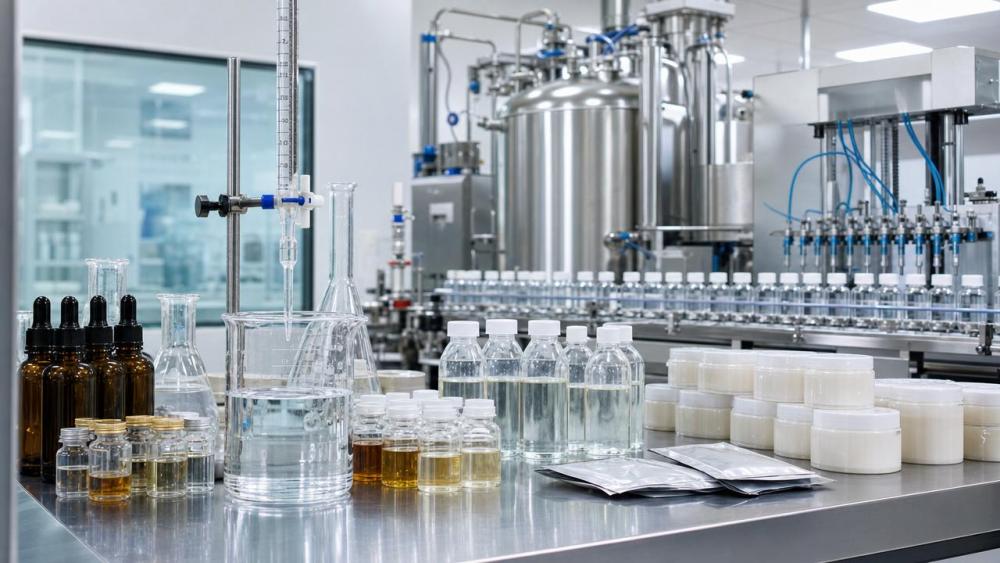
The current environment is less forgiving than before. Clean label pressure, global sourcing swings, and faster launch cycles are exposing weak assumptions in formula R&D for water-soluble flavors.
At the same time, beverage, confectionery, nutraceutical, and personal care applications increasingly demand stronger sensory impact with lower dosage, fewer carriers, and tighter regulatory control.
That combination creates a difficult equation. The formulation must remain soluble, stable, safe, and economical across different plants, water qualities, batch sizes, and storage conditions.
In formula R&D, scale-up is no longer a simple multiplication of ingredients. It is a translation of molecular behavior from controlled conditions into noisy industrial reality.
The hidden shift: lab solubility does not equal plant solubility
Many water-soluble flavor systems appear stable in small beakers because mixing energy is high relative to volume. Residence time is short, temperature is easier to control, and ingredient addition is precise.
At scale, those conditions change immediately. Shear distribution becomes uneven. Dead zones appear in tanks. Local concentration spikes can trigger clouding, salting-out, or phase separation.
Even when the flavor is called water-soluble, real solubility depends on pH, ionic strength, sugar load, alcohol content, preservatives, and trace metals. Formula R&D must test the entire system, not one ingredient.
Common scale-up triggers behind unexpected instability
- Different water hardness between pilot and production sites
- Order-of-addition changes during automated batching
- Higher hold temperature before filling
- Interaction with acids, vitamins, colors, or sweeteners
- Longer storage in intermediate tanks or transfer lines
These issues often look minor alone. In formula R&D, their combined effect is what breaks consistency between pilot approval and market-ready output.
What is driving the risk curve upward
Several structural forces are making formula R&D more fragile during flavor scale-up. The challenge is not only technical. It is also commercial, operational, and regulatory.
For FFAI, this trend confirms a wider industry shift. Formula R&D now needs cross-functional evidence from chemistry, process engineering, quality systems, and market compliance before scale decisions are safe.
The overlooked risk map inside water-soluble flavor scale-up
1. Sensory drift under thermal and oxygen stress
Top notes are often the first casualty. Heating, recirculation, and headspace exposure can strip the very molecules that define freshness, brightness, and product identity.
Formula R&D must compare aroma retention before and after pasteurization, filling, and shelf simulation. Initial acceptance is meaningless if the target profile collapses after distribution.
2. Carrier interactions that change clarity and taste
A flavor carrier may be legally acceptable and bench-stable, but still produce bitterness, haze, or viscosity shifts when blended into a full matrix at industrial scale.
This matters in formula R&D because a technical solution can create a sensory problem. Solubility cannot be optimized in isolation from taste and mouthfeel.
3. Raw material variability hidden by small trials
Natural extracts and certain synthetics may show lot-to-lot shifts in potency, color, oxidation tendency, or insoluble trace content. Small trials may not reveal this spread.
Robust formula R&D uses specification ranges tied to formulation performance, not just supplier certificates. Otherwise, the process is stable only for ideal lots.
4. Equipment surfaces and line design effects
Adsorption on seals, gaskets, hoses, and stainless surfaces can reduce active aroma intensity. Long pipelines and poorly designed CIP cycles may also create contamination or flavor carryover.
In formula R&D, these are often treated as plant issues. In reality, they are formulation risks because they alter delivered flavor concentration and profile.
5. Compliance blind spots during reformulation
A scale-up fix may involve new solvents, preservatives, antioxidants, or processing aids. That can affect labeling, regional approvals, customer standards, or internal claim strategy.
Formula R&D should treat compliance review as part of scale design, not a final checkpoint. Late discovery creates expensive rework and launch delay.
How these risks affect business performance beyond the formula
The impact of weak formula R&D goes far beyond technical rejection. It can distort planning, waste scarce ingredients, damage consistency, and reduce confidence in future innovation cycles.
When a water-soluble flavor fails at scale, the result may include retesting, production downtime, packaging hold, customer complaint exposure, and emergency sourcing of replacement materials.
- Longer commercialization timelines
- Higher scrap and rework cost
- More conservative future innovation choices
- Reduced trust in sensory claims across regions
For integrated sectors covered by FFAI, these lessons also apply beyond food. Fragrance systems, active delivery liquids, and surfactant-rich personal care bases can show similar scale-up behavior.
What deserves closer attention in formula R&D right now
The strongest teams are changing how formula R&D is validated. They are moving from pass-or-fail lab checks toward risk-based, process-linked evidence.
- Test flavor performance in full application matrices, not in water alone
- Simulate worst-case pH, mineral content, and thermal exposure
- Define acceptable sensory drift after shelf-life stress
- Link raw material specs to clarity and aroma retention outcomes
- Verify order-of-addition and mixing windows at pilot scale
- Review compliance impact before introducing stabilizing aids
This approach strengthens formula R&D because it builds decision quality before commercialization pressure removes room for careful correction.
A practical judgment framework for safer scale-up decisions
Used early, this framework helps formula R&D teams judge whether a promising flavor is truly scale-ready or only lab-ready.
The next move: strengthen formula R&D before scale exposes the gap
Water-soluble flavor scale-up is becoming a high-sensitivity test of overall formulation maturity. The hidden risks are rarely mysterious. They are usually unmeasured interactions waiting for larger volume to reveal them.
For organizations following FFAI, the smarter path is clear. Build formula R&D around system behavior, stress data, and compliance foresight rather than relying on elegant bench success alone.
A useful next step is to audit one active scale-up project against solubility window, sensory retention, raw material tolerance, process fit, and regulatory fit. That review often reveals the most expensive blind spot before launch does.
Related News
- When heat stable flavor formulations are needed for UHT beveragesOct 04, 2026Aromatics & Perfumery Fellow
- How heat stable flavor formulations prevent aroma loss in baked goodsOct 03, 2026Aromatics & Perfumery Fellow
- Using 4-vinyl guaiacol flavour standard to calibrate sensory panelsOct 02, 2026Aromatics & Perfumery Fellow
- Garlic Powder Flavor Profiles and Their Role in Seasoning BlendsSep 28, 2026Aromatics & Perfumery Fellow
Related News
- 00
0000-00
Verifying halal status of hydrocolloid ingredients in the Middle East - 00
0000-00
How to interpret active matter on a surfactant specification sheet - 00
0000-00
What Quality Checks Should You Run on Fragrance Ingredient Suppliers? - 00
0000-00
How to assess a flavor chemistry manufacturer's batch consistency - 00
0000-00
What drives fragrance ingredients price changes in bulk orders?
Aromatics & Perfumery Fellow
Weekly Insights
Stay ahead with our curated technology reports delivered every Monday.