





How Controlled Release Flavors Improve Shelf Life Stability
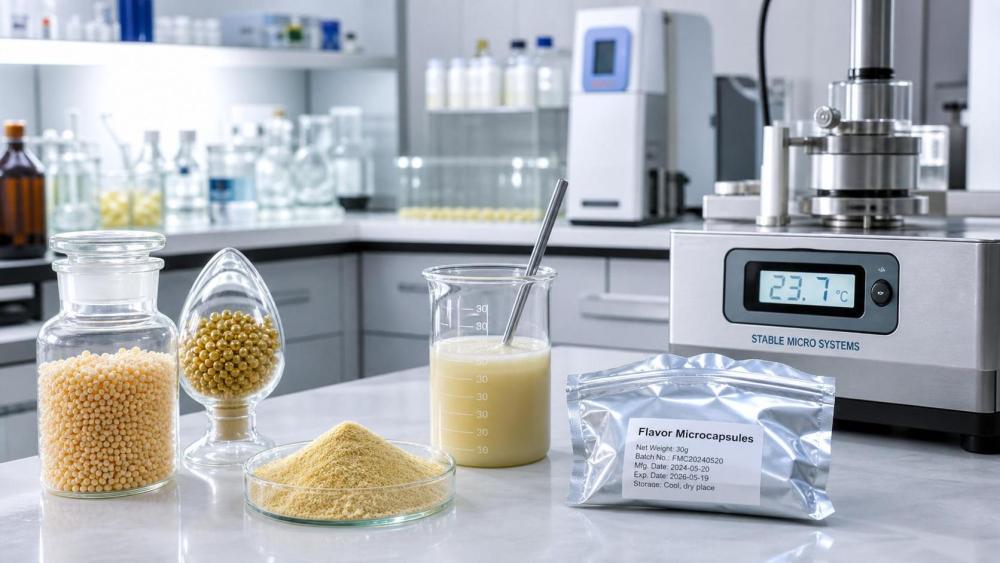
For technical evaluators balancing flavor performance, compliance, and product durability, controlled release flavors solve a very practical problem.
They protect volatile compounds during processing, storage, and distribution, then release them when the product is consumed or activated.
That simple idea has major consequences for shelf life stability, sensory consistency, and total formulation efficiency.
In real FMCG systems, aroma compounds often fade long before the product reaches the consumer.
Oxidation, moisture migration, heat load, light exposure, and ingredient interactions all accelerate flavor loss.
Controlled release flavors reduce that loss by creating a physical or chemical barrier around sensitive aroma molecules.
The result is not only a longer-lasting flavor profile, but also better batch-to-batch predictability.
This matters more as supply chains grow longer and clean label expectations become stricter.
From a technical and standards perspective, these systems are increasingly evaluated as stability tools, not just sensory enhancements.
Why Shelf Life Stability Fails in Flavor Systems
Before judging performance, it helps to identify why conventional flavor systems degrade so quickly.
Most top-note compounds are chemically fragile and highly volatile.
They can evaporate during drying, escape through packaging, or react with oxygen and trace metals.
In powders, moisture cycling can trigger caking and premature release.
In beverages, pH shifts and emulsifier mismatch can destabilize dispersed flavor carriers.
In baked applications, thermal stress may destroy key volatiles before packaging even begins.
That is why controlled release flavors are now considered part of shelf life design.
They address root causes of flavor instability rather than masking the outcome with higher dosage.
Main degradation pathways
- Oxidation of aldehydes, terpenes, and unsaturated compounds
- Volatilization during heating, mixing, and storage
- Moisture-triggered release in hygroscopic matrices
- Absorption into packaging or fat phases
- Interaction with acids, salts, proteins, and minerals
How Controlled Release Flavors Actually Work
Controlled release flavors use a carrier system that delays aroma exposure until a defined trigger appears.
That trigger may be heat, shear, hydration, pH change, chewing, or simple time-dependent diffusion.
The most common technologies include spray-dried encapsulation, coacervation, cyclodextrin inclusion, lipid carriers, and polymer matrices.
Each option offers a different balance of barrier strength, release speed, process tolerance, and cost.
For shelf life stability, the carrier acts like a micro-shield around the most fragile flavor molecules.
This slows oxygen access, reduces evaporation, and limits direct contact with reactive ingredients.
In practice, controlled release flavors also improve flavor retention after filling, transport, and repeated temperature swings.
Typical release mechanisms
- Diffusion-controlled release for gradual aroma delivery
- Moisture-activated release in instant powders and snacks
- Heat-triggered release in bakery and ready meals
- Mechanical release during chewing in gum and confectionery
- pH-responsive release in beverages and nutraceutical systems
Shelf Life Benefits Beyond Aroma Retention
The first benefit is obvious: controlled release flavors help products smell and taste fresher for longer.
But the deeper value lies in making shelf life behavior more stable and easier to predict.
That makes technical assessment simpler, especially when products travel across multiple climate zones.
A stable release system can reduce the sensory gap between fresh production and late-life consumption.
It may also lower the need for flavor overdosage, which improves cost efficiency and label discipline.
More importantly, controlled release flavors can support product claims linked to quality consistency.
That is especially relevant in premium beverages, baked goods, dairy analogs, supplements, and personal care fragrance systems.
Operational advantages
- Longer sensory acceptance window across the product life cycle
- Lower volatility loss during processing and warehousing
- Better consistency between pilot, scale-up, and commercial batches
- Reduced reformulation pressure caused by late-stage flavor fade
- Clearer stability benchmarking for quality assurance teams
Evaluation Criteria for Technical Decision-Making
Not every controlled release flavor system improves shelf life stability in the same way.
The right choice depends on the matrix, process conditions, packaging, target shelf life, and regional compliance pathway.
A useful evaluation starts with the flavor profile itself.
Highly volatile citrus notes need different protection than creamy, fat-soluble compounds.
Then review process stress, including drying temperature, water activity, shear, and hold time.
It is also worth checking whether the release profile aligns with the expected sensory moment.
A technically strong barrier can still fail if release happens too early or too late.
What to verify during assessment
Standards, Risk Control, and Application Fit
From a standards viewpoint, controlled release flavors should be reviewed as complete systems, not isolated aroma blends.
That means checking the status of carrier materials, processing aids, residual solvents, and migration behavior.
It also means comparing accelerated stability data with real-time storage results.
More companies now expect data on flavor retention curves, release kinetics, and sensory persistence at end-of-shelf-life.
This shift reflects a broader market change.
Shelf life is no longer only about microbiology or appearance.
Sensory durability is now part of quality risk control.
For intelligence-driven platforms like FFAI, this is where formulation science and market readiness meet.
A strong solution protects taste, supports compliance, and defends long-term product value in crowded FMCG categories.
Common application matches
- Bakery products exposed to heat and long distribution cycles
- Powdered beverages needing moisture-resistant flavor retention
- Nutritional products requiring stable masking performance
- Confectionery needing staged aroma delivery during consumption
- Fragranced personal care products needing controlled scent persistence
A Practical Way to Compare Controlled Release Flavors
A workable evaluation framework is surprisingly straightforward.
Start by mapping the product’s main stability threats.
Then compare controlled release flavors against those threats using measurable criteria.
In actual business settings, this reduces guesswork and speeds internal approval.
- Define the target flavor profile at beginning and end of shelf life.
- List environmental stress factors across manufacturing and logistics.
- Screen carrier technologies for release fit and compliance status.
- Run accelerated and real-time stability studies side by side.
- Validate sensory performance with instrumental and panel data.
- Model cost against retention benefit and dosage reduction potential.
This kind of structured review turns controlled release flavors from an interesting option into a defensible technical choice.
For teams facing stricter durability targets, that shift is becoming essential.
Conclusion
Controlled release flavors improve shelf life stability by protecting sensitive volatiles and managing when flavor is released.
That leads to stronger sensory consistency, lower waste, and clearer technical control.
As product lifecycles stretch across longer supply chains, controlled release flavors become a strategic tool, not a niche add-on.
The next practical step is to evaluate each candidate system against matrix compatibility, release behavior, and verified shelf life data.
When that work is done carefully, controlled release flavors can protect both product performance and market credibility over time.
Related News
- When heat stable flavor formulations are needed for UHT beveragesOct 04, 2026Aromatics & Perfumery Fellow
- How heat stable flavor formulations prevent aroma loss in baked goodsOct 03, 2026Aromatics & Perfumery Fellow
- Using 4-vinyl guaiacol flavour standard to calibrate sensory panelsOct 02, 2026Aromatics & Perfumery Fellow
- Garlic Powder Flavor Profiles and Their Role in Seasoning BlendsSep 28, 2026Aromatics & Perfumery Fellow
Related News
- 00
0000-00
Can biomimetic peptides in cosmetics reduce the look of wrinkles? - 00
0000-00
How to assess a bio-based thickener manufacturer's batch consistency - 00
0000-00
Verifying halal status of hydrocolloid ingredients in the Middle East - 00
0000-00
How to interpret active matter on a surfactant specification sheet - 00
0000-00
How Do You Test Hydrocolloid Viscosity After Changing a Thickener?
Aromatics & Perfumery Fellow
Weekly Insights
Stay ahead with our curated technology reports delivered every Monday.