





Why Garlic Notes Can Make or Break a Seasoning System
In dry rubs and snack seasonings, garlic rarely acts as a simple background flavor. It changes how salt is perceived, how heat builds, how sweetness lands, and how long savory notes stay on the palate. For operators working on line trials, recipe adjustments, or product consistency, that makes garlic one of the most sensitive levers in the formula.
A small shift in garlic intensity can turn a barbecue rub from rounded to harsh, or a cheese snack dusting from rich to flat and powdery. The issue is not only flavor strength. Particle size, processing method, moisture behavior, and the way garlic interacts with fat and surface adhesion all affect the final eating experience. In many seasoning systems, garlic is doing several jobs at once: adding aroma, supporting umami, softening acidity, and helping bridge top notes such as onion, pepper, smoke, or cheese.
That is why operators often run into trouble when they treat garlic as a fixed percentage ingredient. The same inclusion level may behave differently in a low-moisture meat rub, an extruded corn snack coating, or a fried potato chip seasoning. Flavor balance depends on where the powder sits in the system and what else the formula asks it to do.
What Garlic Contributes Beyond a Recognizable Flavor
Garlic is usually described in broad terms such as savory, pungent, warm, or roasted. In practice, its effect is more layered. A stronger garlic profile can increase perceived fullness in the middle of the palate, helping a seasoning feel less thin. At lower levels, it may function more as a connector, reducing the sensory gaps between salt, spices, sugar, and acid components.
In dry rubs, garlic often supports depth rather than immediate impact. The first bite may still be driven by salt, pepper, paprika, or chili, but garlic helps carry the flavor through chewing and aftertaste. In snack seasonings, especially on chips, crackers, or puffed snacks, the role is slightly different. Garlic can sharpen the savory identity early, but if the balance is off it may dominate aroma release and make the product seem dusty or stale.
Operators should pay attention to three practical effects:
- Salt perception: garlic can make a formula taste saltier or less salty depending on the overall matrix.
- Flavor length: it often extends savory persistence, which is useful in low-fat applications where flavor drops quickly.
- Harshness control: the right garlic profile can round pepper heat or vinegar sharpness, while the wrong one can exaggerate both.
Dry Rubs Need Garlic to Stay Stable Under Heat and Holding Time
Dry rub applications create a different set of demands from snack dustings. A rub may sit on raw meat before cooking, face direct grill heat, or remain on cooked product during hot holding. Under these conditions, garlic has to integrate with salt and spice without creating bitter edges or a burnt aromatic note.
Raw garlic character is not always desirable in rubs for long cooking. If the formula leans too pungent, the finished product can develop a sharp front-end aroma that does not match smoke, caramelization, or rendered fat. On the other hand, a garlic profile that is too mild may disappear once the rub meets protein and heat, leaving the seasoning hollow.
In practical formulation work, this means the operator should judge garlic after cooking, not only in the dry blend. Bench tasting of powder alone can be misleading. A rub that seems garlic-forward in the bowl may become balanced on chicken wings or pork ribs, while another that tastes smooth in dry form may flatten after heat exposure.
For rub systems, flavor balance is often affected by:
- The sugar level and whether caramel notes will emerge during cooking
- The intensity of black pepper, chili, or smoke flavor
- Salt crystal size and distribution in the blend
- Whether the application is short cook, long smoke, or oven finish
- How much fat is present to carry sulfur-based aroma compounds
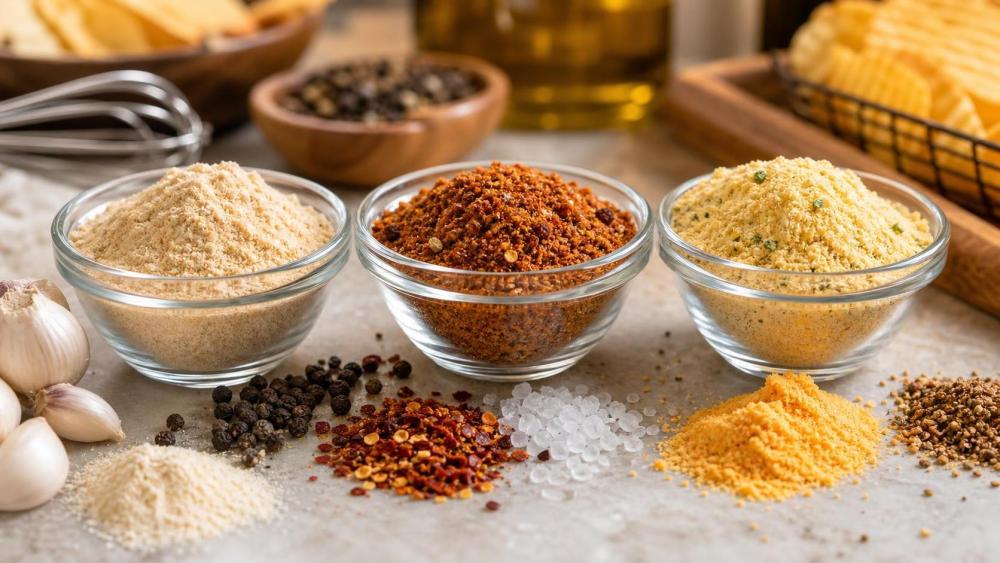
Snack Seasonings Expose Different Garlic Problems
Snack coatings magnify aroma release because the seasoning sits on the surface and reaches the nose quickly. This makes garlic useful for delivering an immediate savory identity, but it also means imbalance becomes obvious fast. A formula that works on a baked cracker may not perform the same on a fried potato chip because oil, surface roughness, and product temperature affect how the seasoning blooms.
One common problem is top-note crowding. If garlic is too dominant, cheese, sour cream, vinegar, tomato, or herb notes may collapse into a single generic savory impression. Another issue is late-stage fatigue. On multi-bite snacks, heavy garlic can create a lingering dryness or mouth coating that reduces repeat appeal.
Adhesion matters as well. Fine powders often stick better, but very fine garlic fractions can release rapidly and create a dusty first impression. Coarser fractions may improve visual texture in some snack applications, yet they can separate during handling or cause uneven flavor pickup. Operators need to look at sensory performance together with processing behavior, not as separate decisions.
Processing Method Changes Flavor Balance More Than Many Teams Expect
Garlic materials do not all behave alike. Drying method, heat exposure, color development, and milling approach can produce noticeably different sensory outcomes even when the ingredient is labeled the same way. A fresher, sharper profile may help cut through rich cheese or creamy seasoning systems. A more cooked or rounded profile may fit barbecue, roast meat, or savory herb blends better.
When teams review garlic powder options for taste ingredient formulation, the useful question is not only “How strong is it?” but “What kind of savory work is it performing in this formula?” A material chosen for pungency may destabilize balance in a snack dusting that needs softness and lingering umami. A material chosen for smoothness may underperform in a spicy rub where garlic must remain noticeable after cooking.
That is why side-by-side testing should use the intended carrier system whenever possible. Dry comparison in water or direct powder tasting can help screen materials, but the final call usually depends on performance in the complete matrix.
How Garlic Interacts with Salt, Sugar, Acid, and Heat
Salt
Garlic and salt are closely linked in perception. In some formulations, garlic strengthens savory intensity enough that salt can be reduced slightly without making the product feel weak. In others, especially where acid or bitterness is present, lowering salt while maintaining garlic may expose a rougher flavor edge. Operators should check whether garlic is amplifying savory fullness or simply masking imbalance.
Sugar
In sweet-leaning barbecue and grill rubs, garlic helps prevent sugar from making the profile one-dimensional. It adds savory relief and supports roasted notes. Too much garlic, though, can fight with brown sugar, maple, or honey-style flavors and create a muddy middle palate. If a rub tastes heavy rather than deep, garlic is often part of that problem.
Acid
Acid systems in snacks, such as sour cream and onion, salt and vinegar, or tangy cheese, need careful garlic management. A modest garlic level can smooth the transition between acid and dairy or starch. A high level may produce a sharp, metallic impression, especially when the seasoning is very dry and surface coverage is uneven.
Heat
Chili and pepper ingredients often seem cleaner when supported by garlic, but the pairing has limits. Pungent garlic can push a pepper system toward aggression rather than complexity. In hot snacks, that may reduce snackability. In meat rubs, it may work for bold profiles, but only if smoke, sweetness, and salt are strong enough to keep the blend anchored.
Operational Checks That Prevent Garlic Imbalance
Flavor balance problems are often diagnosed too late, after a full batch has already been blended or applied. Operators can reduce rework by checking a few points early:
- Smell the blend after mixing and again after rest time. Garlic can open up or settle after the other powders absorb and redistribute volatiles.
- Taste in the actual application matrix. A dry spoon test will not show how the flavor behaves on fat, starch, or protein.
- Look for uneven color or particle segregation. This may signal uneven garlic distribution and inconsistent flavor impact.
- Check holding performance. Some garlic profiles are acceptable at first bite but become harsh after warm holding or packaged shelf time.
- Review dusting and adhesion behavior. If the powder does not stay where it should, sensory balance will vary from piece to piece.
Procurement and Quality Questions That Matter in Real Use
For buyers and line users, garlic selection is not only a sensory decision. Supply consistency affects daily performance. Variation in color, aroma intensity, residual moisture, and particle size can change blend flow, coating pickup, and flavor delivery. If one lot is more pungent and another more cooked, the rest of the formula may need adjustment even when the specification seems unchanged.
Practical review points during sourcing or incoming inspection often include:
- Whether the sensory target is sharp, mellow, roasted, or neutral-supportive
- How tightly particle size is controlled for the intended application equipment
- Whether the ingredient is likely to cake in storage or humid production conditions
- How it behaves in blends containing salt, sugar, acids, or fats
- Whether trial samples are evaluated in the final use format rather than in isolation
These checks help avoid a common mistake: approving an ingredient on aroma alone without considering process fit. A garlic component that smells excellent in the sample room may still perform poorly in a tumbler, ribbon blender, or snack drum if flow and dispersion are not right.
When Less Garlic Produces a Stronger Flavor System
Operators sometimes chase impact by increasing garlic dosage, but more is not always more effective. If the seasoning already has onion, yeast extract, cheese solids, smoke flavor, or hydrolyzed savory components, adding garlic may narrow the profile instead of enriching it. The result can be immediate intensity with poor definition.
A lower inclusion level often works better when the goal is separation between notes: pepper should taste like pepper, cheese should still read as cheese, and sweetness should remain visible instead of turning dull. In those cases, garlic functions as a bridge rather than a headline flavor. That approach is especially useful in premium-style snack seasonings where consumers expect complexity rather than blunt strength.
Reading Garlic as a Functional Flavor Tool
The best formulas treat garlic as a balancing ingredient, not merely a familiar savory note. In dry rubs, it helps connect salt, spice, and cooked meat character under heat. In snack seasonings, it shapes first aroma release, mid-palate fullness, and aftertaste persistence on the product surface. The right choice depends on processing conditions, flavor architecture, and how the product is actually eaten.
For users and operators, the practical takeaway is straightforward: evaluate garlic in context, watch how it shifts salt, acid, sweetness, and heat, and do not separate flavor judgment from handling behavior. When those factors are checked together, garlic becomes easier to control and much more useful in building a stable, repeatable seasoning profile.
Related News
- When heat stable flavor formulations are needed for UHT beveragesOct 04, 2026Aromatics & Perfumery Fellow
- How heat stable flavor formulations prevent aroma loss in baked goodsOct 03, 2026Aromatics & Perfumery Fellow
- Using 4-vinyl guaiacol flavour standard to calibrate sensory panelsOct 02, 2026Aromatics & Perfumery Fellow
- Garlic Powder Flavor Profiles and Their Role in Seasoning BlendsSep 28, 2026Aromatics & Perfumery Fellow
Related News
- 00
0000-00
What drives personal care ingredient price volatility in sourcing - 00
0000-00
What drives micelles price differences in cosmetic formulations? - 00
0000-00
How to assess color stability from a natural food colors manufacturer - 00
0000-00
When does amino acid surfactant powder improve cleanser mildness? - 00
0000-00
How to verify a cosmetic nanotechnology supplier's safety documentation
Aromatics & Perfumery Fellow
Weekly Insights
Stay ahead with our curated technology reports delivered every Monday.