





On June 30, 2026, India introduced a new export control measure for vanillin by shifting to a quarterly quota system from July 1, with the Q3 quota reduced by 35%. For companies tied to water-soluble flavoring (WSP), this is not just a raw-material headline; it is a concrete trade-rule change that is already affecting lead times, supplier allocation, procurement planning, and substitute-source qualification, making it a relevant development for buyers, exporters, processors, and supply-chain teams.
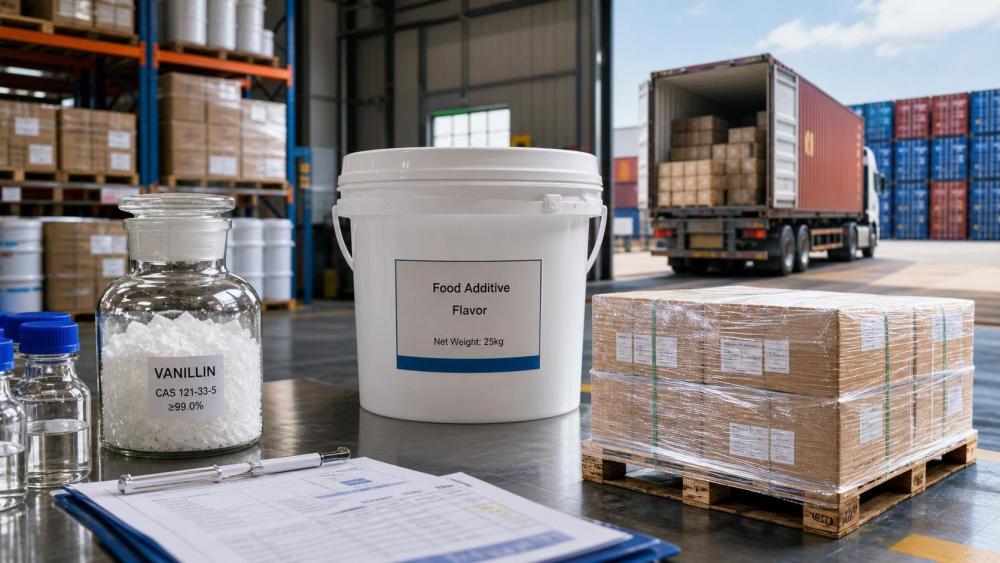
A Confirmed Shift in Export Administration
The confirmed facts are limited but clear. India’s Ministry of Chemicals and Fertilizers announced on June 30, 2026 that vanillin would be subject to quarterly export quotas starting July 1. The Q3 quota was reduced by 35%. The stated reason was complaints from domestic flavor and fragrance companies regarding raw-material stockpiling and price volatility.
The market effect described in the provided information is also specific: average global lead times for water-soluble flavoring (WSP) have extended to 8-10 weeks. In response, buyers in Southeast Asia and the Middle East have already begun urgent qualification reviews of alternative suppliers in China.
Where the Pressure Is Likely to Appear First
Procurement teams are facing a narrower sourcing window
For raw-material and ingredient buyers, the immediate issue is reduced availability under a formal quota mechanism. The impact is likely to show up in purchase scheduling, allocation discussions, and the timing of order confirmation. From an operational perspective, what deserves closer attention is whether existing supplier commitments, shipment timing, and document readiness still align with the new export rhythm.
Manufacturers may see delivery risk move upstream
Processors and manufacturers using WSP are likely to feel the effect through extended input lead times rather than through any single regulatory filing. This matters because production planning, batch sequencing, and customer delivery commitments can all be disrupted when a key upstream material becomes quota-constrained. Companies in this position should pay close attention to lead-time revisions, contract delivery terms, and the status of substitute-source validation.
Export and trading firms may need faster supplier qualification cycles
Trading companies and exporters are exposed in a different way: the rule change can shift buyer expectations toward alternative origins on short notice. The information provided already indicates that buyers in Southeast Asia and the Middle East have started urgent reviews of Chinese replacement suppliers. In practice, this means supplier credentials, technical documents, testing records, and traceability materials may receive closer scrutiny during onboarding or requalification.
Supply-chain service providers will need to watch execution details closely
Logistics coordinators, sourcing intermediaries, and related service providers may not be the direct target of the quota rule, but they are likely to be affected by shipment reprioritization and revised delivery calendars. The main pressure point is execution: once export volumes are managed by quarter, timing, booking discipline, and documentary completeness can become more important across the delivery chain.
Practical Points Companies Should Track Now
Review qualification files for replacement suppliers
Because urgent qualification reviews are already underway for Chinese alternatives, companies should treat supplier documentation as a live commercial issue. Analysis shows that technical specifications, test reports, traceability records, and consistency of supply claims are likely to become central in current review processes. The provided information does not confirm any new certification requirement, so this should be understood as a practical compliance and approval focus rather than a confirmed new rule.
Recheck procurement and delivery assumptions against longer lead times
The reported extension of WSP lead times to 8-10 weeks means procurement teams should reassess current purchase cycles and customer delivery commitments. Observably, the immediate business risk is less about abstract regulation and more about whether planning assumptions still reflect actual supply conditions after the quota change.
Monitor how the quota is described and applied in follow-up communications
The announced measure is already in effect as a rule change, but the available input does not provide detailed implementation language beyond the quarterly quota structure and Q3 reduction. For that reason, companies should continue tracking any follow-up official wording, trade-administration clarifications, or market notices that could influence how the rule is interpreted in transactions and delivery planning.
Prepare for tighter buyer review in tenders and supply approvals
Where supply substitution is being considered, commercial and technical reviews may accelerate. From an industry perspective, companies should be ready for closer checks on product matching, supply continuity, supporting documents, and quality traceability in tenders, customer approvals, or emergency sourcing reviews. This is especially relevant where buyers are moving quickly to de-risk supply gaps.
Why This Matters Beyond a Single Raw Material
Analysis shows that this development is more than a price or availability story. It is a rule-driven supply adjustment in a critical upstream input, and that makes the downstream impact broader than spot procurement alone. It is more appropriate to understand this as an executed policy signal with immediate commercial consequences, while still recognizing that the full market response and execution pattern require continued observation.
What deserves closer attention is not only the quota reduction itself, but how quickly buyer behavior is changing around alternative-source approval. That shift can affect document requirements, qualification speed, and delivery expectations across regional trade flows tied to WSP.
How the Market Should Read the Current Signal
At this stage, the event is best understood as a real and already active trade-control change with direct implications for supply planning and supplier review. The confirmed impact on lead times and the start of emergency alternative-supplier audits suggest that companies should read it as an immediate execution issue, not as a distant policy discussion. At the same time, it would be premature to treat all downstream outcomes as settled, because the available information does not yet define every implementation detail or longer-term market adjustment.
Basis of This Article and What Still Needs Verification
This article is based on the user-provided news title, event date, and event summary. For developments of this kind, relevant source categories typically include official government announcements, regulatory releases, customs or trade-administration notices, industry association communications, standards-related documents, and reporting by authoritative media.
No specific official source link was provided in the input, so the exact official publication path still needs to be verified on an ongoing basis. Further observation is also needed on any detailed implementation language, compliance interpretation, tender-document changes, market feedback, and how companies are executing supplier substitution and delivery adjustments in practice.
Related News
- When heat stable flavor formulations are needed for UHT beveragesOct 04, 2026Aromatics & Perfumery Fellow
- How heat stable flavor formulations prevent aroma loss in baked goodsOct 03, 2026Aromatics & Perfumery Fellow
- Using 4-vinyl guaiacol flavour standard to calibrate sensory panelsOct 02, 2026Aromatics & Perfumery Fellow
- Garlic Powder Flavor Profiles and Their Role in Seasoning BlendsSep 28, 2026Aromatics & Perfumery Fellow
Related News
- 00
0000-00
Verifying halal status of hydrocolloid ingredients in the Middle East - 00
0000-00
How to interpret active matter on a surfactant specification sheet - 00
0000-00
What Quality Checks Should You Run on Fragrance Ingredient Suppliers? - 00
0000-00
How to assess a flavor chemistry manufacturer's batch consistency - 00
0000-00
What drives fragrance ingredients price changes in bulk orders?
Aromatics & Perfumery Fellow
Weekly Insights
Stay ahead with our curated technology reports delivered every Monday.