





Liquid flavor enhancers work differently once the real use case changes
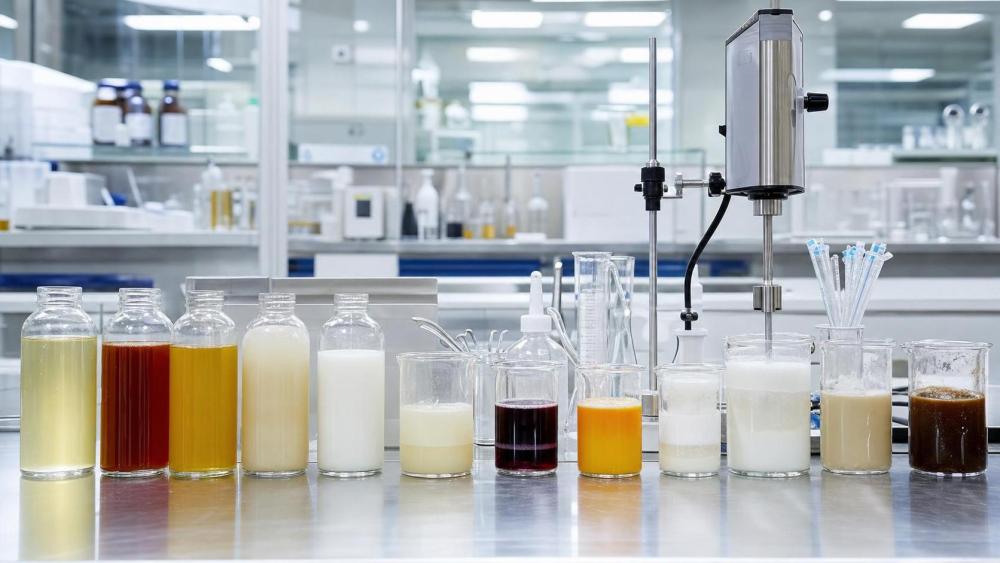
Liquid flavor enhancers look simple on paper, yet they rarely fail for one reason alone.
A formula can taste bright in the lab, then separate, haze, flatten, or drift during filling, shipping, or storage.
That gap matters across food, beverage, fragrance-adjacent systems, and broader FMCG development.
FFAI often tracks this exact intersection: sensory performance, rheology, preservation, compliance, and processing reality.
In practice, liquid flavor enhancers are judged less by headline intensity and more by what happens after blending begins.
The same enhancer may behave well in a syrup base, yet fail in a protein drink or acidic shot.
So the useful question is not whether liquid flavor enhancers are effective.
The useful question is which formulation stress is dominant in a given application, and what correction fits that stress.
Why the same liquid flavor enhancers behave differently across applications
Different systems pull flavor ingredients in different directions.
Water activity, oil load, pH, sweetener choice, heat, and package oxygen all change volatility and stability.
A clean-label beverage may avoid certain solubilizers, while a shelf-stable sauce can tolerate a wider toolbox.
Some liquid flavor enhancers are pushed by appearance constraints.
Others are limited by preservative compatibility, thickener interaction, or export compliance.
This is why FFAI links flavor chemistry with preservation, hydrocolloid behavior, and regulatory intelligence rather than reviewing aroma in isolation.
Once that broader frame is clear, common formulation problems become easier to diagnose.
The first diagnosis usually starts with these variables
- Continuous phase: mostly water, mostly oil, or mixed emulsion.
- Stress profile: heat, freeze-thaw, shear, light, oxygen, or metal ions.
- Sensory target: top-note impact, lingering body, sweetness lift, or masking.
- Texture system: gums, proteins, starches, fibers, or alcohol content.
- Market constraint: clean label, low sugar, low pH, or cross-border compliance.
In beverages, phase separation is often the first visible warning
Ready-to-drink beverages expose liquid flavor enhancers to strong dilution and visual scrutiny.
If the flavor system contains poorly solubilized oils, ring formation and cloud instability appear quickly.
This happens often in citrus, cola, botanical, and energy-style profiles.
The fix is rarely “add more flavor.”
More often, the formula needs a better emulsion design, tighter droplet control, or a more compatible weighting approach.
In low-calorie drinks, sweetener systems can also expose bitterness that stronger aroma alone cannot cover.
Here, liquid flavor enhancers work best when paired with bitterness modulators, acid balance, and mouthfeel support.
A small hydrocolloid adjustment may stabilize both suspension and flavor release.
Useful beverage-side fixes
- Check whether haze comes from flavor oil, mineral load, or preservative interaction.
- Match emulsifier choice to pH and heat treatment, not only to pilot appearance.
- Review filling temperature because volatile loss may look like weak flavor dosing.
- Test sweetness and acid together, since masking performance changes after final dilution.
Sauces, syrups, and thicker systems usually hide a different problem
In viscous applications, separation may be less obvious, but flavor distortion is more common.
Xanthan gum, starches, pectin, or blended thickeners can trap aroma release.
The formula tastes rich in a hot process stream, then dull after cooling.
This is where liquid flavor enhancers need to be judged with rheology, not separately from it.
A heavier body can improve perceived fullness, yet suppress high notes.
A more open texture can release flavor better, yet reduce cling and shelf appeal.
The fix may involve staggered flavor addition, adjusting the thickener ratio, or splitting the profile into top and body components.
Heat-sensitive notes should also be reviewed against cook temperature and hold time.
Fortified and functional formulas need more than flavor intensity
Protein beverages, collagen shots, botanical tonics, and anti-aging nutrition systems create a harder environment.
Here, liquid flavor enhancers are often asked to cover bitterness, sulfur notes, mineral harshness, or fermentation traces.
Yet off-notes do not all respond the same way.
A peptide-driven bitterness may need temporal masking.
A vitamin note may need oxidation control before flavor adjustment.
In these systems, FFAI’s broader lens matters because active ingredients, preservatives, and flavor chemistry keep interacting over time.
Precipitation is another common trap.
What looks like flavor fallout may actually be protein aggregation or mineral incompatibility pulling flavor compounds with it.
The correction should start with matrix stability, then sensory tuning.
What to confirm before changing dosage
- Whether the off-note forms immediately or appears after storage.
- Whether precipitation is flavor-related or driven by proteins, salts, or pH shift.
- Whether sweetness systems amplify metallic or drying sensations.
- Whether oxygen ingress is shortening flavor life more than expected.
Shelf life, transport, and compliance often decide the final fix
A stable pilot sample does not guarantee a stable commercial result.
Liquid flavor enhancers can shift under long storage, warehouse heat, repeated agitation, or oxygen-permeable packaging.
This is especially relevant in globally distributed FMCG systems.
Antioxidants, preservative choice, and packaging barrier may protect the formula more effectively than reformulating the whole flavor profile.
At the same time, regional requirements can narrow solvent, preservative, or labeling options.
A liquid flavor enhancer that works under one market standard may need adjustment for another destination.
That is why formulation fixes should be checked against both sensory targets and compliance pathways.
Where liquid flavor enhancers are commonly misjudged
One common mistake is treating similar applications as identical.
A flavored water, an energy drink, and a collagen shot may all be clear liquids, but their stress conditions differ sharply.
Another mistake is reading a flavor problem as a dosage problem.
If the root issue is oxidation, pH drift, or poor emulsification, extra flavor can intensify imbalance instead of solving it.
Cost is also misread when only ingredient price is compared.
A cheaper liquid flavor enhancer may require more process correction, more masking, or shorter shelf-life tolerance.
Finally, many teams validate only fresh samples.
For liquid flavor enhancers, the more revealing checkpoints are week-two aroma drift, transport stress, and package-opening performance.
A practical way to choose the next formulation step
Start by mapping the actual application window for liquid flavor enhancers.
That means pH, process heat, viscosity system, storage period, package barrier, and destination market.
Then separate the problem into one dominant category: physical instability, sensory imbalance, chemical degradation, or matrix incompatibility.
From there, the fixes become more precise.
- For separation, review solubility architecture and emulsion stability.
- For off-notes, identify the source before selecting masking tools.
- For precipitation, check matrix interactions before reformulating aroma.
- For short shelf life, reassess oxidation control, preservatives, and packaging.
That approach keeps liquid flavor enhancers aligned with real processing conditions, not just bench-top expectations.
It also fits the FFAI view that successful formulas depend on connected decisions across flavor, texture, preservation, and safety.
Before the next adjustment round, it is worth building a short scenario checklist, comparing storage stresses, and defining which parameter is allowed to move and which is not.
Related News
- When heat stable flavor formulations are needed for UHT beveragesOct 04, 2026Aromatics & Perfumery Fellow
- How heat stable flavor formulations prevent aroma loss in baked goodsOct 03, 2026Aromatics & Perfumery Fellow
- Using 4-vinyl guaiacol flavour standard to calibrate sensory panelsOct 02, 2026Aromatics & Perfumery Fellow
- Garlic Powder Flavor Profiles and Their Role in Seasoning BlendsSep 28, 2026Aromatics & Perfumery Fellow
Related News
- 00
0000-00
Can biomimetic peptides in cosmetics reduce the look of wrinkles? - 00
0000-00
How to assess a bio-based thickener manufacturer's batch consistency - 00
0000-00
Verifying halal status of hydrocolloid ingredients in the Middle East - 00
0000-00
How to interpret active matter on a surfactant specification sheet - 00
0000-00
How Do You Test Hydrocolloid Viscosity After Changing a Thickener?
Aromatics & Perfumery Fellow
Weekly Insights
Stay ahead with our curated technology reports delivered every Monday.